Nepal races to find hundreds stuck in hydropower tunnels following floods
More than 1,000 people have been killed in the devastating floods that struck the border between Nepal and Tibet. Authorities have started mass burials for unclaimed bodies while they wait for victims' families to claim them. Meanwhile, rescue operations are underway to rescue hundreds of workers stuck in hydropower tunnels. FRANCE 24's Shahzaib Wahlah tells us more from the Chitwan district in…
New Delhi (AP) — Rescue teams in Nepal are urgently searching for hundreds of workers potentially trapped in hydropower tunnels following catastrophic flooding that has claimed over 1,000 lives. At least 900 workers remain missing, with approximately 500 believed to be inside the tunnels, according to officials and industry experts.
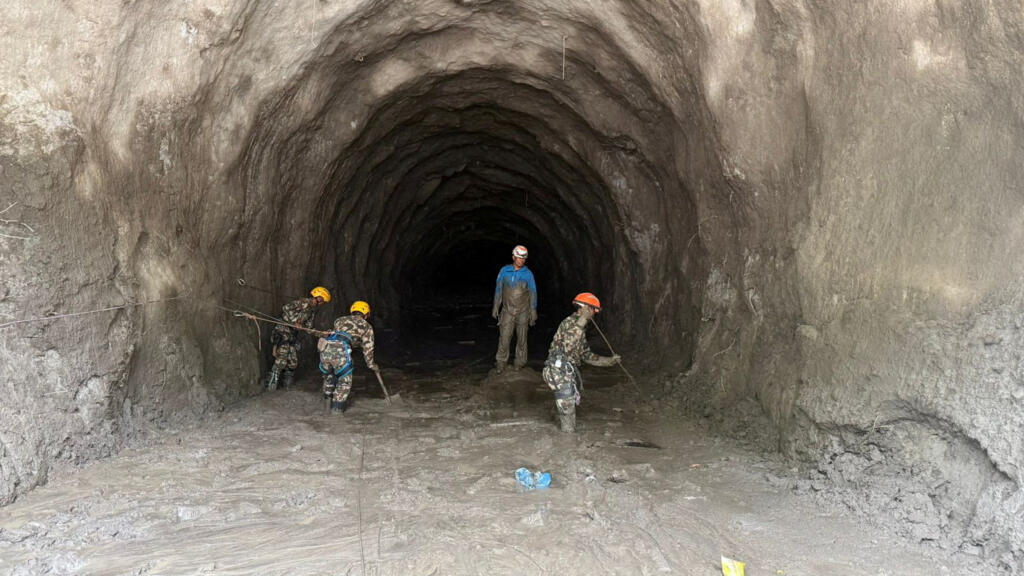
Access to the tunnels has been severely impeded by the flooding, debris and damaged infrastructure, hindering rescue efforts. Brig. Gen. Raja Ram Basnet, a spokesperson for the Nepal Army, reported that teams equipped with foreign assistance were conducting searches across multiple hydropower sites. Footage from the Army showed rescuers navigating dark, debris-laden tunnels, wading through mud and scaling rocks while hunting for the missing individuals.
Mohan Kumar Dangi, president of the Independent Power Producers Association of Nepal, stated that floods have damaged at least 12 hydropower projects in Rasuwa and Nuwakot districts, totaling 670 MW in capacity. These projects include four under construction, seven operational, and one still in testing. Dangi described the Aug. 26 flooding as "something unimaginable," emphasizing the unprecedented nature of the disaster.
The primary obstacle for rescuers is reaching the trapped workers. Many of Nepal's hydropower projects are located in isolated, mountainous regions, with steep terrain and narrow roads making transportation and access challenging. Furthermore, the flooding has exacerbated the situation by damaging roads and restricting access to certain sites.
Rescuers are also confronted with tunnels that are either blocked or severely damaged. The floods have inundated tunnels with mud, massive rocks, and debris, collapsing sections and trapping workers inside. Even when tunnel entrances are accessible, rescuers must clear substantial amounts of debris before proceeding deeper.
Locating the missing workers has proven to be a formidable challenge. Filmmaker and drone pilot Manish Maharjan, who has volunteered with the Nepal Army, described some tunnels as "filled with mud like toothpaste in a tube." He used a drone to survey one tunnel to its end but found no signs of life. Some workers reportedly called for help during the early hours following the floods, while others who managed to escape claimed that colleagues remained underground.
It remains unclear whether these individuals have since been located and whether they are still alive.
Experts warn that the first 72 hours following a disaster are critical. Individuals trapped underground may survive without food for extended periods, but limited access to drinking water and breathable air can swiftly turn dire. Anil Pokhrel, a disaster risk reduction expert and former head of Nepal's disaster authority, lamented the weak state of Nepal's rescue capabilities.
He noted that rescuers lost precious time identifying the exact entry point and coordinates of the tunnels and lacked the necessary heavy equipment and well-trained personnel. "Harsh and remote locations combined with inclement weather have further worsened the situation," Pokhrel remarked. "Additionally, we did not have adequately trained human resources to manage such operations."
Despite Nepal's long-standing experience in tunnel construction, the country's readiness for complex tunnel rescues remains insufficient, according to experts.
Written by urgent.news from Winnipeg Free Press's reporting — not their text. Machine-written — may contain errors; check the original before relying on it.