Many roads to modern art: Frieze Seoul spotlights overlooked artists
The new Spotlight section brings together 12 solo presentations of 20th-century artists
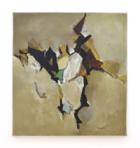
Frieze Seoul's latest edition features a Spotlight section that highlights 20th-century artists from diverse backgrounds, including India, Germany, Serbia, Nepal, and South Korea. The curator, Wonseok Koh, explains that the selection aims to rediscover overlooked artists and shed light on those who operate outside mainstream art hubs.
One such artist is Lain Singh Bangdel, a Nepali immigrant artist whose work bridges international Modernist artistic language with Nepal's cultural heritage and his homeland's Himalayan landscapes. Born in 1919, Bangdel's paintings, like "Himalayan Harmony," showcase his innovative approach to abstract interpretations of his native terrain.
Götz, a German artist of the late 20th century, is another featured artist whose work embodies the post-war artistic currents seeking new ideas by breaking away from traditional forms. His painting, "Transition Phase," marks a pivotal moment in his career, showcasing a fusion of his early CoBrA phase and Informel art, rejecting classical forms while incorporating movement and controlled color application.
The Spotlight section also features Han Youngsoo, a photographer who captures the Korean War's aftermath with unique perspectives. His photograph "Ruins and Famine" defies rigid preconceptions of the era, emphasizing the resilience of the human spirit amidst devastation. Similarly, Suk Ranhi, a painter born in 1939, moves away from representational nature studies, instead expressing abstract rhythms through line, movement, color, and material.
Her work "Nature 87-22" exemplifies her independent painterly world rooted in her unique sensory experiences.
Hoon Kwak, born in 1941, was active in Daegu during a transformative period in Korean contemporary art. His series "Incantations VIII" represents a significant portion of his oeuvre, demonstrating his ability to transform everyday objects into surreal forms through spiritual imagery and free-spirited creativity.
Lastly, Son Sangki, who died in his early 40s due to rickets, spinal disability, illness, poverty, and loneliness, is a testament to an artist who persevered despite overwhelming adversity. His paintings, such as "Artificial City–Ahyeon-dong–Homecoming," portray South Korea's rapid industrialization through grotesque, surreal, and semi-abstract visuals, offering a unique and irreplaceable artistic contribution.
Written by urgent.news from The Art Newspaper's reporting — not their text. Machine-written — may contain errors; check the original before relying on it.