Maharashtra Targets Drug-Free State By 2029 With Multi-Department Anti-Narcotics Policy
Maharashtra has set an ambitious target of completely eliminating the menace of narcotic drugs from the state by 2029, with the state Cabinet approving a comprehensive policy based on a “whole-of-government approach” to strengthen the ongoing Nasha Mukt Bharat Abhiyan. Two-Pronged Strategy Planned The policy was approved at a Cabinet meeting chaired by Chief Minister Devendra Fadnavis. It…
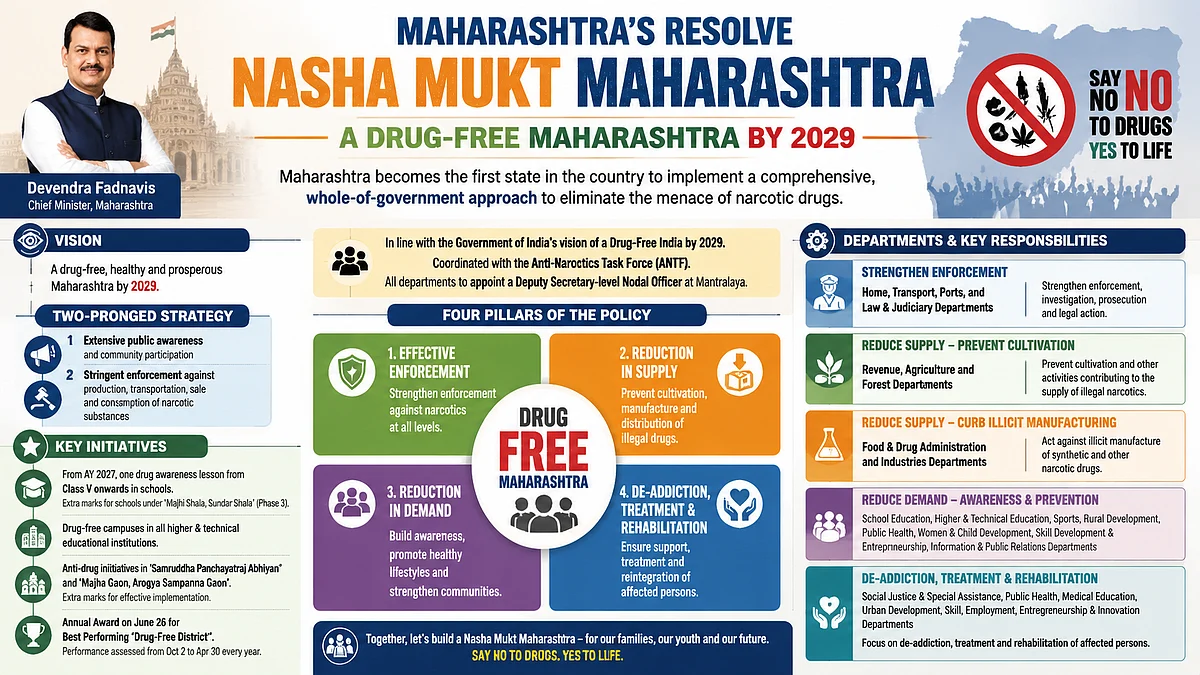
Maharashtra aims to become a drug-free state by 2029, as its Cabinet has approved a comprehensive anti-narcotics policy with a "whole-of-government" approach. Led by Chief Minister Devendra Fadnavis, the policy focuses on public awareness and strict enforcement across multiple departments, from the village level to the state Secretariat.
The state will collaborate with the Anti-Narcotics Task Force and assign a Deputy Secretary rank officer as a nodal officer in Mantralaya for each department. Schools will begin teaching drug awareness lessons from Class V onwards in the 2027 academic year, with additional recognition for schools implementing anti-drug activities.
The state aims to create drug-free campuses in educational institutions and integrate anti-drug measures into various campaign initiatives. An annual award will be presented on June 26 for the best-performing "Drug-Free District," evaluated based on efforts between October 2 and April 30 each year. The policy follows four key pillars: effective enforcement, supply reduction, demand reduction, and de-addiction, treatment, and rehabilitation.
Departments such as Home, Transport, Ports, Law and Judiciary, Revenue, Agriculture and Forest, Food and Drug Administration, Industries, School Education, Higher and Technical Education, Sports, Rural Development, Public Health, Women and Child Development, Skill Development, and Information and Public Relations will each play specific roles in achieving the goal.
Written by urgent.news from Free Press Journal's reporting — not their text. Machine-written — may contain errors; check the original before relying on it.