LPT1 crash: Manage high-risk road user behaviour more firmly
LETTER: The Road Safety Expert Association (RSEA) takes seriously the latest fatal crash on the East Coast Expressway Phase 1 (LPT1), which claimed four lives and involved 11 vehicles.
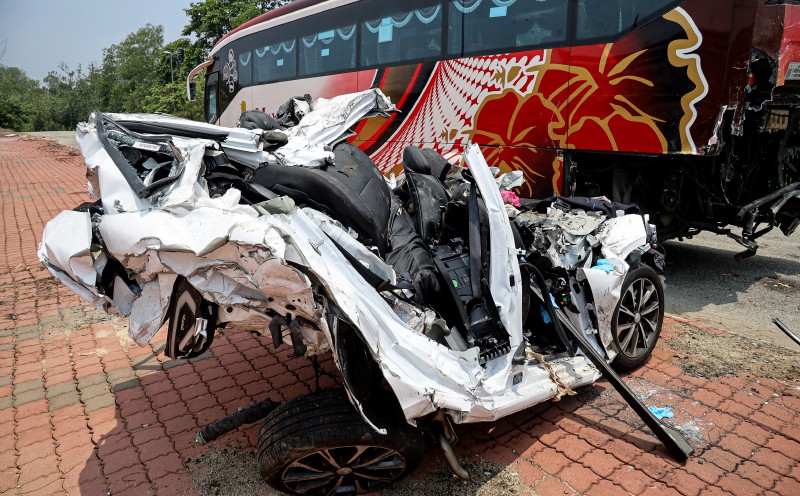
The latest fatal crash on the East Coast Expressway Phase 1 (LPT1) has drawn attention from the Road Safety Expert Association (RSEA), urging a more robust approach to managing high-risk road user behavior. The RSEA emphasizes that simply labeling LPT1 as safe or unsafe is insufficient; instead, the focus should be on whether the risks on the highway are being managed aggressively enough to prevent fatal crashes.
Speed is a critical factor in highway safety, as it directly impacts a driver's ability to perceive hazards, react, brake, and regain control. The RSEA highlights that excessive speeds occur at specific times and locations, involve certain vehicle categories, and happen with alarming frequency. To effectively address this issue, the RSEA recommends an integrated enforcement approach involving various governmental bodies, supported by advanced technology and real-time traffic intelligence.
Key recommendations include targeted speed enforcement, stronger penalties for excessive speeding, monitoring average travel speeds, and stricter enforcement against tailgating and dangerous lane changes. The RSEA also emphasizes the importance of focusing on heavy vehicles, express buses, and other high-risk categories, as well as implementing rapid intervention at crash-prone locations.
The association advocates for the use of CCTV, automated systems, and telematics to monitor enforcement outcomes and adjust strategies accordingly.
The RSEA proposes a continuous, data-driven Risk-Based Road Safety Management System that regularly analyzes various factors, including speed, traffic flow, vehicle type, driver behavior, weather conditions, road conditions, crash history, and enforcement outcomes. By converting this information into risk intelligence, authorities can take immediate action at locations with consistently dangerous conditions.
Furthermore, the RSEA urges a move away from identifying only "black spots" and instead focuses on "risk spots" where dangerous conditions and behaviors may occur before a crash occurs. This proactive approach should involve regular safety risk audits of LPT1, examining all aspects of the road-user, vehicle, road, traffic, and enforcement systems.
The audits should result in measurable corrective actions, clear responsibilities, and deadlines. The ultimate goal is to create a safe highway that continuously identifies, measures, controls, and reduces risk before it becomes a tragedy.
Written by urgent.news from New Straits Times's reporting — not their text. Machine-written — may contain errors; check the original before relying on it.