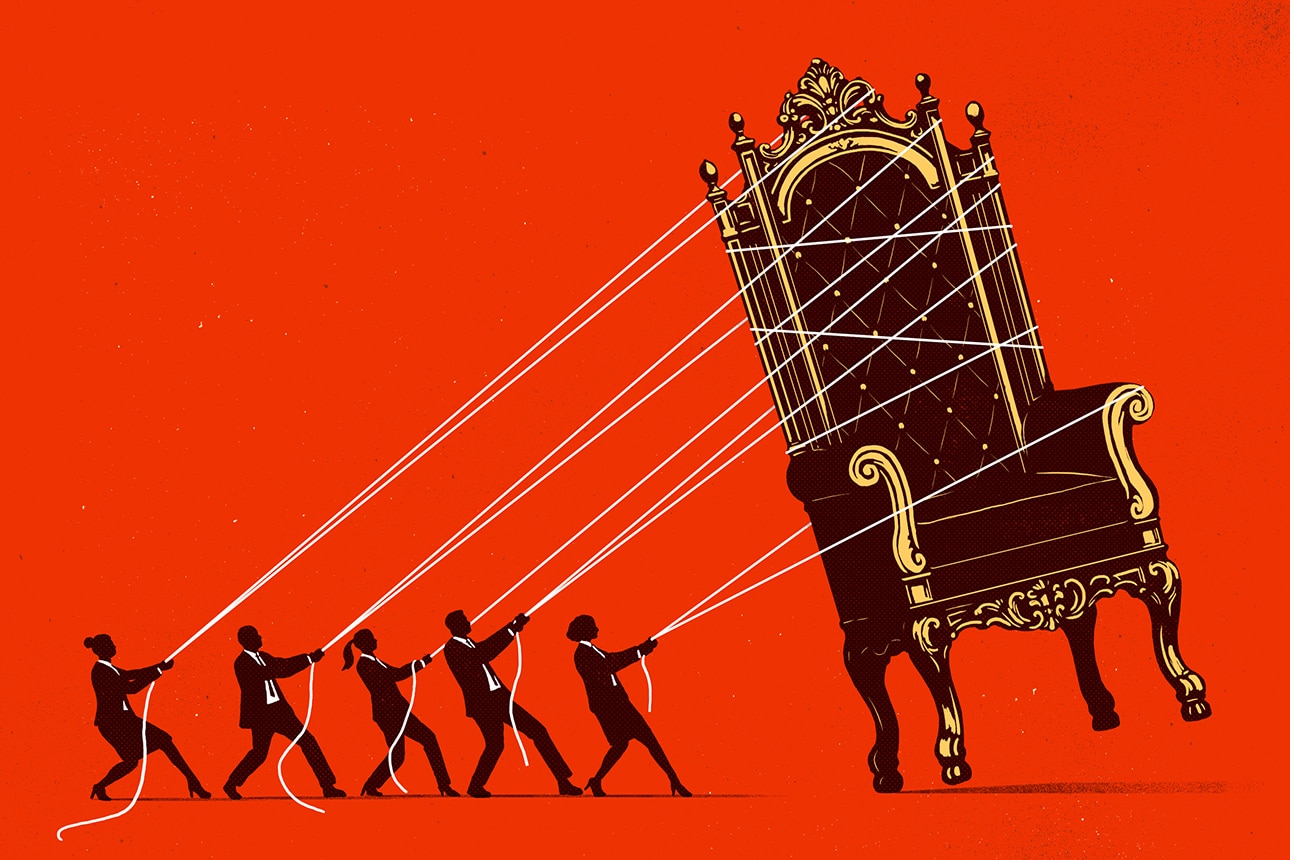
How Leadership Anxiety Derails Transformation
Rob Dobi The Research This article draws on a four-year ethnographic study of a professional services firm whose leaders initiated a major transformation to reverse declining performance. The research involved nearly 760 hours of observation across leadership and project team meetings, more than 300 interviews, and analyses of internal documents spanning the full life of […]

In a study that spanned four years, researchers observed the inner workings of a professional services firm undergoing a significant transformation aimed at reversing declining performance. The transformation, which had been championed by the executive team for three years, ultimately failed to deliver the desired results, and the initial excitement gave way to blame and disillusionment. This article delves into the underlying factors that contributed to this disappointing outcome.
The researchers found that the foundation for defensive organizing rests on two conditions: one or more executives identifying with the organization, and the workforce's trust in their executives' competence and benevolence. When these conditions are met, leaders feel responsible, and employees feel reliant on their guidance. This creates a vigilant and proactive leadership style, one that is attentive to environmental turbulence and eager to steer the organization through it.
However, when uncertainty rises, leaders experience anxiety. This anxiety can manifest as existential anxiety (concern about one's leadership abilities) and social anxiety (concern about meeting the expectations of others). In the case of the professional services firm under study, called "Recco," executives acknowledged their worries privately but refrained from sharing them with their peers. One executive confessed, "I don't want to look like a chump because everyone can deliver ... and I can't."
Such concerns are not uncommon among leaders, but cultural norms often discourage them from openly admitting anxiety. Many organizations view admitting anxiety as disqualifying for leaders, making it a taboo topic. As a result, these leaders may struggle to manage and make sense of their anxiety, leading to overwhelming feelings of inadequacy.
Leaders who view their role as projecting unwavering confidence and rallying people behind a vision of change tend to adopt anxiety as a coping mechanism. This coping strategy shapes their vision and decision-making processes, paving the way for defensive organizing to take hold. With a growing sense of anxiety, leaders may begin to organize their efforts in ways that keep everyone busy while the status quo remains unchanged.
Defensive organizing, as the researchers term this process, is a covert function that ultimately sabotages the intended transformation. This article examines the unfolding of this phenomenon and offers guidance on how leaders can avoid it by learning to work with anxiety rather than allowing it to derail their efforts.
Written by urgent.news from MIT Sloan's reporting — not their text. Machine-written — may contain errors; check the original before relying on it.