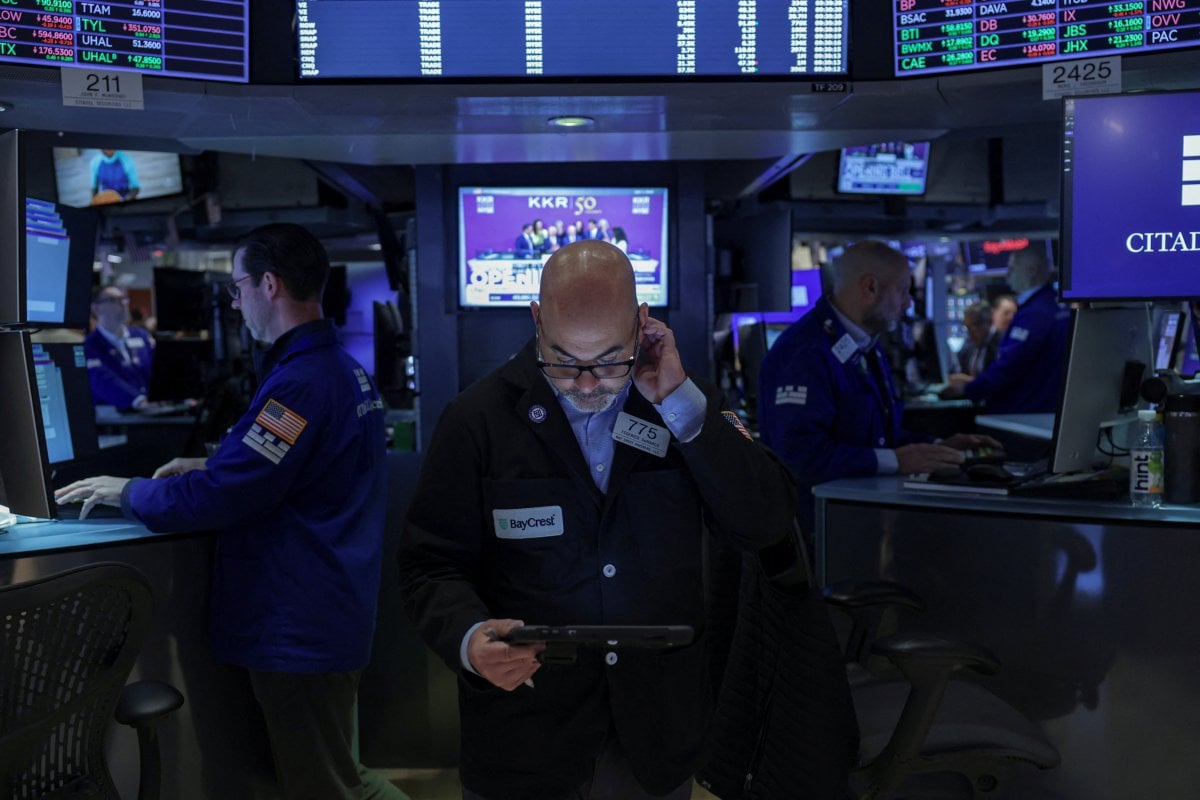
Global bond selling, surging oil send markets lower
A sell-off of bonds from key countries worldwide deepened on Tuesday, sending government borrowing costs soaring and equities lower as investors fretted that energy-driven inflation would force central bankers to hike interest rates. Renewed fighting between the United States and Iran on Tuesday pushed oil prices higher, stoking fears of tighter monetary policy that could weigh on economic…
A global sell-off of bonds from major countries intensified on Tuesday, driving up borrowing costs for governments and pulling equities lower, as investors grew concerned that energy-driven inflation would force central banks to raise interest rates. Tensions between the United States and Iran resurfaced, prompting a surge in oil prices and fueling worries about stricter monetary policy that could dampen economic growth.
This heavy bond selling pushed the interest rate on 30-year UK government bonds to the highest since 1998, while the 10-year yield rose to a level not seen since the 2007 financial crisis. Japan's 10-year bond yield hit a 30-year high of three percent, reflecting concerns over plans for substantial government spending. The 30-year US Treasury bond yield was just under 5.3 percent, nearing levels last observed in 2007, while the 10-year yield reached its highest point since the global financial crisis.
Adam Sarhan of 50 Park Investments noted that rising bond yields and oil prices could pressure the economy, as inflation already exceeds the Federal Reserve's expectations and further rises would exacerbate the situation. Patrick O'Hare at Briefing.com pointed to similar fears about inflation and government deficits, leading to a steady increase in sovereign bond yields and creating concerns for both stocks and overall growth.
Wall Street's main stock indices closed lower, with the Dow down 0.8 percent and the tech-heavy Nasdaq falling one percent. European stocks also declined, with eurozone inflation hitting a three-year high of 3.3 percent in August, raising expectations that the European Central Bank would raise interest rates the following week. Oil prices jumped nearly five percent on Tuesday due to ongoing fighting between the United States and Iran, with both sides maintaining a stalemate and Tehran continuing to block the strategic Strait of Hormuz.
Susannah Streeter, chief investment strategist at Wealth Club, highlighted that supply concerns are again at the forefront, given Trump's threat of further action against Iran, including the Kharg Island oil export hub. Traders are now eagerly awaiting key economic data ahead of the US Federal Reserve's policy meeting on September 16, which could determine whether the bank raises rates.
Recent data revealed slowing US manufacturing growth, and jobs openings figures were below expectations. The S&P 500 fell 0.7 percent, the Dow dropped 0.8 percent, and the Nasdaq decreased by 1 percent.
Written by urgent.news from RTHK News - Finance's reporting — not their text. Machine-written — may contain errors; check the original before relying on it.
This story
This is one outlet's version. Read the fullest account.
- Global bond sell-off, surging oil prices send markets into the red freemalaysiatoday.com