Germany says Russia behind Leipzig airport drone attack
Germany has said Russia was responsible for last month's drone attack at Leipzig's airport.
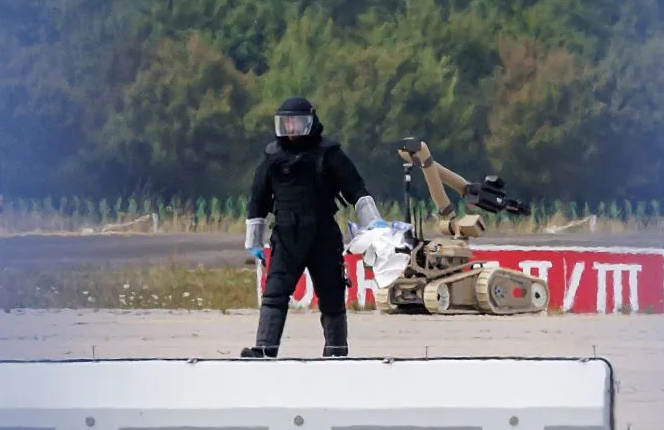
Germany has accused Russia of carrying out a drone attack last month at Leipzig/Halle Airport, located in eastern Germany. The incident, which occurred on August 4, involved a drone carrying an explosive device that failed to detonate due to a faulty detonator. Investigators suspect a second drone collided with a cargo aircraft near the airport, and a third drone was subsequently found nearby.
Interior Minister Alexander Dobrindt contended that the attack followed a "well-established pattern of Russian hybrid operations in Europe" and speculated that Germany might be targeted again. The Russian Foreign Minister indicated that Russia would respond to "anti-Russian decisions".
Security experts had previously suggested Russia may be responsible for the attack, however, Russia has consistently denied involvement. Leipzig/Halle Airport, situated in eastern Germany, serves as a vital military and NATO logistics hub and also functions as a base for Ukraine's Antonov Airlines, which transports most of the country's cargo.
Following the press conference, German Foreign Minister Johannis Wadephul announced the closure of the Russian consulate in Bonn and the termination of the contract for the Russian House in Berlin, citing allegations of espionage and Russian propaganda dissemination. NATO Secretary-General Jens Stoltenberg expressed solidarity with Germany, stating that the organization stands in full support of the country's response.
The incident of the drone attack on Leipzig/Halle Airport is part of a broader pattern of drone sightings at various NATO member states, including Germany, over the past year. Germany has been cautious about attributing blame, initially stating that "foreign powers" could be responsible. US media had earlier reported that American officials linked the incident to Russia.
German Chancellor Friedrich Merz has warned that those responsible for hostile acts against Germany would face consequences. In an effort to bolster the capabilities of its intelligence services, which have been criticized for their perceived ineffectiveness, Germany is seeking to enhance their powers to counter potential threats.
Germany, a prominent supporter of Ukraine, faces a challenging political climate as a state election in Saxony-Anhalt could potentially grant the far-right Alternative für Deutschland (AfD) their first state-level victory. The AfD, Germany's largest opposition party, seeks to end support for Ukraine and restore ties with Russia.
Simultaneously, German police are investigating the discovery of improvised explosive and incendiary devices at a power substation in the eastern state of Brandenburg, which led to a temporary power outage. The origin of these devices remains undetermined.
Written by urgent.news from MyJoyOnline Ghana's reporting — not their text. Machine-written — may contain errors; check the original before relying on it.
This story
This is one outlet's version. Read the fullest account.
- Germany blames Russia for last month's attempted drone attack at Leipzig airport channelnewsasia.com
- Germany blames Russia for last month’s attempted drone attack at Leipzig airport apnews.com
- Germany blames Russia for Leipzig plane sabotage attempt, expels diplomats, and restricts visas meduza.io
- Breaking: Germany officially blames Russia for drone attack attempt at Leipzig airport kyivindependent.com
- Russia behind attempted drone 'attack' at Leipzig airport, Berlin says euronews.com
- Drone incident at Leipzig Airport: Germany convinced of Russian involvement ukrinform.net
- Germany says Russia behind Leipzig airport drone incident rte.ie
- Germany says Russia behind attempted drone attack at Leipzig airport dw.com