Gefahr auch in Europa: Verheerende Sturzflut - Welche Risiken bergen die Alpen?
Sehr schmal, zwischen steilen Hängen liegend: Solche Täler, die besonders wuchtige Sturzfluten begünstigen, gibt es in der Himalaya-Region viele. In den Alpen ist das anders - bedeutet das Entwarnung?
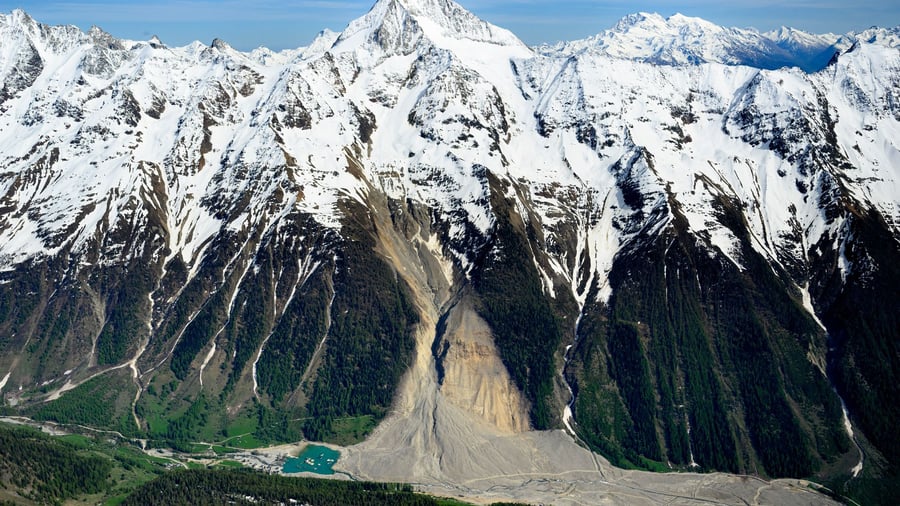
A massive landslide and flash flood in the Himalayas has raised questions about similar catastrophic events in the Alps. Natural hazards expert Oliver Korup from the University of Potsdam notes that major rock and glacier slides have occurred in the Alps in the past, but the extreme differences in elevation create greater potential for slide heights and distances, impacting the entire chain from the initial break to the resulting flash flood.
Jan Blöthe from the Albert-Ludwigs-University of Freiburg adds that similar events could happen in the Alps as well, citing the Blatten glacier landslide in Switzerland as a comparable example. The key difference lies in the scale of the events; the Nepal incident involved about ten times the volume of the Blatten incident. In May 2025, at Blatten in the Swiss canton of Wallis, rock and ice broke off the Birchgletscher and tumbled into the valley, inundating much of the town.
The area surrounding the site had been identified as at risk, and the village was evacuated in advance. The narrow, steep valley terrain in the Himalayas contributed to the devastating power of the flash flood, while the broader, less steep valleys of the Alps are believed to be more prone to the overwhelming force of the floodwaters.
However, even an event with less intensity could have devastating consequences in densely populated Alpine valleys. Early warning systems are crucial in mitigating such risks, emphasizing the need for the detection and systematic monitoring of suspicious rock or glacier movements. Detailed and localized measurements are currently the most viable method for predicting such events, as large-scale predictions and warnings prove difficult.
The role of permafrost in increasing the risk of rockslides is also significant. As climate change accelerates the melting of alpine permafrost, the frozen ice that serves as a natural glue within rock fissures loses its strength, making destabilized slopes more susceptible to collapse.
Written by urgent.news from Handelsblatt's reporting — not their text. Machine-written — may contain errors; check the original before relying on it.