Kākāpō rising: 90 chicks swell population of the world’s heaviest parrot
Critically endangered New Zealand bird enjoys record breeding season triggered by mass fruiting of native tree, pushing its numbers to 325 The population of the world’s heaviest parrot, the kākāpō , has surpassed 300 birds for the first time in 75 years, after a record breeding season triggered by the mass fruiting of a native New Zealand tree. Ninety chicks were officially added to the…
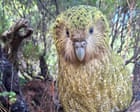
The world's heaviest parrot, the kākāpō, has made a remarkable recovery, with its population surpassing 300 birds for the first time in over 75 years. A record breeding season, triggered by the mass fruiting of a native New Zealand tree, has led to the addition of 90 chicks to the population on September 1st, bringing the total to 325 – a significant milestone since the start of recovery efforts.
Deidre Vercoe, the kākāpō recovery operations manager, remarked that the last time the population exceeded 300 birds may have been as long as 75 years ago. Kākāpō, the sole nocturnal and flightless parrot species globally, were once abundant in New Zealand but suffered a dramatic population decline due to the introduction of predators such as cats and stoats.
By the 1900s, they were teetering on the brink of extinction. In 1995, a recovery program began with just 51 birds, facing challenges related to genetic diversity, infertility, and poor chick hatching rates. Kākāpō breed every two to four years when native rimu trees produce large numbers of berries, making repopulation a slow process.
This year, a bountiful harvest of rimu berries after a four-year wait prompted the birds to breed and produce a record number of chicks. Vercoe explained that it took 16 years in the earlier years of recovery to produce such a large number of chicks. Kākāpō can live between 60 and 80 years, weigh up to 4kg, and are known for their entertaining behavior.
Thousands of people watched a live stream of a kākāpō's daily activities during the breeding season. The parrots exhibit unique mating rituals, with male birds gathering in a "lek" to produce a distinctive booming sound using air sacs in their chests. Females are solely responsible for laying the one to four eggs, incubating them, and raising the chicks for approximately six months.
The youngest chick of the 2026 breeding season was female Awarua-A3, hatched on March 30th. Experts indicate that the next breeding season might occur as early as 2028, and preparations are already underway for what could be a promising future for the species.
Written by urgent.news from The Guardian's reporting — not their text. Machine-written — may contain errors; check the original before relying on it.