Climate Week kicks off with a train trip from Cape Town to Khayelitsha
Journey aims to highlight how climate change affects different communities
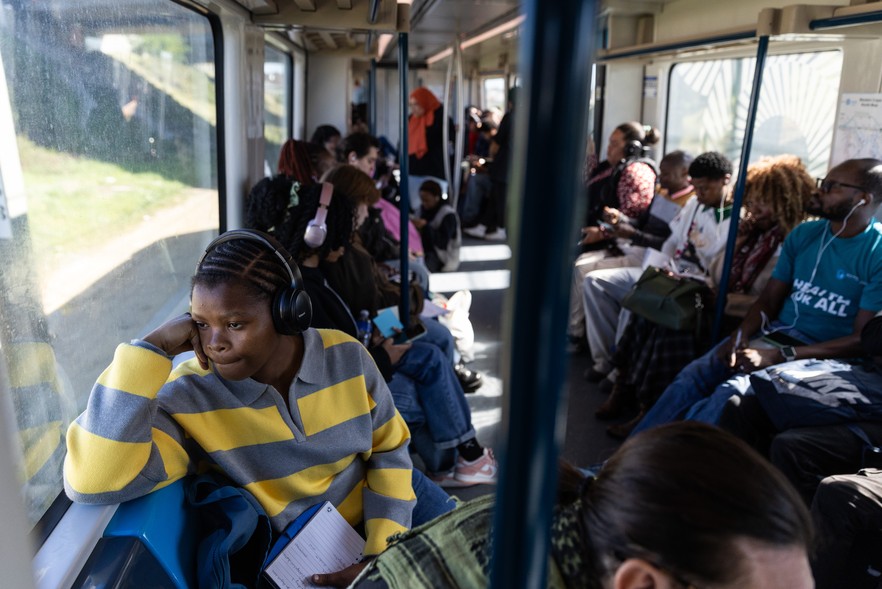
To inaugurate Climate Week, roughly 50 individuals embarked on a train journey from Cape Town Station to Khayelitsha, aiming to comprehend how apartheid's spatial planning continues to shape people's living conditions, mobility, and vulnerability to climate risks. Throughout the trip, attendees engaged with audio narratives detailing the impacts of climate change on their daily lives.
Organized by the African Climate Alliance as part of Cape Town Climate Week, under the theme of Spatial Justice, the Train of Thought audio tour highlighted the disparity in transportation and urban planning. La’eeqa Martin, a representative of the African Climate Alliance, emphasized the importance of viewing spatial justice through the lens of transportation, infrastructure, and historical segregation.
The train route traversed various communities, from the affluent Pinelands to the informal settlements of Khayelitsha, offering a visual perspective on the stark contrasts. Passengers were urged to observe the transformation of landscapes, housing, and access to resources as the train journey progressed. The tour provided historical context on apartheid-era railway policies that relegated black communities to peripheral areas of the city.
Commuters frequently recounted overcrowded trains, making daily travel a challenge. The visit to Khayelitsha included a walk to the Isivivana Centre, where discussions centered on the disproportionate effects of climate change on low-income communities. Zamindlela Mkhwanazi, a researcher with Ndifuna Ukwazi, highlighted the heightened risk of flooding for those living in informal settlements, leading to cycles of displacement exacerbated by climate change.
Solutions such as climate-resilient housing and community mobilization were proposed to address these pressing issues.
Written by urgent.news from GroundUp's reporting — not their text. Machine-written — may contain errors; check the original before relying on it.