China's humanoid robots not smart enough to take your job -- — yet
INSIDE a training centre in southern China, more than 100 humanoid robots stand in neat rows.
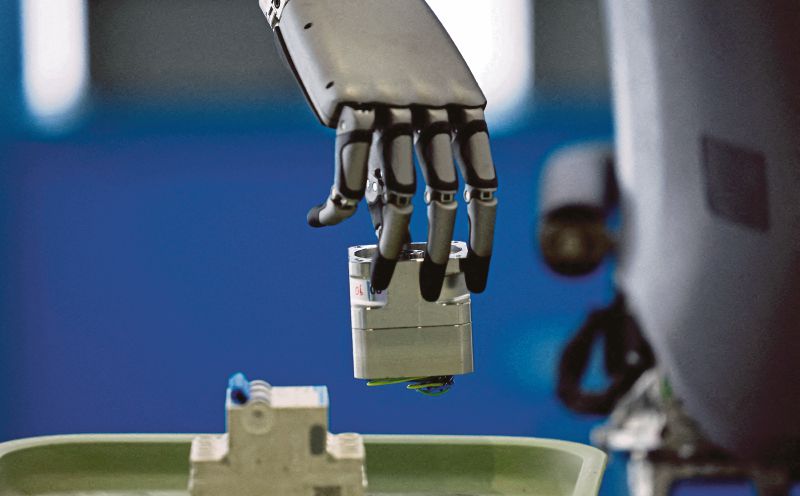
In a Chinese training center, over a hundred humanoid robots are placed in orderly lines, awaiting instruction from human trainers equipped with headsets. These robots, manufactured by UBTech, are tasked with completing simple assignments such as sorting crates, packaging noodles, and making coffee. The robots are described as slow and clumsy, with a novice trainer managing to elicit one successful movement from them every 300 attempts, while an experienced trainer can achieve this in one out of 50 tries.
The robots are being developed for a concept known as embodied artificial intelligence, where robots can perceive, decide, and act in the physical world. This objective is being funded by a US$18 million tender from the Guangxi regional government, awarded to UBTech in October. The goal is to generate training data that could potentially be sold to factories, but currently, the project is subsidized due to high operating costs and low prices for the produced data.
The humanoid robot industry is estimated to have shipped about 20,000 units globally in the previous year, with the vast majority being manufactured in China. According to a China Industry and Information Technology Ministry official, the country aims to produce over 100,000 humanoids this year, a figure that surpasses the number of Chinese electric vehicle brands.
However, despite the government's emphasis on robotics and AI, the robots' capabilities are still limited. A Beijing pharmacy has implemented a robot, Galbot, which can retrieve products from shelves using cameras and grippers, but the company has not timed the robot's performance against human workers. The main challenge lies in the fact that robots may perform tasks correctly in one environment but fail when presented with different conditions such as changes in the object, lighting, angle, surface, timing, or equipment.
The Chinese government's push for humanoid robots is driven by the need to address an aging and shrinking population, which threatens its industrial base. Additionally, China's military researchers are exploring the potential applications of robotics and AI in future weapon systems. However, experts predict that consolidation among humanoid robot companies could occur later this year or the next, as they anticipate policy support from Chinese officials will eventually shift towards more promising ventures.
Written by urgent.news from New Straits Times's reporting — not their text. Machine-written — may contain errors; check the original before relying on it.
This story
This is one outlet's version. Read the fullest account.