China's humanoid robots not smart enough to take your job – — yet
INSIDE a training centre in southern China, more than 100 humanoid robots stand in neat rows.
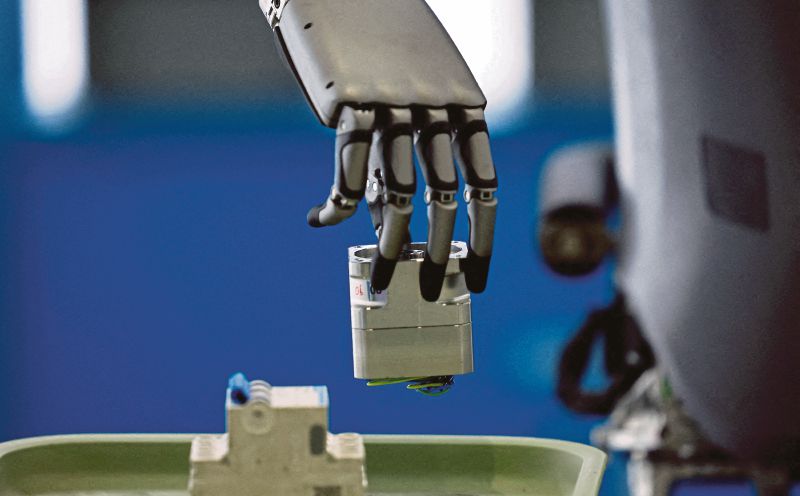
In a training centre in southern China, over 100 humanoid robots are arranged in neatly aligned rows. A dozen human trainers, equipped with headsets, guide these robots through simple tasks such as sorting crates, packaging noodles, and making coffee. The humanoid robots are slow and awkward, with a novice trainer requiring around 300 attempts for the robot to perform a single usable movement, while an experienced trainer achieves this in just one in 50 attempts.
UBTech, a robot maker, secured a tender worth US$18 million from the Guangxi regional government in October to supply the training facility with the humanoid robots and related hardware. The objective is to generate training data for so-called embodied artificial intelligence - robots capable of perceiving, deciding, and acting in the physical world.
Trainees use headsets to perceive the robots' perspective and handheld controllers with sensors to translate their movements into the robots' actions. Training humanoid robots to handle labor-intensive work could eventually address China's demographic challenges, including an aging and shrinking population that diminishes the industrial base's critical workforce advantage.
Additionally, China's military researchers have investigated the potential applications of robotics and AI in future weapons systems. The Liuzhou training center aims to sell robot-training data to factories. However, three employees at the center acknowledged that the subsidy-dependent project currently lacks a clear path to profitability due to high operating costs and low prices for its data in the emerging market.
A co-founder and CEO of the AI robotics venture, Yuanli Lingji, stated that the robots' IQ is too low, describing many of their movements as "dancing disguised as working." Industry experts predict that the humanoid-robot industry globally shipped about 20,000 units last year, with Chinese manufacturers accounting for 95 percent.
The Chinese government expects to build over 100,000 humanoids this year, exceeding the number of Chinese electric vehicle brands. Currently, demand for humanoids is driven by government purchases and subsidies rather than market forces. The Chinese government and state regulatory body have pledged preferential policy support for regions and companies with strong robot-training programs.
Some robotics founders and investors believe that consolidation could occur in late this year or the next, as they anticipate Chinese officials will eventually curb subsidies and focus support on the most credible players. The ultimate commercial goal for these companies remains a significant hurdle, and many are actively seeking capital to survive the potential bubble burst.
At the Liuzhou training center, the robots complete simple tasks at just 20 percent of a human's speed or output, but they may catch up in two to three years, according to a staffer at the facility.
Written by urgent.news from New Straits Times's reporting — not their text. Machine-written — may contain errors; check the original before relying on it.