Xi is in Bishkek for SCO summit. How does bloc fit China’s Eurasian strategy 25 years on?
As Washington’s strategic focus shifts and energy and grain supply disruptions continue to unsettle the Middle East, Beijing’s expanding presence across Central Asia is expected to be in focus as Kyrgyzstan hosts the Shanghai Cooperation Organisation (SCO) summit this week. Chinese President Xi Jinping’s presence in Bishkek is expected to put the spotlight on whether the increasingly diverse…
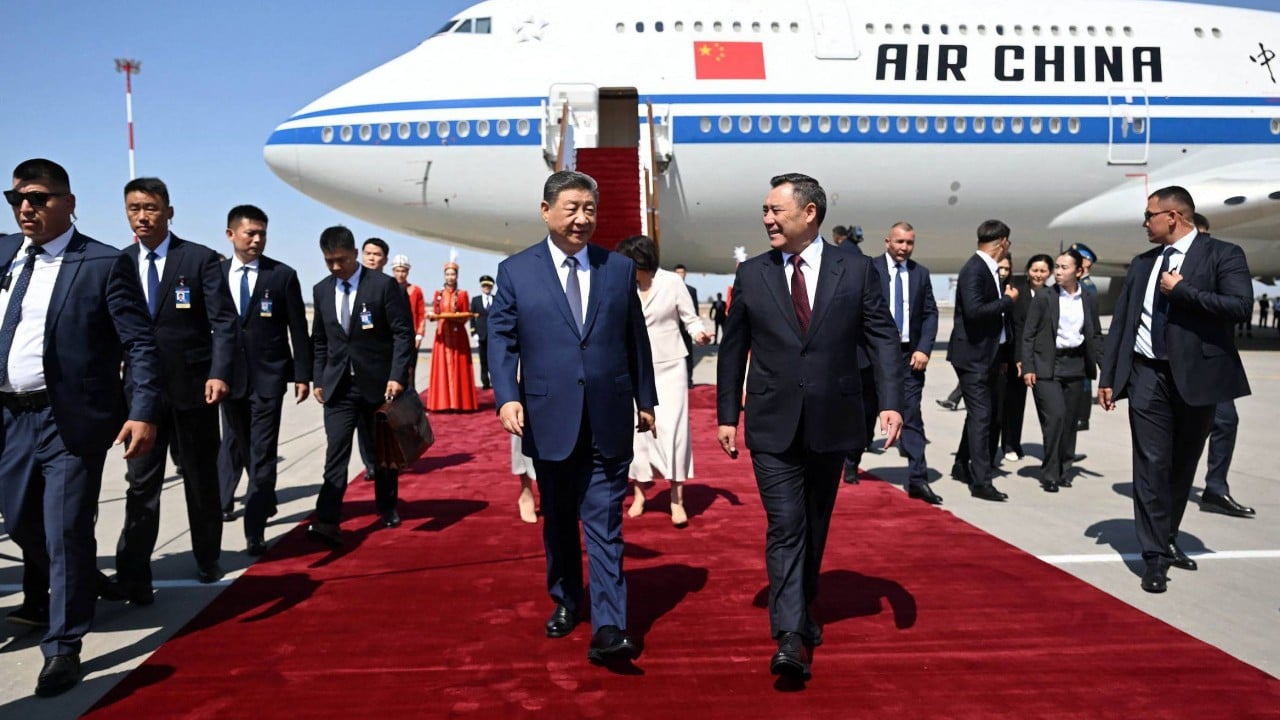
As global power dynamics shift and disputes over energy and grain supplies continue to disrupt the Middle East, Beijing's growing influence in Central Asia is expected to be a key focus of the upcoming Shanghai Cooperation Organisation (SCO) summit in Bishkek. The SCO, which was founded in 2001 by China and Russia, now includes four Central Asian states – Kazakhstan, Kyrgyzstan, Tajikistan, and Uzbekistan – along with Belarus, India, Pakistan, and Iran, and is preparing to celebrate its 25th anniversary.
According to Chinese analysts, the SCO summit offers a unique opportunity to assess the bloc's progress in moving beyond diplomatic signaling and to evaluate Beijing's ambitions for a more multipolar Eurasia. With Chinese President Xi Jinping in attendance, the spotlight will be on whether the SCO can shift from symbolic gestures to tangible action in key areas such as regional security, connectivity, energy, and digital cooperation.
The summit, which will be held over Monday and Tuesday, is themed "25 years of the SCO: together for sustainable peace, development and prosperity" and will focus on addressing a range of challenges, including Iran, Afghanistan, and food security. Analysts emphasize that China's increasing engagement with Central Asia is driven by the need to counterbalance the influence of the US-led West in a fragmented global order.
By deepening its ties with Central Asian partners, China aims to present a united front and project power and influence on the global stage. The SCO's strategic significance for Beijing lies in its geography, with the region serving as a crucial bridge between China, Russia, the Middle East, South Asia, and Europe. The construction of the China-Kyrgyzstan-Uzbekistan railway, which is poised to become a vital trade artery linking China to Central Asia and beyond, is seen as a strategic priority.
However, security concerns, particularly the vulnerability of the railway to terror attacks, are expected to be a major focus of the summit discussions. As the SCO expands, energy and food security are emerging as critical non-traditional security concerns, with disruptions to fuel supplies due to the Russia-Ukraine war and the impact of climate change on harvests.
Iran's ongoing conflict with the United States is also expected to receive close attention, given the strategic importance of the Strait of Hormuz for energy and grain shipments. The SCO's role in fostering economic and technological cooperation with Russia, the region's principal security partner, is also under scrutiny, as China's growing economic and technological presence raises questions about the balance of power in the Central Asian region.
Written by urgent.news from Reuters Business via SCMP's reporting — not their text. Machine-written — may contain errors; check the original before relying on it.