Why Japan’s hypersonic and underwater weapon plans might worry China
In its latest swipe at Tokyo’s military build-up, China singled out Japan’s plans to arm its submarine drones with long-range missiles and test hypersonic weapons in Australia. Analysts say those moves could threaten People’s Liberation Army amphibious groups and surface combatants within the “first island chain” – potentially affecting the PLA Navy’s ability to operate in the event of a Taiwan…
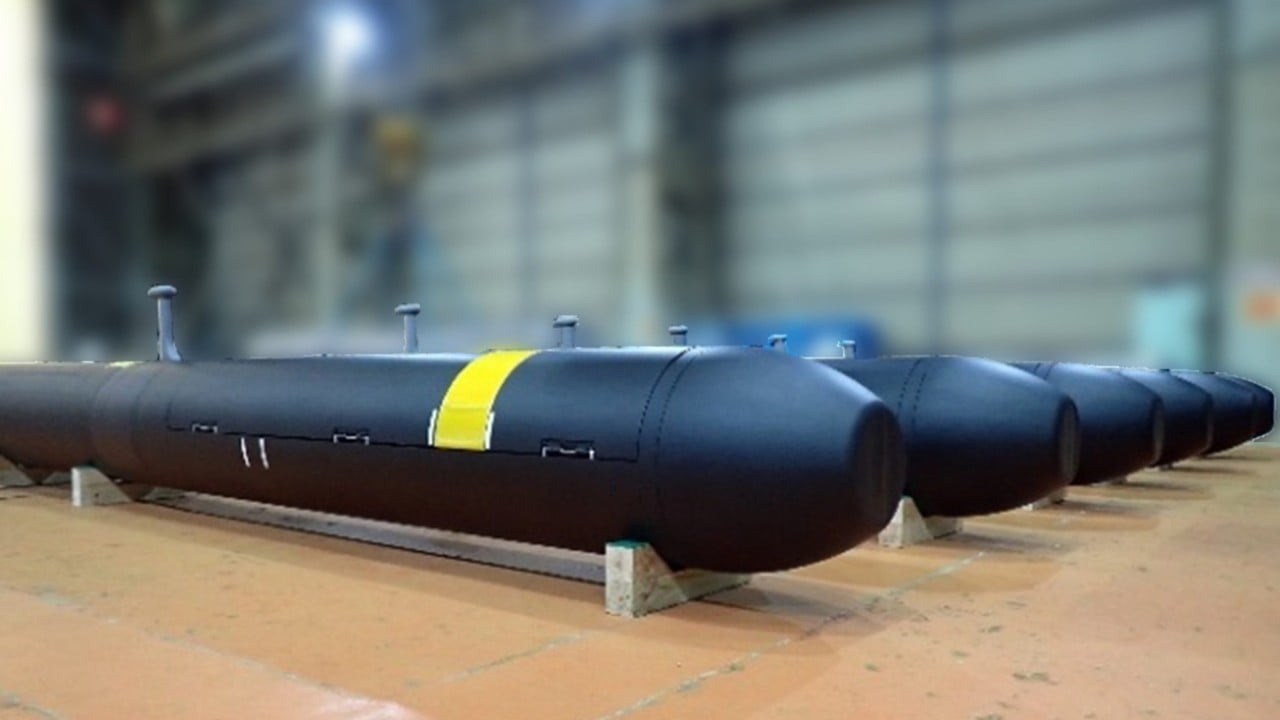
China criticized Japan's military plans, focusing on the development of long-range missiles for submarine drones and hypersonic weapons testing in Australia. Analysts claim these moves could threaten China's amphibious forces and surface combatants within the "first island chain" - the area stretching from Japan to Taiwan, the Philippines and Borneo.
Zhang Xiaogang, the Chinese defence ministry spokesman, accused Japan of "openly expanding its military arsenal", likening the moves to Japan's pre-World War II militarization. Japan's military capabilities have grown since adopting a "counterstrike capability" in its 2022 security strategy, allowing pre-emptive strikes in self-defense.
Japan has deployed long-range strike weapons like the Type-25 HVGP, which entered service in March, and continues to develop more advanced hypersonic weapons. Tokyo is also researching underwater-launched hypersonic missiles and unmanned underwater vehicles (UUVs) that could launch long-range missiles. These developments may pose a "persistent threat" to China's naval vessels in the region.
Timothy Heath, a defence researcher, noted that missile-armed UUVs could be harder to detect and more cost-effective for Japan, potentially overwhelming Chinese defences. China's concerns are understandable, given the speed and manoeuvrability of Japan's future hypersonic weapons and the potential for large-scale missile attacks on Chinese naval forces, which would significantly impact Beijing's military. This situation has led to growing tensions between the two nations over military capabilities.
Written by urgent.news from South China Morning Post's reporting — not their text. Machine-written — may contain errors; check the original before relying on it.
This story
This is one outlet's version. Read the fullest account.