Why Japan’s hypersonic and underwater weapon plans might worry China
In its latest swipe at Tokyo’s military build-up, China singled out Japan’s plans to arm its submarine drones with long-range missiles and test hypersonic weapons in Australia. Analysts say those moves could threaten People’s Liberation Army amphibious groups and surface combatants within the “first island chain” – potentially affecting the PLA Navy’s ability to operate in the event of a Taiwan…
In a recent display of military expansion, China criticized Japan's plans to arm submarine drones with long-range missiles and develop hypersonic weapons in Australia. Analysts warn that these initiatives could pose a threat to the People's Liberation Army's amphibious forces and surface combatants within the first island chain, which stretches from Japan to Taiwan, the Philippines, and Borneo.
The Chinese defense ministry spokesperson, Zhang Xiaogang, emphasized that Japan had "openly expanded its military arsenal" and drew comparisons to Japan's pre-World War II militarization. Japan has been rapidly increasing its long-range strike capabilities since adopting a "counterstrike capability" in its 2022 security strategy.
The country has already begun deploying domestically developed stand-off weapons, such as the Type-25 hypervelocity gliding projectile (HVGP), which entered service in March. Japan's hypersonic development is still in its early stages, with advanced systems like the Block 2 HVGP and a scramjet-powered hypersonic cruise missile (HCM) still under construction.
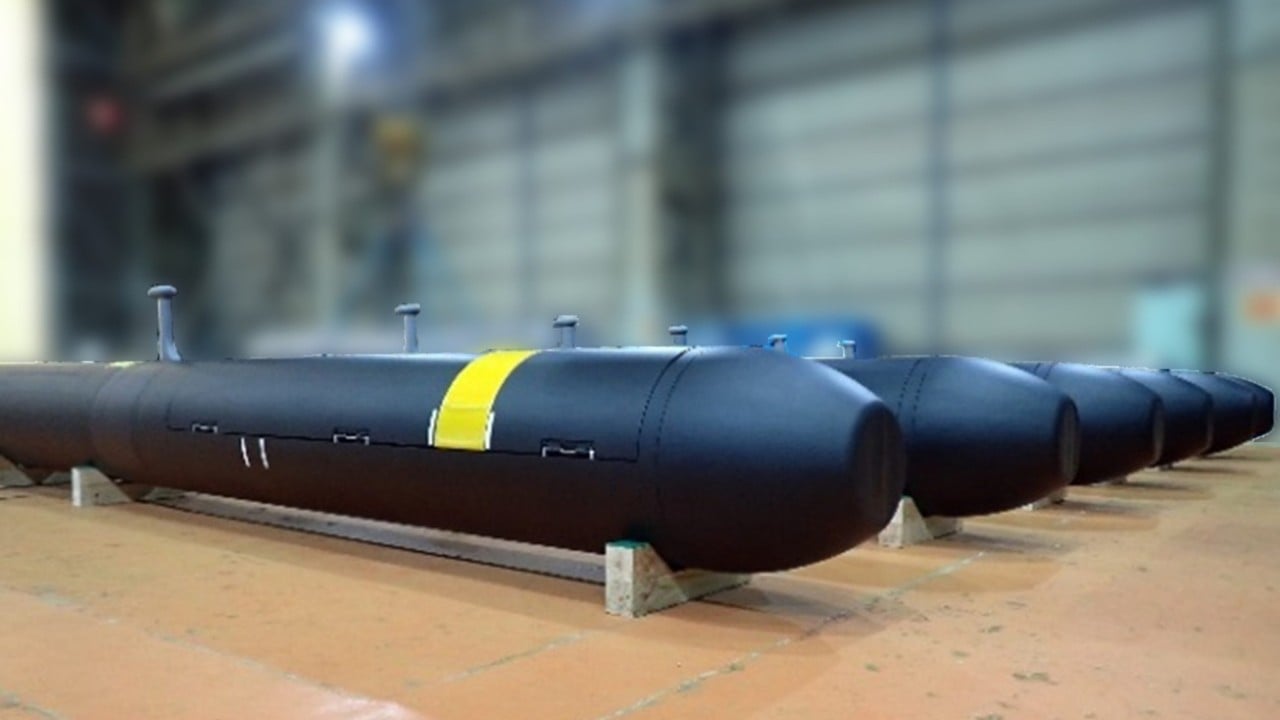
Japan is also exploring underwater capabilities, including the development of an underwater-launched hypersonic missile that could be fired from a crewed submarine. Additionally, Tokyo plans to research technology that would enable unmanned underwater vehicles (UUVs) to launch long-range missiles, potentially supplementing its smaller submarine fleet.
These developments could pose a "persistent threat" to PLA naval vessels operating around Japan's southwestern Nansei Islands or supporting a potential attack on Taiwan. Defense analyst Timothy Heath stated that missile-armed UUVs might be difficult to detect due to their quiet operation and unanticipated launch locations. He also noted that their lower cost could allow Japan to deploy them in greater numbers, potentially overwhelming a target's defenses.
Professor Christopher Hughes of the University of Warwick observed that China is "clearly irked" by Japan's development of these capabilities and likely fears their potential impact. Hughes pointed out that Japan's future hypersonic weapons could make it difficult to intercept, while large numbers of UUVs could also present challenges.
Hypersonic weapons could significantly extend Japan's strike range, potentially reaching targets on the Chinese mainland. However, Masashi Murano of the Hudson Institute cautioned that the value of Japan's hypersonic weapons may lie primarily in anti-ship strikes rather than land targets. Murano argued that Japan's missile-armed UUVs' limited missile capacity and difficulties in recharging at sea might make them less effective against China's dispersed and redundant ground targets.
The potential testing of hypersonic weapons in Australia by Japan, agreed upon in August between Japanese Defense Minister Shinjiro Koizumi and Australian counterpart Richard Marles, could complicate Chinese intelligence collection efforts due to the difficulty of monitoring activities in Australian missile ranges. Analysts suggest that the arrangement may also reflect the growing political and military tensions between the two nations.
Written by urgent.news from Reuters Business via SCMP's reporting — not their text. Machine-written — may contain errors; check the original before relying on it.