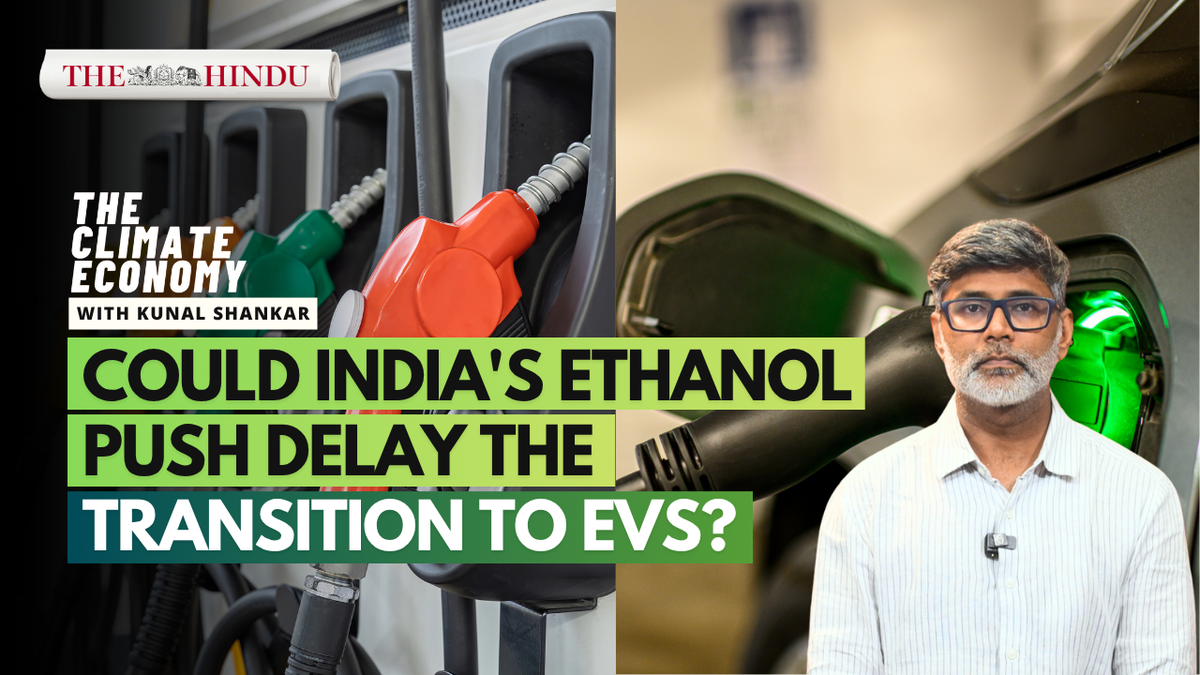
What’s the link between sugar, ethanol and India’s CAFE norms? | Climate Economy
Can ethanol and India’s new fuel-efficiency norms really drive the country’s energy transition? This episode of The Climate Economy examines the connection between ethanol blending, rising sugar prices, CAFE standards and electric vehicles, and asks whether India is building a genuinely new energy system or simply making existing technologies more efficient. From E20 fuel and sugarcane economics…
The recent developments in India's fuel efficiency standards, ethanol blending, sugar prices, and electric vehicles have sparked a debate about whether the country is truly transitioning to a new energy system or merely improving existing technologies. This analysis, from The Climate Economy, delves into the intricate relationship between these factors and their implications for India's climate and energy future.
E20 fuel, which contains 20% ethanol, has been a significant part of India's efforts to reduce its reliance on fossil fuels. However, the cost of sugarcane, the primary raw material for ethanol production, has been on the rise, driving up the price of ethanol itself. This has raised questions about the economic feasibility of E20 fuel and its impact on the overall energy transition.
The government's CAFE (Corporate Average Fuel Economy) standards, which aim to improve the average fuel efficiency of passenger vehicles, have also been a subject of scrutiny. Critics argue that these standards are primarily focused on improving the efficiency of conventional vehicles rather than encouraging the adoption of electric vehicles (EVs).
This has led to concerns that India's energy system may be merely making incremental improvements to existing technologies rather than making a genuine shift towards a more sustainable future.
EV adoption in India has been relatively slow, partly due to the high cost of electric vehicles and the lack of charging infrastructure. However, with the government's push towards CAFE standards, there is optimism that this could change in the coming years. Improved fuel efficiency could make EVs more viable and attractive to consumers, potentially accelerating their adoption and contributing to India's energy transition.
The debate over ethanol, sugar prices, CAFE standards, and EV adoption highlights the complex interplay between different factors in India's energy landscape. While ethanol blending is a crucial component of India's climate strategy, the rising cost of sugarcane presents significant challenges. Similarly, while CAFE standards have the potential to drive EV adoption, their effectiveness will depend on the availability of affordable EVs and adequate charging infrastructure.
The ultimate question remains: is India building a genuinely new energy system or simply making existing technologies more efficient?
Written by urgent.news from The Hindu - Sci-Tech's reporting — not their text. Machine-written — may contain errors; check the original before relying on it.
This story
This is one outlet's version. Read the fullest account.