India’s plan to begin natural-capital and climate-risk accounting of its blue economy | Explained
By assigning a monetary value to marine fish stocks (found in both coastal and inland within exclusive economic zones or EEZs), India is moving towards measuring the wealth contained in oceans.
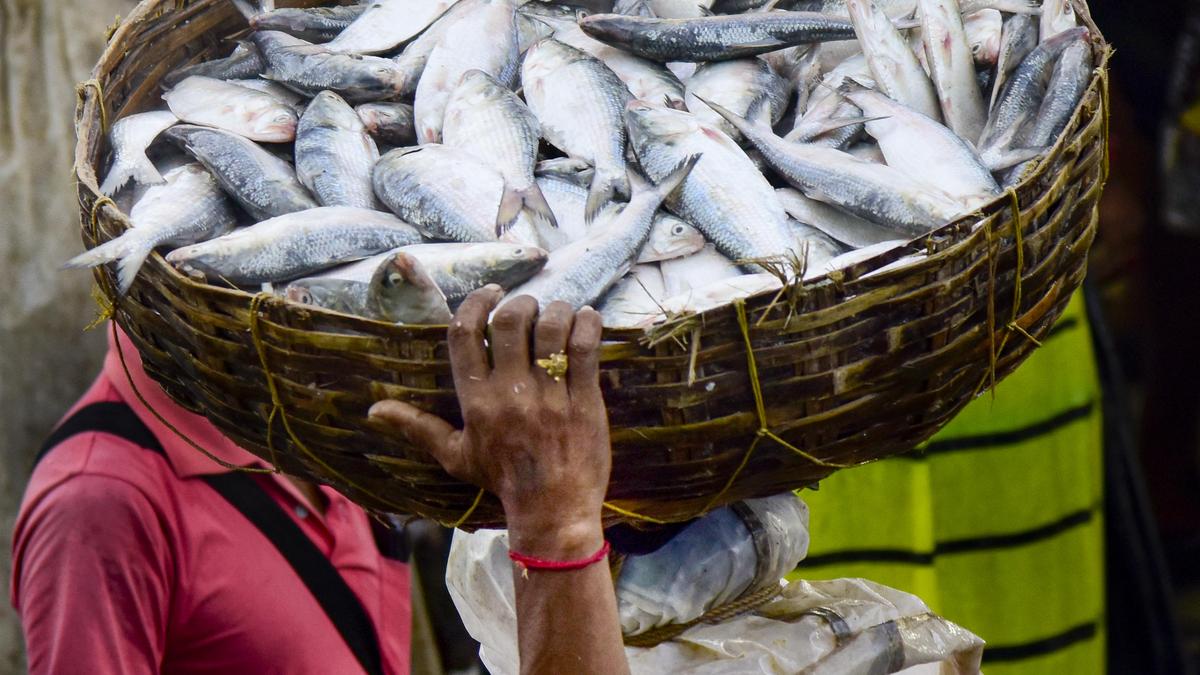
India is set to begin an experimental approach to measure its blue economy's natural capital and climate risks by assigning monetary value to its marine fish resources, according to a concept paper from the Ministry of Statistics and Programme Implementation (MoSPI). The country, the second-largest fish-producing nation globally, accounts for 8% of global fish production, supporting approximately 30 million livelihoods and contributing significantly to exports.
The MoSPI's idea is based on the U.N. System of Environmental-Economic Accounting (SEEA), aiming to integrate marine natural capital into India's national accounts. This is a significant shift in measuring natural resources, as India is one of the few countries—alongside Australia, Netherlands, Norway, Canada, U.K., France, U.S., and New Zealand—attempting this integration.
Currently, the fishing industry supports 77% of India's total fish production, with marine fisheries contributing ₹1.76 lakh crore (1.09%) to the national gross value added in 2023-24. The sector's exports have grown annually by 3.11%, reaching 1.7 MMT valued at ₹62,408.45 crores in FY25.
However, aggregate production figures do not reveal the changing value of individual species, regional fish stocks, or the long-term impact of fishing pressure and environmental change. If successful, India would join a select group of nations in integrating blue natural capital into national accounts.
The SEEA-Fisheries' guidance is currently outdated, with only a few countries compiling monetary asset accounts for aquatic resources. India's EnviStats India programme has been compiling environmental accounts since 2018, but lacks a regular, comprehensive blue economy GDP series.
India's vast coastline, EEZ, and rich marine biodiversity offer immense potential for a $100-billion blue economy by 2030. The experiment could help estimate the economic cost of climate-induced changes in marine resources and guide investments in fishing capacity, stock restoration, or deep-sea fisheries.
Written by urgent.news from The Hindu - Sci-Tech's reporting — not their text. Machine-written — may contain errors; check the original before relying on it.