Vineyard skips irrigation and pesticides for 20 years; organic matter doubles
A Spanish vineyard study revealed significant soil health improvements over two decades. Long-term vegetation cover doubled topsoil organic matter compared to tilled areas. This practice enhanced soil porosity and biological activity in dry conditions. The findings suggest reduced soil disturbance benefits water-limited vineyards. Allowing plants to remain strengthens soil function under…
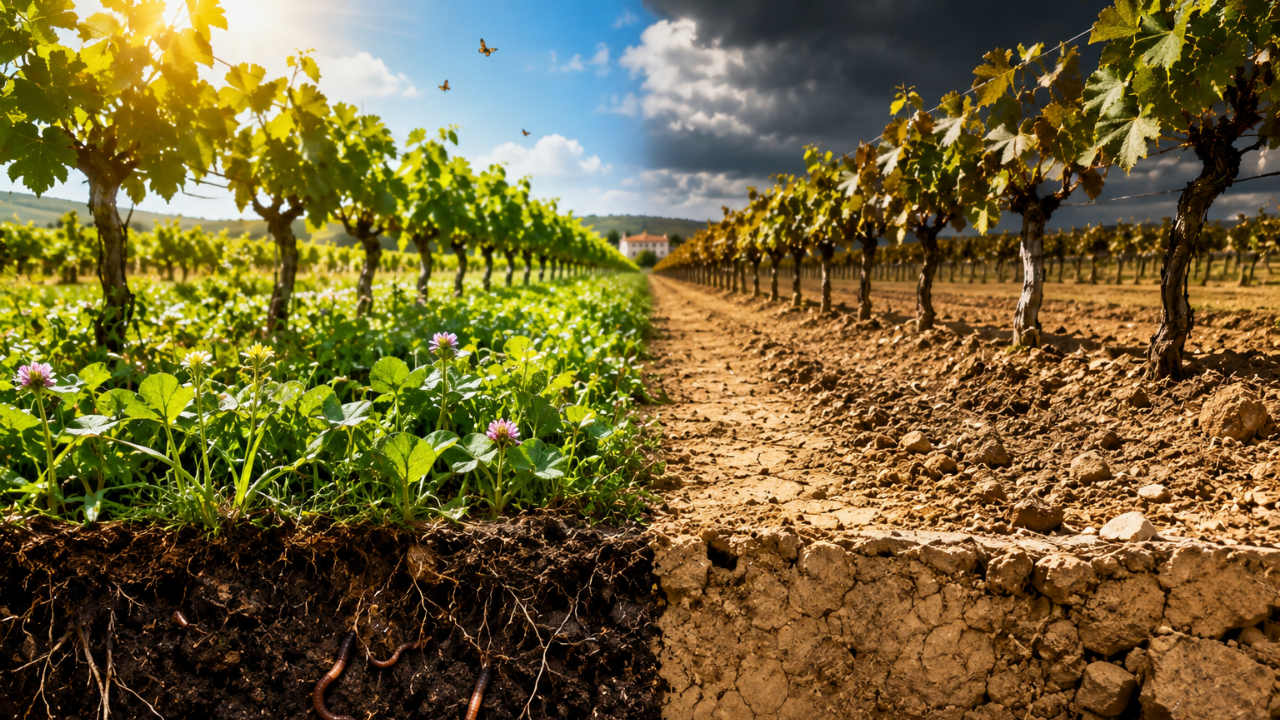
For over two decades, a vineyard in Spain maintained vegetation cover instead of tilling the soil, leading to a significant increase in organic matter. A study published in Frontiers in Soil Science compared this rainfed vineyard with a neighboring one managed by conventional tillage. The vegetation-free tilled soil contained only 0.83% organic matter, while the cover-cropped soil had an average of 1.74% organic matter, more than doubling the content.
Organic matter, derived from decomposing plant and animal material, enhances soil structure, nutrient cycling, and water behaviour. The study also noted that cover-cropped soil had 51.2% porosity at 10-30 cm depth, compared to 44.0% in tilled soil, indicating better soil structure and biological activity. Cover crops can mitigate soil degradation, erosion, and maintain soil fertility by adding organic material, reducing soil disturbance, and preserving soil structure.
However, the study acknowledges that cover cropping may not be suitable for all vineyards, as it could compete with grapevines for water in dry climates, potentially reducing vine growth during severe drought conditions. Still, the Spanish vineyard serves as a real-world example of how maintaining spontaneous vegetation without irrigation or pesticides can improve soil health over time, providing valuable insights for vineyards facing water scarcity and soil degradation.
Written by urgent.news from Times of India's reporting — not their text. Machine-written — may contain errors; check the original before relying on it.