This famous architect died before finishing his last building. Then his son stepped in to help
The final project of César Pelli—the architect behind major buildings such as San Francisco’s Salesforce Tower, Kuala Lumpur’s Petronas Towers, and Los Angeles’s Pacific Design Center—has been completed. But unlike these large-scale skyscrapers and monumental buildings that catapulted him to fame, it’s a modestly sized space that melts into the landscape. For Pelli , who died in 2019 at the age…
César Pelli, renowned architect responsible for iconic structures like San Francisco’s Salesforce Tower and Los Angeles’ Pacific Design Center, passed away in 2019 at the age of 92 before he could complete his final project. However, his son Rafael Pelli stepped in to help bring the project to fruition.
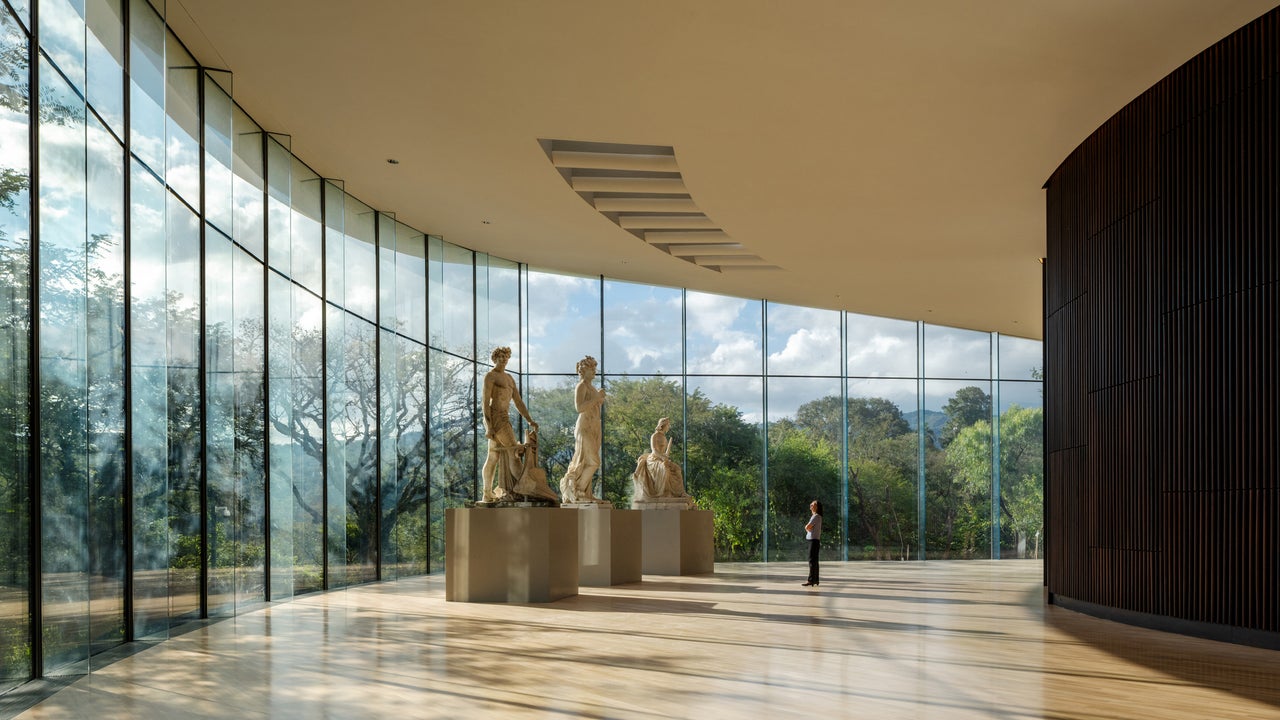
The final work of the architect is a modest 32,000-square-foot museum located in San Salvador de Jujuy, a province in northwestern Argentina. This museum is dedicated to Lola Mora, a celebrated Beaux Arts sculptor who was once one of Argentina's most prominent artists in the early 20th century.
Mora’s sculptures, six marble figures representing human virtues such as liberty, progress, and justice, were originally installed at Argentina's National Congress building in Buenos Aires. However, after a conservative government took power in 1918, Mora’s career was abruptly ended, and her sculptures were removed and left outdoors, where they began to deteriorate.
It was only a decade ago that the governor of Jujuy province sought to reunite Mora’s sculptures and bring them indoors. He approached César Pelli directly to commission the museum to display these works.
Pelli embraced the project and recruited his longtime collaborators, Susana La Porta Drago and her husband Axel Zemborain, to lead the project. Although there was some initial resistance from Pelli, who did not want the sculptures to be enclosed, the governor successfully convinced him to alter the design after presenting expert documents proving the sculptures would deteriorate if left outdoors.
Once completed, the museum frames Mora’s sculptures and brings her nearly forgotten story back to life. The sculptures, brought together after more than a century, are displayed in a curved panoramic gallery, surrounded by a glass-walled main gallery floating visitors into the canopy of the surrounding forest.
Written by urgent.news from Fast Company's reporting — not their text. Machine-written — may contain errors; check the original before relying on it.