Svakere enn ventet fra Bakkafrost
Lakseoppdretterens driftsfasit i andre kvartal tynges av tap i Skottland.
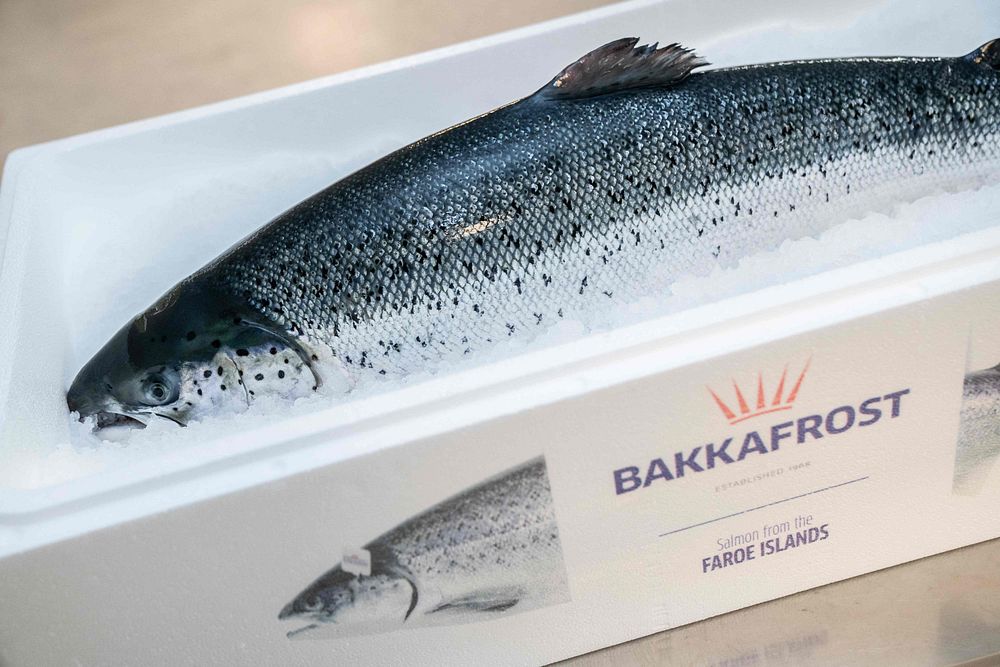
Bakkafrost, a company operating in the Faroe Islands and Scotland, released its fourth-quarter report on Monday morning. The company's financial performance was primarily driven by a negative net income of 406 million Danish kroner on biological assets. The operational EBIT, according to Bloomberg, came in weaker than expected at minus 139 million Danish kroner.
This was offset by a positive EBIT of 411 million Danish kroner in the Faroe Islands. Overall, Bakkafrost reported a net income of 411 million Danish kroner for the quarter.
However, Bakkafrost expressed disappointment with its performance in Scotland. The company's slaughtering volume in Scotland was significantly lower, and biological challenges, such as those affecting a group of fish imported from outside sources, had a notable negative impact on the results. Despite these challenges, Regin Jacobsen, the company's top executive, highlighted that biological development was stable at most other locations.
In the Faroe Islands, the financial performance was boosted by strong biological and operational growth. Slaughtering volumes increased by 67 percent, average slaughter weight remained high, and operating costs fell at the sites. This reflects the value of good biological control, disciplined operations, and the company's integrated value chain.
Bakkafrost noted that the "salmon market remained challenging" overall. Global supply increased by seven percent, partially due to inventory movements, and salmon prices fell considerably from the first quarter. However, demand remained solid in their key markets. As supply growth is expected to slow down significantly in the second half of 2026, Bakkafrost anticipates the market balance to improve.
The company is collectively satisfied with the clear improvement in operational development in the fourth quarter. Overall, the company's total slaughter volume for the Faroe Islands and Scotland was 29,894 tons of live weight in the fourth quarter. For the second half of 2026, a tighter salmon market is expected. Globally, salmon slaughtering is expected to fall by around 1 percent compared to the second half of 2025.
Supply movements are expected to see global supply increase by around 2 percent in the second half of 2026. For 2026, global supply is expected to grow by around 2-3 percent excluding inventory movements and around 6 percent including inventory movements. For 2026, the Faroe Islands are expected to see a slaughter volume of around 97,000 tons of live weight.
Scotland is expected to see a slaughter volume of around 20,000 tons, leading to a combined slaughter volume of around 117,000 tons.
Written by urgent.news from E24 Norway's reporting — not their text. Machine-written — may contain errors; check the original before relying on it.