Study: Peptides can form well-defined structures in harsh, Venus-like conditions
New research offers support for the possibility that complex biological molecules could exist in the highly acidic environment of Venus’s cloud layer.
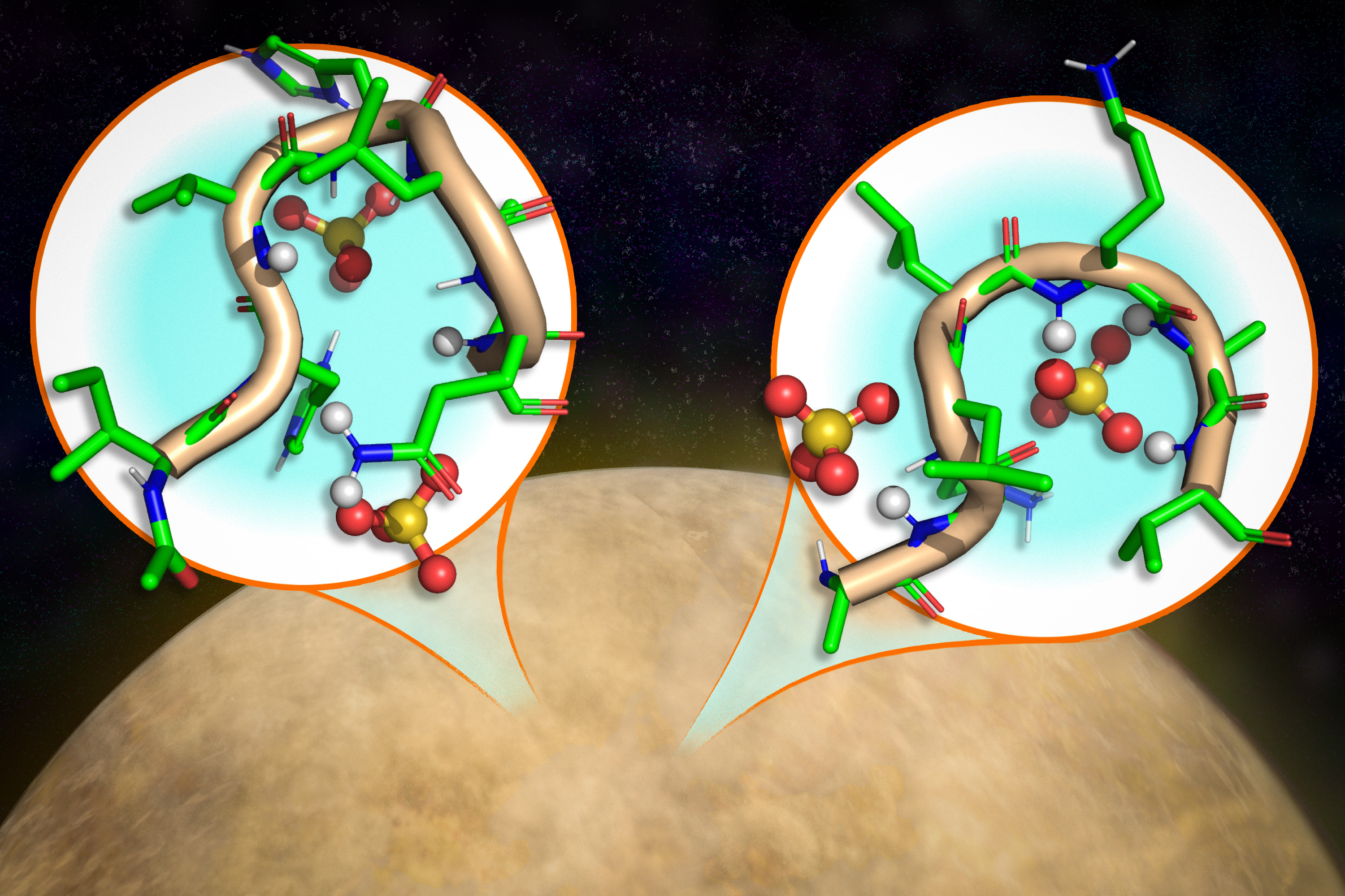
Scientists have discovered that short peptides can maintain well-defined structures in the highly acidic clouds surrounding Venus, challenging previous assumptions about the planet's habitability. The study, conducted by researchers from MIT, reveals that these peptides can fold into shapes that may enable biological functions, even in the corrosive environment of Venus's sulfuric acid clouds.
Mei Hong, an MIT professor of chemistry and co-senior author of the study, explains that if peptides find their way to the cloud layer, they will be stably preserved. Sara Seager, another co-senior author and planetary scientist, highlights the significance of these findings, suggesting that scientists should consider a wider range of planetary conditions in their search for life.
The research, published in the Proceedings of the National Academy of Sciences, indicates that peptides could potentially serve as building blocks for simple life forms if they can survive Venus's harsh cloud environment.
Written by urgent.news from MIT News Research's reporting — not their text. Machine-written — may contain errors; check the original before relying on it.
This story
This is one outlet's version. Read the fullest account.