Recording a rainforest before Indonesia’s new capital changes it
Founder’s Briefs: An occasional series where Mongabay founder Rhett Ayers Butler shares analysis, perspectives and story summaries. In the forests around Pemaluan in East Kalimantan, Indonesian Borneo, researchers led by Wendy Erb at the Cornell K. Lisa Yang Center for Conservation Bioacoustics in the U.S. have placed audio recorders on mountains, beside caves, and among […]
In the forests surrounding Pemaluan, East Kalimantan, Indonesia, researchers have been diligently recording the sounds of the rainforest. Under the leadership of Wendy Erb from the Cornell K. Lisa Yang Center for Conservation Bioacoustics, a diverse array of audio recorders has been placed in various locations, including mountains, caves, and mangroves.
Over the course of 18 months, these devices have captured the calls of gibbons, frogs, hornbills, insects, and other wildlife, with the primary goal of establishing a baseline before the construction of Nusantara, Indonesia's new capital city, commences.
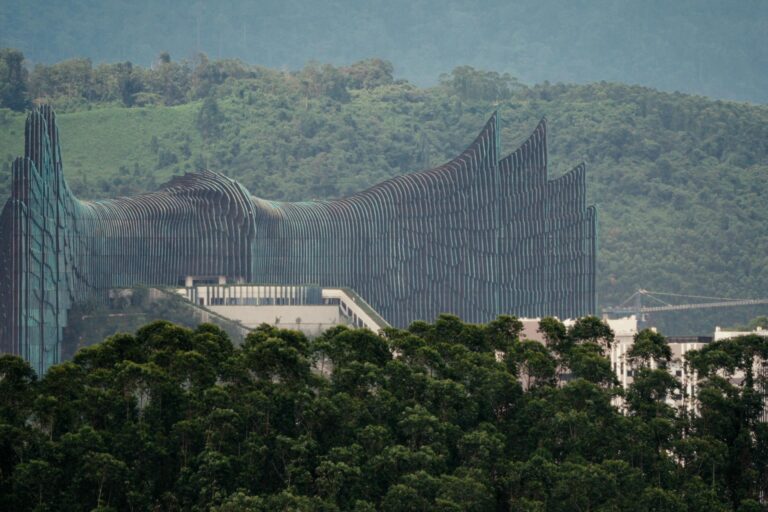
Nusantara, situated in East Kalimantan province, is being developed to alleviate some of the congestion and pressure caused by land subsidence in Jakarta. The city is envisioned as a "smart forest city," where development and biodiversity are intended to coexist harmoniously. However, as construction progresses, roads, apartment buildings, a hotel, and a presidential palace have already emerged, accompanied by the ever-increasing sounds of chainsaws.
The ongoing recording efforts will enable scientists to monitor changes in the environment over time, potentially identifying areas where wildlife remains undisturbed, where populations decline, and whether development is driving animals to migrate to other regions.
Furthermore, the project also endeavors to capture the knowledge possessed by the Indigenous Balik people, who have long utilized animal calls to interpret their surroundings. For instance, gibbons serve as an indicator of dawn, and in certain unusual circumstances, are believed to serve as warnings of death within the village. Additionally, the great argus (Argusianus argus), a large pheasant native to the island's forests, is one of the many fascinating species being documented.
Written by urgent.news from Mongabay's reporting — not their text. Machine-written — may contain errors; check the original before relying on it.