Planting crops in fields of solar panels is more efficient, protects the plants and helps keep workers cool, study finds
A new model simulates the benefits of agrivoltaic farming, in which solar panels and crops share the same land.
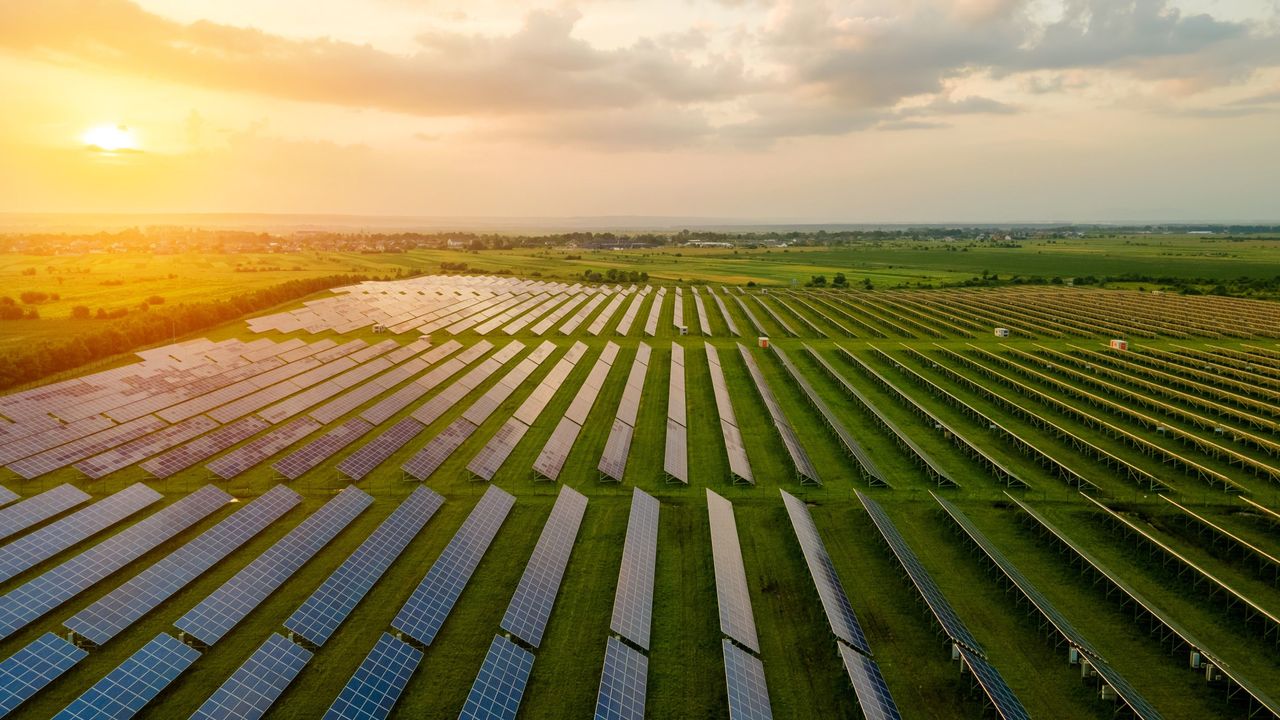
Agri-voltaics, the practice of growing crops around or beneath solar panels, promises to optimize land usage while harnessing renewable energy. Recent research indicates this dual-purpose system not only preserves crops but also mitigates the heat experienced by both plants and workers. A newly developed model simulates the microclimate within agrivoltaic systems, considering energy, air, and water dynamics, as well as carbon dioxide absorption.
Utilizing real-world data from Davis, California, and Chicago City, Minnesota, researchers tested the model in Princeton, New Jersey. Under simulated conditions akin to a humid summer day, tomatoes cultivated beneath solar panels were notably cooler, with leaf temperatures 1.84°C lower on average and up to 7.56°C less during the hottest part of the day, leading to a 22.4% reduction in water loss.
Despite receiving 47% less sunlight, these crops absorbed 31% less carbon, demonstrating that cooler conditions partially compensated for reduced photosynthesis. Additionally, the panels themselves were 5.6°C cooler than their soil counterparts, allowing them to regain 15% of lost efficiency in warmer weather. Perceived temperatures for human workers dropped by 4.46°C during work hours, underscoring significant health and safety advantages.
The researchers propose this model as a tool for evaluating the potential benefits of agrivoltaic systems across various crops and climates.
Written by urgent.news from Live Science's reporting — not their text. Machine-written — may contain errors; check the original before relying on it.