Punjab Assembly passes controversial anti-terror law
Opposition describes Punjab Anti-Terrorism (Amendment) Bill, 2026 as black law
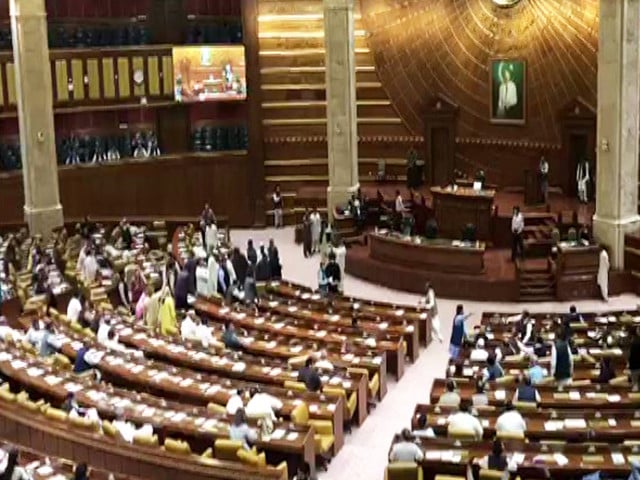
Punjab's legislative body approved the Punjab Anti-Terrorism (Amendment) Bill, 2026 on Monday, despite opposition lawmakers boycotting the session. During the debate, Speaker Malik Muhammad Ahmad Khan and Opposition Leader Moin Riaz Qureshi clashed over the law's legality and constitutionality. Khan confirmed the bill could be placed on the agenda, citing Article 142 of the Constitution regarding criminal-law jurisdiction.
He emphasized the high casualty toll of terrorism in Pakistan, including notable figures and attacks on religious sites, arguing that terrorists had often escaped justice due to insufficient witness protection and security. Khan noted that even Western democracies have established anonymous courts for extreme terror threats, urging the opposition to propose constructive amendments instead of obstructing the bill.
Qureshi vehemently opposed the "draconian" legislation, alleging it targeted political adversaries, particularly PTI leaders and activists, similar to prior defamation and National Accountability Bureau laws. He questioned a provision granting a Grade-20-designated official the power to advise the Lahore High Court chief justice on classifying cases as "special security cases."
Opposition member Ahmar Rashid Bhatti cited a 1909 British colonial-era act, criticizing the law's potential violation of Article 10-A of the Constitution, which ensures a fair and transparent trial. After the heated discussion, opposition members protested by walking out and chanting slogans. Waqas Mann, a treasury bench member, pointed out a lack of quorum but managed to maintain it.
With the opposition absent, their amendments were rejected, and the House voted to approve the Anti-Terrorism (Amendment) Bill, 2026. The bill introduces a new Section 21AAA into the Anti-Terrorism Act, 1997, creating a mechanism for "special security cases" where participants may require extraordinary protection. A confidential officer with at least BS-20 rank could declare a case or class of cases as a special security case, prompting the Lahore High Court chief justice to assign the case to an Anti-Terrorism Court judge.
The identities of judges, prosecutors, defense counsel, police officers, witnesses, and others involved in these proceedings would remain undisclosed. Judicial orders would bear official titles rather than judge names, while witnesses would be identified by codes issued by the designated authority. Proceedings could take place at secure locations or through video links, even from prisons.
The proposed provision would also permit the government to implement additional security measures deemed appropriate.
Written by urgent.news from The Express Tribune - Pakistan's reporting — not their text. Machine-written — may contain errors; check the original before relying on it.
This story
This is one outlet's version. Read the fullest account.