Playing against climate risk
Climate scientist Sai Ravela is using games to help coastal communities find creative adaptations to climate change.
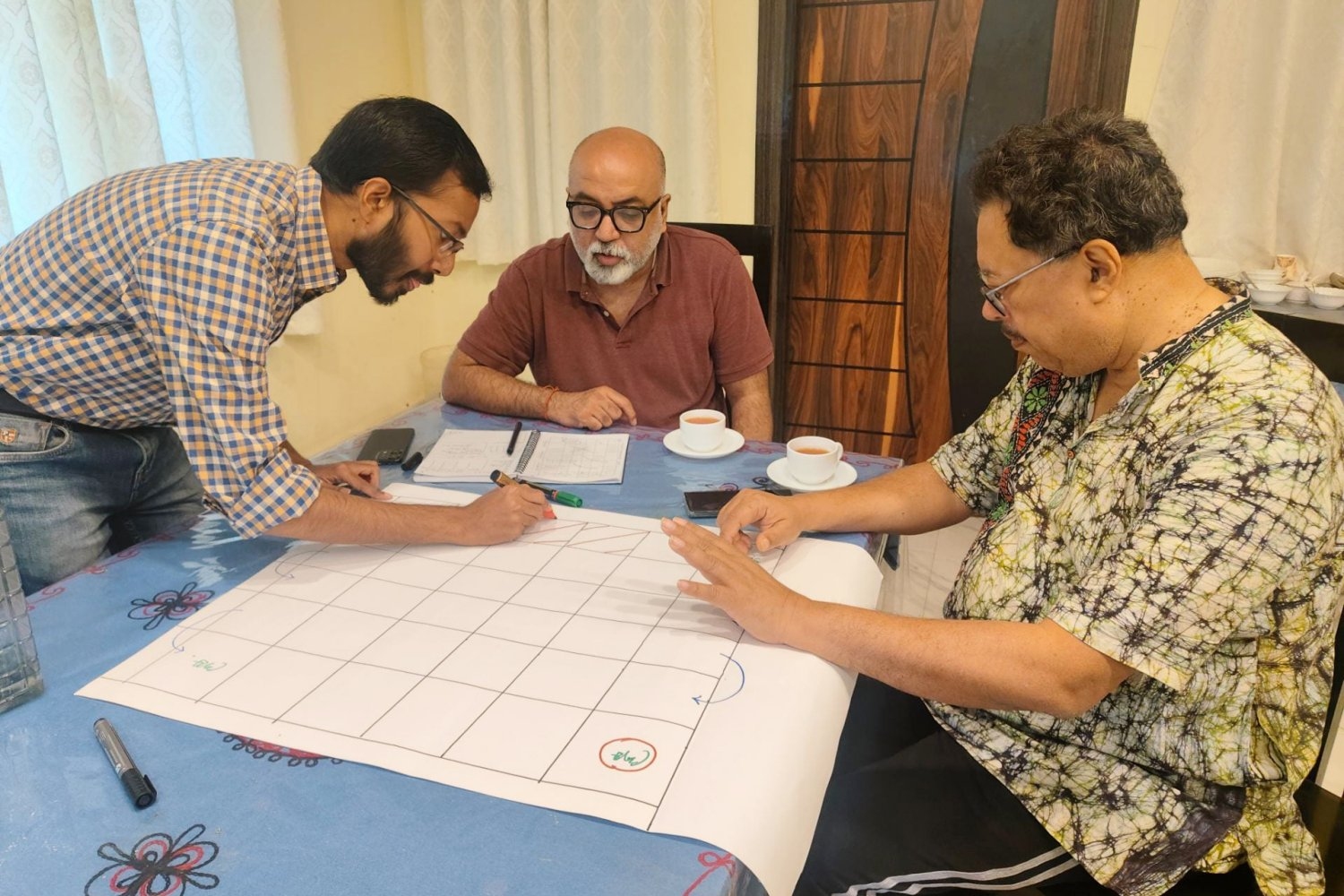
Sai Ravela, a principal research scientist at MIT's Department of Earth, Atmospheric and Planetary Sciences, leads a team working on an innovative project inspired by climate risk. Funded by a 2025 Abdul Latif Jameel Water and Food Systems Lab India Grant, the project uses game-based computer models to help communities develop sustainable solutions to their specific environmental challenges.
The team, including postdoc Anamitra Saha and collaborators from various institutions, focuses on agricultural decision-making during climate stress. They employ downscaling techniques to convert large-scale climate projections into detailed local projections, creating hazard maps that estimate the risk of extreme weather events like flooding, drought, heat waves, and salinity-related stress.
To bridge the gap between experts and affected communities, Ravela developed a game-based approach. Starting with a simple "snakes and ladders" game, the project evolved into a mixed game with a computer-generated system, and finally a detailed computer simulation playable on a cellphone app. This progression allowed players to engage with hazard maps directly and explore different strategies for climate resilience.
The team conducted informal community-engagement sessions, refining the game based on local knowledge and conditions. The three villages in the Sundarbans region of India and a village in Bangladesh were selected for testing the game. Ravela's project reveals that integrated strategies, combining multiple interventions such as mangrove restoration, canal excavation, groundwater recharge, diversified agriculture and fisheries, and solar panels integrated into farming, are more effective than isolated approaches in mitigating climate risks.
Written by urgent.news from MIT News Research's reporting — not their text. Machine-written — may contain errors; check the original before relying on it.