On women, Manusmriti has a context. Don’t go by colonial interpretation
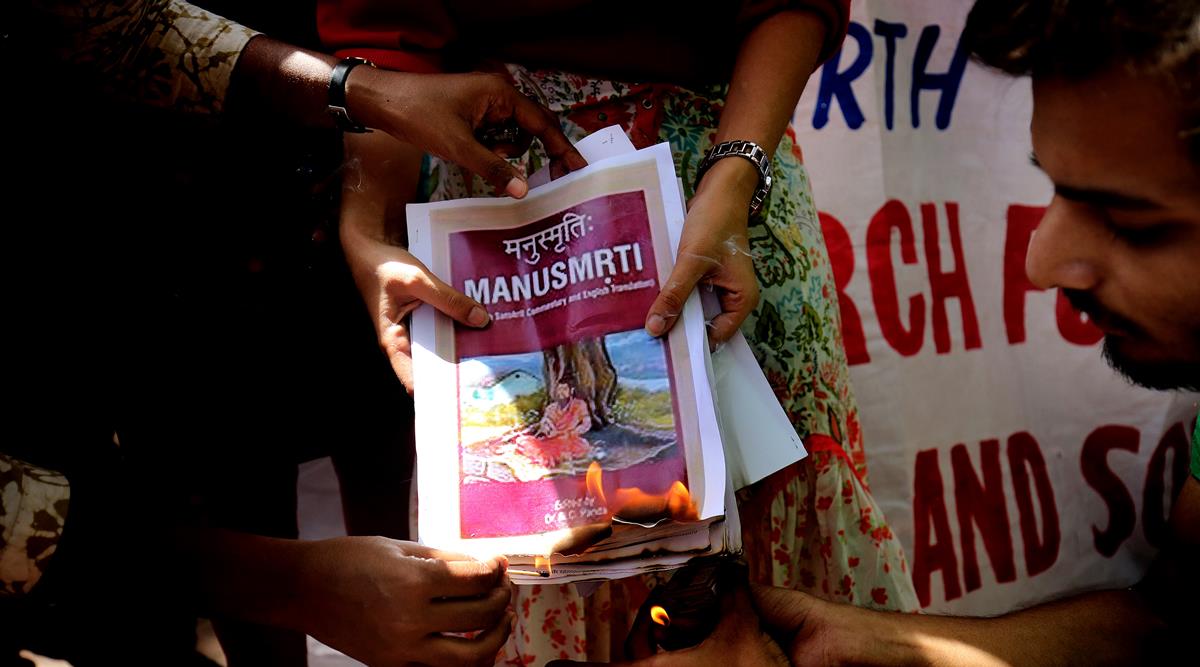
A popular politician recently made a reference to a verse from Manusmriti, a classical Hindu legal text, during a speech at a university in Pune. The verse in question discusses the duty of a woman's father, husband, and son to protect and ensure her safety throughout her life. However, there is a debate over whether this verse reflects a negative view of women's status.
The author, a law professor with expertise in ancient Indian law, argues that the interpretation of Manusmriti as a discriminatory text towards women is influenced by colonial-era translations. The original Sanskrit text uses the term "raksha," which means protection and safety. The author suggests that the English translation commonly used, "undeserving" or "unfit for independence," is a direct result of these translations.
The author emphasizes that ancient texts like Manusmriti should be interpreted within their historical and cultural context. Just as Roman law cannot be considered Christian law, ancient Indian law should not be labeled as "Hindu law." The author asserts that these texts represent the traditional law of India, inherited by all citizens today.
The verse in question is part of a larger discussion about dharma, or the divine code of conduct for human life. It points out that the concept of maintaining a woman's safety and well-being is consistent with modern legal standards. The author concludes that the verse should not be viewed as endorsing lifelong subjugation of women, but rather as a reflection of the cultural values of its time.
Written by urgent.news from The Indian Express's reporting — not their text. Machine-written — may contain errors; check the original before relying on it.