Nepal’s Communal Fault Lines Expose A Deeper Political Crisis
Nepal’s recent communal violence is more than a local law-and-order failure. Clashes in Sunsari and Siraha in the southern plains, triggered by a dispute during a Hindu religious event and involving Hindu and Muslim groups, left at least three people dead and around 25 injured, forcing curfews and security deployment. The violence was contained, but it exposed a dangerous fault line in a country…
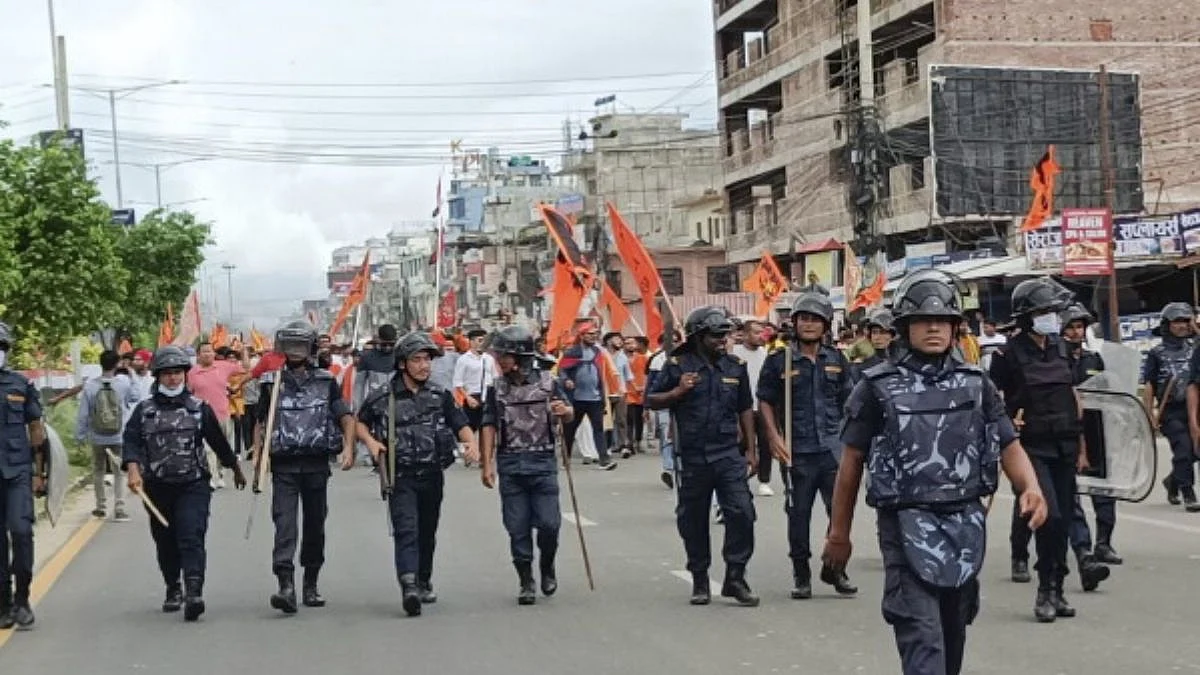
Nepal's recent wave of communal violence is more than just a local law-and-order failure; it reveals a deeper political crisis within the country. Recently, clashes occurred in Sunsari and Siraha, in the southern plains, following a dispute during a Hindu religious event involving both Hindu and Muslim groups. At least three individuals lost their lives and around 25 were injured, leading to curfews and increased security measures.
Although the violence was eventually contained, it highlights a dangerous fault line in a nation traditionally known for coexistence. Additionally, the intersection of religious tensions with identity politics, institutional weaknesses, and disappointment with Prime Minister Balendra Shah has further complicated the situation.
Prime Minister Balendra Shah's inability to swiftly contain the communal violence has exposed significant weaknesses in his new government. His delayed political response, administrative inexperience, and excessive reliance on security measures after the situation had already escalated contributed to the crisis. Initially, Shah seemed silent on the matter, allowing a local dispute over religious flags and loud music to escalate throughout the Madhesh region.
This initial hesitation reinforced doubts about his ability to manage crises at the national level, especially as the government already faces criticism for delayed responses, executive overreach, and weak institutional coordination.
The immediate challenge for Nepal is not just to restore peace on the streets, but to prevent communal mistrust from becoming a permanent political fault line. The underlying mistrust often stems from competition over public space and religious expression. Moreover, social media plays a role in accelerating such incidents, with rumours, provocative videos, and unverified claims spreading faster than the administration can respond.
Once such a confrontation occurs, it can quickly become a broader narrative of religious victimhood. While curfews may stop a riot, they cannot repair the deep-rooted mistrust.
The government's response to the violence raises further questions. Although security forces eventually restored order, treating the violence as merely a law-and-order issue overlooks its deeper significance. Curfews can stop a riot, but they cannot mend the underlying mistrust. Nepal's greatest casualty could ultimately be its social fabric.
Communal peace in the Tarai region has depended not only on institutions but also on everyday interaction, shared economic interests, and local accommodations. Once neighbors begin viewing one another primarily through religious identities, ordinary disputes can take on an explosive dimension. The cycle of retaliation could be encouraged by Hindu-Muslim rhetoric, leading to segregation and the hardening of identities. If communal polarization persists, it could create another layer of fragility in Nepal's society.
The violence has also reignited the debate over Nepal's political future. Should the country remain a secular republic, or should it return to its earlier status as a Hindu state? Hindu nationalist groups are increasingly advocating for the restoration of Hindu Rashtra status, while secular and republican forces view such a move as a threat to constitutional pluralism.
The danger is that this ideological debate could become a street confrontation, with Hindu groups portraying clashes as evidence that the secular state cannot adequately protect majority traditions, while secular forces fear that majoritarianism could marginalize minorities. Prime Minister Shah faces the challenge of preventing the state from becoming an instrument of either camp, ensuring that protection of Hindu religious freedoms goes hand in hand with equal citizenship and security for Muslims and other minorities.
Written by urgent.news from Free Press Journal's reporting — not their text. Machine-written — may contain errors; check the original before relying on it.