Nepal-Tibet disaster: Singapore to send police officers specialising in disaster victim identification
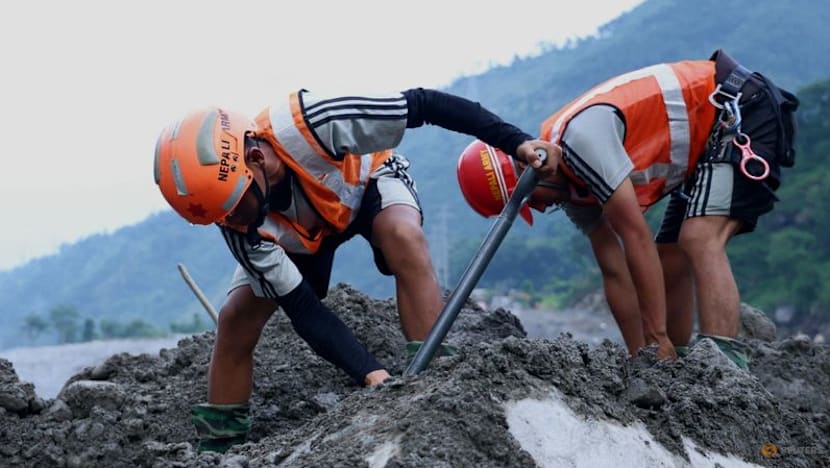
Beijing, China has penalized 10 individuals for spreading "online rumors" concerning the Nepal-Tibet disaster, as the country intensifies its anti-misinformation campaign. The Chinese embassy in Nepal has also publicly dismissed "fake news" regarding the disaster's origin and the provision of adequate warnings. A catastrophic flood resembling a tsunami struck the Himalayan region on August 26, resulting in extensive damage to communities across the border.
As of Monday, August 31, the death toll had risen to over 900, with approximately 4,800 people still missing. On Monday, the cybersecurity protection bureau under China's Ministry of Public Security announced 10 cases, asserting their commitment to combating the dissemination of "false disaster information" that could mislead the public and disrupt online order.
The cases primarily revolved around social media posts alleging higher casualty counts in Tibet, including claims of thousands of deaths or additional missing individuals than officially reported. All 10 individuals have been subjected to administrative penalties, though the specific punishments and platforms used to disseminate the claims remain undisclosed.
Under Chinese law, individuals who intentionally spread misinformation or falsely report dangers, epidemics, disasters, or police alerts, thereby disrupting public order, can face up to 10 days in detention and a fine of up to 1,000 yuan (approximately $149). Those found to be fabricating information about "false dangers," epidemics, disasters, or police alerts, and disseminating it via social media networks, may be imprisoned for up to three years.
In extreme cases, offenders could receive up to seven years in prison. The Chinese embassy in Nepal has explicitly rejected two claims circulating online, alleging that China had failed to issue an early warning to Nepal, leading to significant casualties on the Nepali side, and that a geological disaster dam collapse on the Chinese side had caused substantial losses in Nepal.
The embassy emphasized that the disaster had caused significant casualties and left people missing on both sides of the border. Beijing has also been actively working to counter misinformation beyond casualty figures. The embassy highlighted that risk points in the Himalayan region are highly dispersed, and that routine ground surveys in high-altitude areas are less comprehensive than those in low-altitude areas.
Chinese expert teams have consistently made efforts, within the constraints of available technology, to monitor, assess, and analyze the situation, sharing crucial information with the Nepali side in a timely manner. In addition to addressing misinformation, China has stepped up emergency assistance to Nepal. The Chinese ambassador to Nepal, Zhang Maoming, delivered US$2 million in emergency flood relief aid from the Chinese government to the Nepali government.
The Red Cross Society of China also contributed US$200,000 to the Prime Minister Disaster Relief Fund of Nepal. Chinese relief supplies, including 13,200 emergency items such as tents, blankets, sleeping bags, and first aid kits, arrived in Kathmandu, along with four Chinese tunnel rescue experts.
Written by urgent.news from Channel News Asia's reporting — not their text. Machine-written — may contain errors; check the original before relying on it.
Also reported by 3 other outlets
- Nepal-Tibet disaster: Singapore to send police officers specialising in disaster victim identification channelnewsasia.com
- Singapore deploys humanitarian supplies and specialist officers to Nepal for flood relief malaymail.com
- Singapore to send police team, humanitarian supplies to aid Nepal flood relief efforts: MFA straitstimes.com