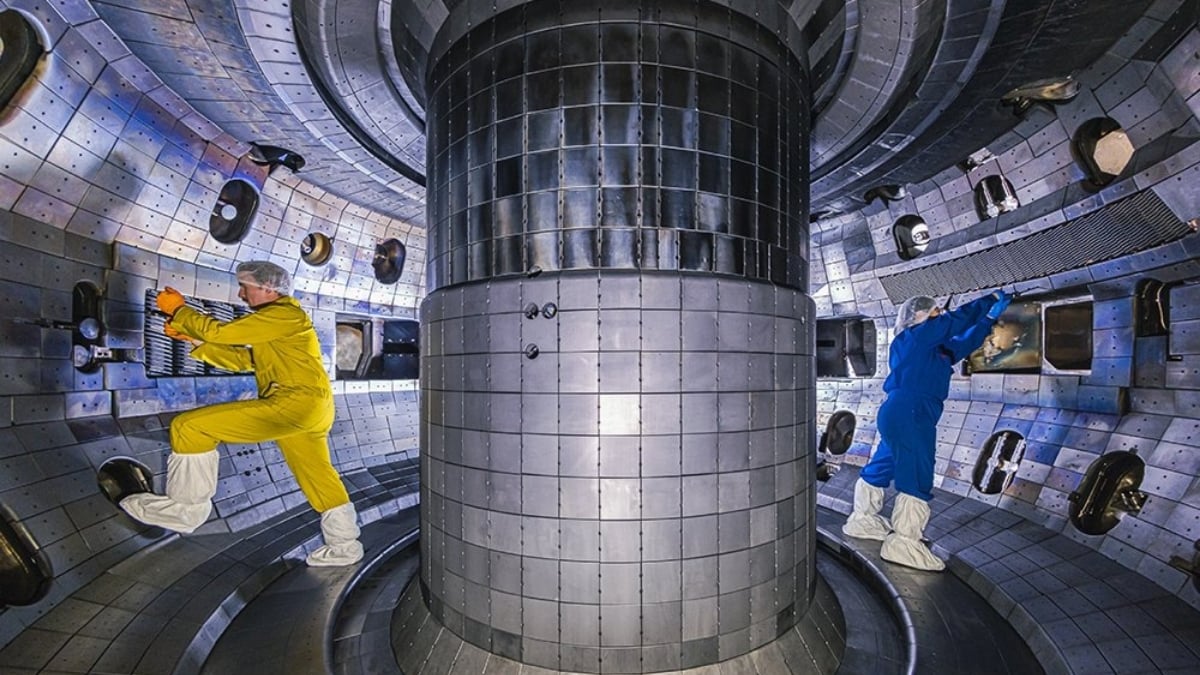
Mexican-built particle detector slated to help global scientists illuminate the birth of the universe
If all goes according to plan, the Mexican team, under UNAM physicist Antonio Ortiz Velásquez, will contribue to an international project at the famous atom-smashing CERN Large Hadron Collider. The post Mexican-built particle detector slated to help global scientists illuminate the birth of the universe appeared first on Mexico News Daily
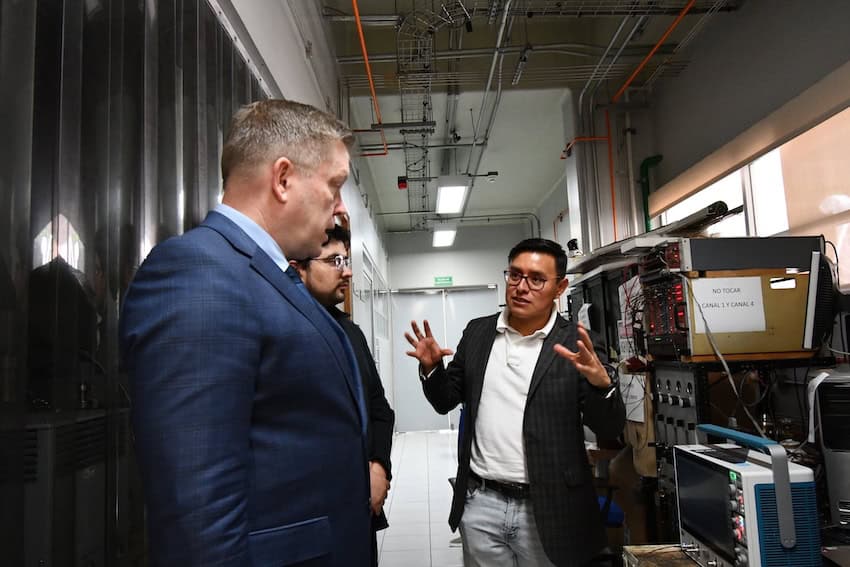
A Mexican physicist has been selected to lead the development of a particle detector for a major scientific project aimed at understanding conditions in the universe shortly after the Big Bang. The detector, called the Muon Identifier Detector (MID), will be built in Mexico and installed at the European Organization for Nuclear Research (CERN) in Europe.
CERN houses the Large Hadron Collider (LHC), a 27-kilometer particle accelerator and collider near Geneva, Switzerland. When in operation, the LHC accelerates beams of protons or charged atomic nuclei to near light speed, enabling collisions that recreate conditions similar to those shortly after the universe's inception. The Mexican project, led by Antonio Ortiz Velásquez, a senior researcher from the National Autonomous University of Mexico (UNAM), is still pending approval and funding.
The ALICE experiment, of which the MID will be a central component, is one of four main experiments at CERN. Ortiz, a physicist at UNAM's Institute of Nuclear Sciences, will direct the development of this subsystem, making him the first Mexican scientist to lead such a strategic project. Mexico's involvement in the ALICE experiment has been growing, with the country contributing to detector construction and data analysis in the past.
The new project involves researchers from UNAM, the Center for Research and Advanced Studies, and universities in Sinaloa and Puebla, along with international partners from the United States, Hungary, the Czech Republic, and Pakistan. If successful, the installation of the MID at CERN is targeted for 2036, with construction beginning in Mexico by 2028.
Written by urgent.news from Mexico News Daily's reporting — not their text. Machine-written — may contain errors; check the original before relying on it.