Looking for Earth 2.0 in Binary Systems
While astronomers have found thousands of exoplanets over the last few decades, the true prize continues to elude them - they have yet to find an Earth-mass, rocky planet orbiting in the habitable zone of a Sun-like star. That’s partially just due to cosmic geography - around half of all sun-like stars near us aren’t alone. They have one or more companion stars that complicate their orbital…
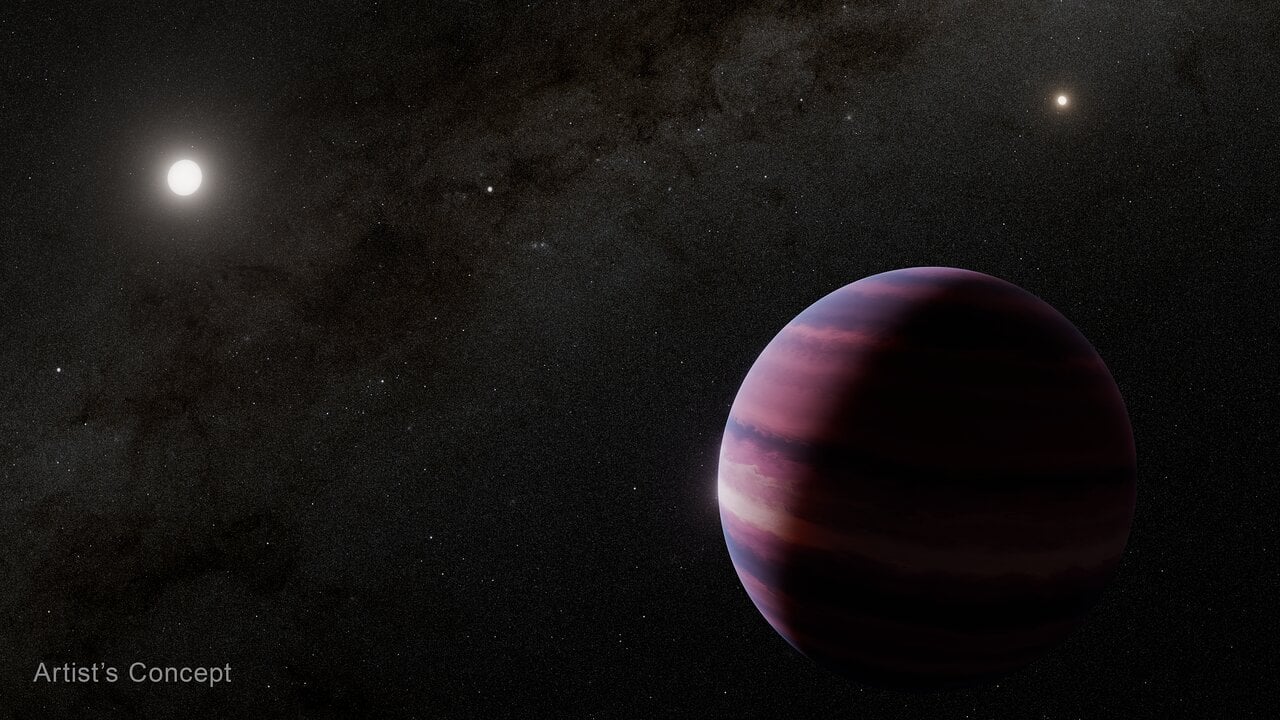
Scientists have yet to discover an Earth-mass, rocky planet in the habitable zone of a sun-like star. Around half of the sun-like stars near us have companion stars, which complicates the search for exoplanets in these multistar systems. Currently, three main methods are used to hunt for exoplanets: transiting, radial velocity, and astrometry.
Transiting and radial velocity have limitations, making astrometry the most promising approach. Astrometry measures the exact position of stars against a background field of stars, but sensitivity issues have hindered progress. The new NASA Small Explorer mission SHERA aims to use astrometry in a novel way. Instead of mapping a star against the background, SHERA focuses on bright, closely separated binary pairs of stars.
These binaries act as co-moving reference points, eliminating background error and canceling out large-scale optical distortions. To achieve the required sub-microarcsecond precision, SHERA uses a diffractive pupil created through electron-beam lithography. The mission will search for Earth-mass planets around the closest target stars, test the suppression of planet formation in close-in binaries, and provide additional context to ground-based radial velocity data.
If successful, SHERA could significantly contribute to the Habitable Worlds Observatory, a more expensive mission targeting these stars.
Written by urgent.news from Phys.org's reporting — not their text. Machine-written — may contain errors; check the original before relying on it.