Giant trees break a decades-old science theory
Giant trees have evolved remarkable adaptations that allow them to reach extreme heights while maintaining efficient water transport. The post Giant trees break a decades-old science theory first appeared on EarthSky .
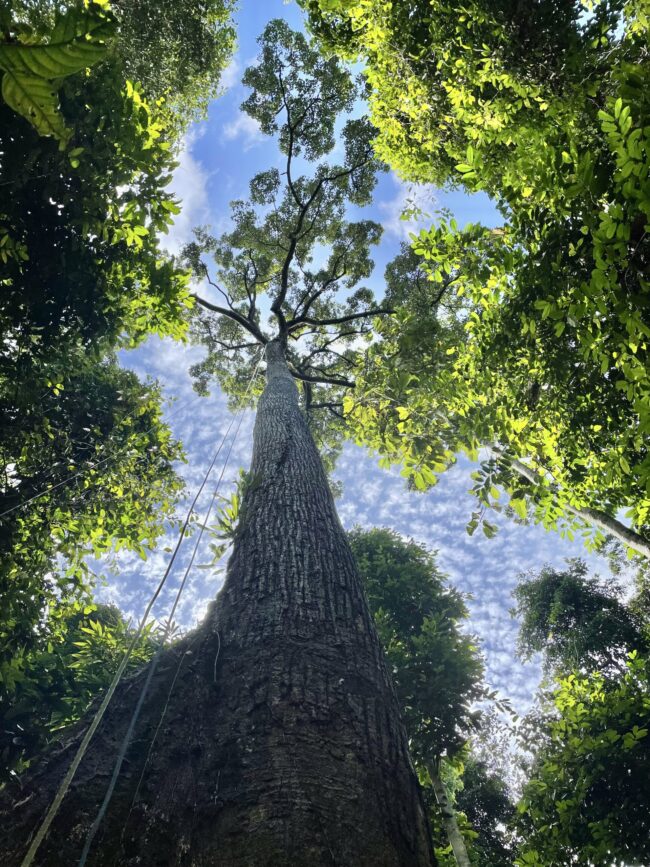
For decades, scientists believed that the height of the world's tallest trees would eventually become a disadvantage, as the greater distance water had to travel from their roots to their leaves would make transportation increasingly difficult. However, a team of researchers from the University of Exeter and Cardiff University have discovered that giant tropical trees, including some reaching over 230 feet (70 meters) tall, have developed ways to overcome this challenge.
The key to their success lies in the intricate adaptations of their water-conducting vessels, which are thousands of tiny tubes running through their trunks. As water evaporates from the leaves, it creates a pulling force that draws water upwards. To transport water efficiently over long distances, these trees have evolved to have wider vessels closer to the ground and leaves that can tolerate greater levels of water stress before wilting.
Researchers studied dipterocarp trees in Malaysian Borneo, which ranged in height from 23 to 233 feet (7 to 71 meters). They measured various traits related to water transport at multiple points along each tree and examined trunk growth rates before, during, and after the severe El Niño drought of 2023-2024. The findings showed that taller trees have perfectly evolved hydraulic systems, allowing them to maintain efficient water transport despite the enormous distance between their roots and highest branches.
This challenges the previous theory that height placed a natural limit on tree growth, suggesting that the tallest trees are not more vulnerable to drought than smaller trees exposed to the same conditions. The importance of these findings extends beyond understanding how trees move water, as trees play a central role in the global carbon cycle, absorbing carbon dioxide and storing it in their living tissues for decades or even centuries.
Protecting the world's largest trees is crucial for both biodiversity and climate change mitigation.
Written by urgent.news from EarthSky's reporting — not their text. Machine-written — may contain errors; check the original before relying on it.