Foreign students beneficial to Dutch economy, CPB says
International students in the Netherlands more than pay for themselves over their lifetimes, and capping their number would do little...
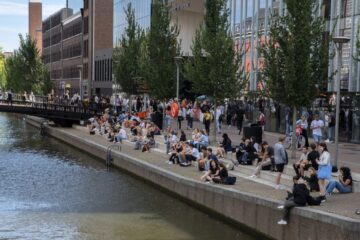
The Netherlands’ Central Bureau of Statistics (CPB) claims that international students prove beneficial to the Dutch economy over their lifetimes, and restricting their numbers would not alleviate the housing shortage. The costs the government incurs for students – grants, healthcare, social security – are typically recouped, mainly due to graduates contributing taxes after completing their studies.
While short-term housing pressure from international students does increase, this effect is limited in the long run as the market adjusts, depending on housing policies rather than student counts.
Around 17% of students in the Netherlands last year were foreign, predominantly from the European Economic Area (EEA), with most EU members along with Norway, Iceland, and Liechtenstein. Similar to Dutch students, they pay standard tuition fees of €2,694 this year and may apply for financial aid under specific conditions. Non-EEA students lack the right to financial assistance, paying the full tuition cost, which is relatively low for the government.
They are also staying in the Netherlands more frequently. Five years post-higher education, about one in five EEA graduates and two in five non-EEA graduates remain in the country – roughly a quarter more than a decade ago.
CPB researcher Paul Verstraten told NOS that the longer these graduates work in the Netherlands, the more taxes they pay, and they are finding jobs faster, partly due to the tight labor market. Furthermore, graduates are mostly highly educated and use social security less, so reducing their numbers is not a clear solution. In 2024, the D66-led education ministry aimed to cut enrolments to save nearly €300 million and reduce housing and public service pressures.
However, five universities warned that such cuts would harm the economy. Rianne Letschert’s ministry subsequently allowed universities and colleges to manage their own admissions, focusing on sectors with workforce shortages, such as engineering and healthcare. This year, international student numbers fell for the first time in two decades.
Written by urgent.news from DutchNews's reporting — not their text. Machine-written — may contain errors; check the original before relying on it.