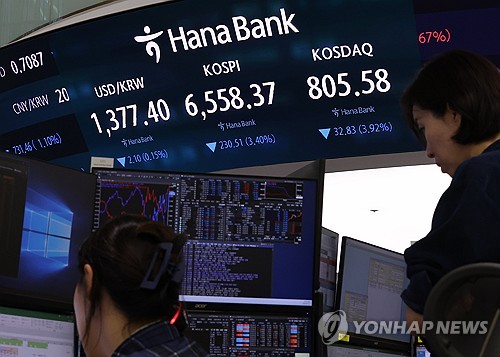
Asian stock markets face slight pressure from renewed geopolitical risks, hawkish Fed bets
Asian equity markets remain under pressure at the start of the week, as risk sentiment turns sour due to renewed tensions in the Middle East and a sharp increase in Federal Reserve (Fed) interest rate hike expectations.

Asian equity markets faced slight pressure at the beginning of the week due to heightened geopolitical risks and increased expectations of Federal Reserve interest rate hikes. The Nikkei225 index declined 0.25% to around 66,250, while the Hang Seng dropped 0.36% slightly below 22,500. Chinese stock markets, however, remained positive, with the Shanghai Composite and Shenzhen Composite up by 0.7%.
Korean stock market KOSPI also showed a gain of 0.46%. The tension between the US and Iran escalated after the latter retaliated by striking US bases in Jordan following US attacks on Iranian rocket launchers near the Strait of Hormuz, leading to a sharp rise in oil prices. The WTI Oil price increased by 2.5% to near $84.85. This increase in oil prices adversely affects several Asian economies, given their heavy reliance on oil imports for their energy needs.
Fed Chair Kevin Warsh's remarks at the Jackson Hole Symposium that the central bank is focused on reducing price pressures have boosted hawkish Fed bets. The odds of the Fed leaving interest rates unchanged in the September meeting have decreased to 39.4% from 60% a week ago, as per the CME FedWatch tool. Asia accounts for approximately 70% of global economic growth and hosts significant stock market indices such as the Nikkei225, Hang Seng, KOSPI, and various Chinese indices.
These indices are influenced by the performance of respective sectors like technology, financial services, and manufacturing. Political stability, technological progress, and the rule of law also impact equity markets. US equity indices and broader market sentiment are crucial factors as well, as Asian markets often follow trends set by Wall Street.
Investors should consider region-specific risks, including political systems, geopolitical events, natural disasters, and currency fluctuations, while evaluating Asian stock markets.
Written by urgent.news from FXStreet's reporting — not their text. Machine-written — may contain errors; check the original before relying on it.
This story
This is one outlet's version. Read the fullest account.
- China bond market diverges from US as Warsh strikes hawkish tone at Jackson Hole scmp.com
- Global Market Today: Asian stocks drop on hawkish Warsh tone, oil gains economictimes.indiatimes.com
- Kospi falls 1.6% as Asian stocks drop after hawkish Warsh tone businesstimes.com.sg
- Asian stocks drop on hawkish Warsh tone, oil gains straitstimes.com
- Asian shares drop amid geopolitical friction, oil spikes, and hawkish Fed signal seekingalpha.com
- Asia chip stocks fall as Warsh revives rate-hike fears, oil adds risk-off pressure investing.com