Crown of Kerch: A 1,600-year-old gold, gem-studded diadem found in the grave of a Hun noblewoman
This crown depicts two birds of prey and was discovered in the grave of a fifth-century noblewoman in Crimea.
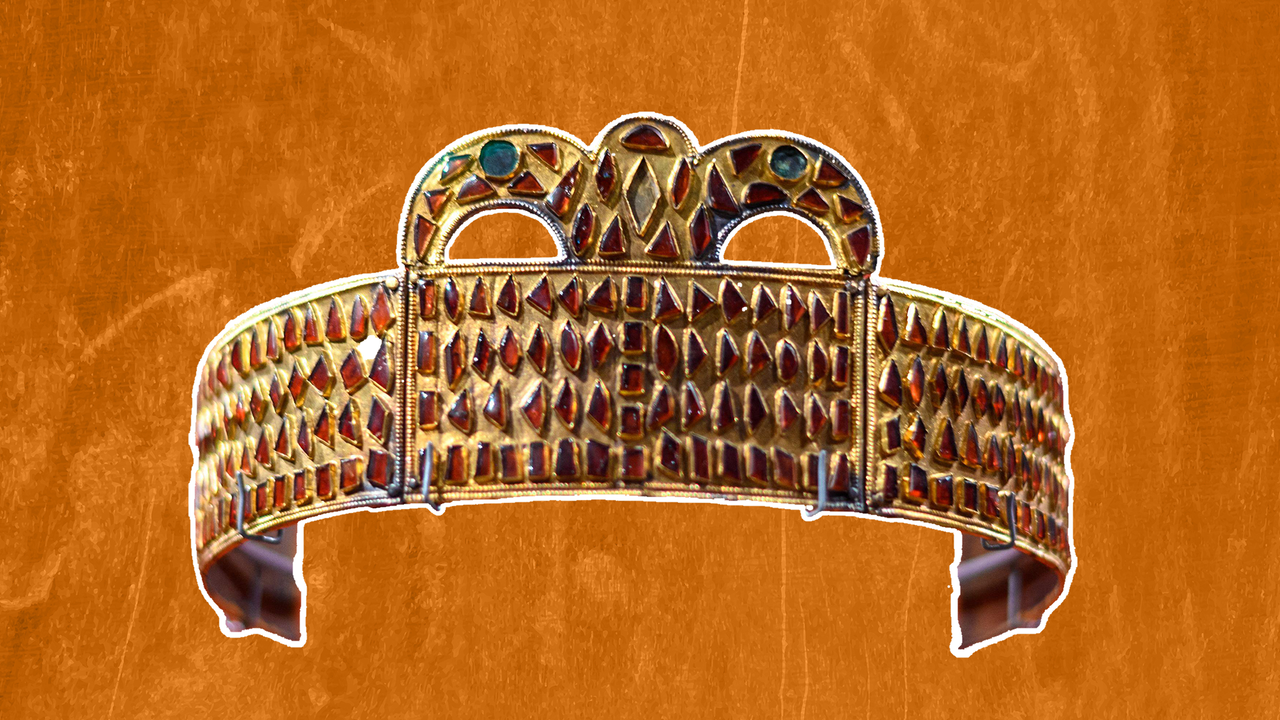
The Crown of Kerch, a 1,600-year-old gold and garnet diadem, was unearthed in the grave of a high-status Hun woman in Crimea over a century ago. (Image credit: Mirko Kuzmanovic/Alamy)
This exquisite artifact, now housed at the Neues Museum in Berlin, is composed of three gold-covered bronze plaques and over 250 cells adorned with gemstones. Discovered in the grave of a woman buried in the ancient city of Pantikapaion on the Kerch Peninsula, the diadem's band is approximately 1.7 inches (4.4 centimeters) tall.
The Crown of Kerch bears two stylized heads of birds of prey, believed to represent eagles, flanking a central floral motif. Round, green gems symbolize the birds' eyes. These creatures were likely symbols of power and authority among the Huns and other cultures of the time, as evidenced by similar designs found on Visigoth jewelry from sixth-century Spain.
German archaeologist Joachim Werner suggested that the woman was buried with the diadem, but believed these items were not solely grave goods. He posited that high-status Hun women might have regularly worn such accessories during their lifetimes, possibly adorned with a cloth cap or veil. Over two dozen similar gold diadems have been found, suggesting the Crown of Kerch was not royal insignia but rather a diadem worn by a member of the ruling Hun elite around 1,600 years ago.
Written by urgent.news from Live Science's reporting — not their text. Machine-written — may contain errors; check the original before relying on it.