China's three biggest airlines post heavy first-half losses as fuel shock bites
China's three biggest state-owned airlines reported first-half losses for the seventh consecutive year, battered by surging jet fuel prices, with the outlook for the rest of the year clouded by a...
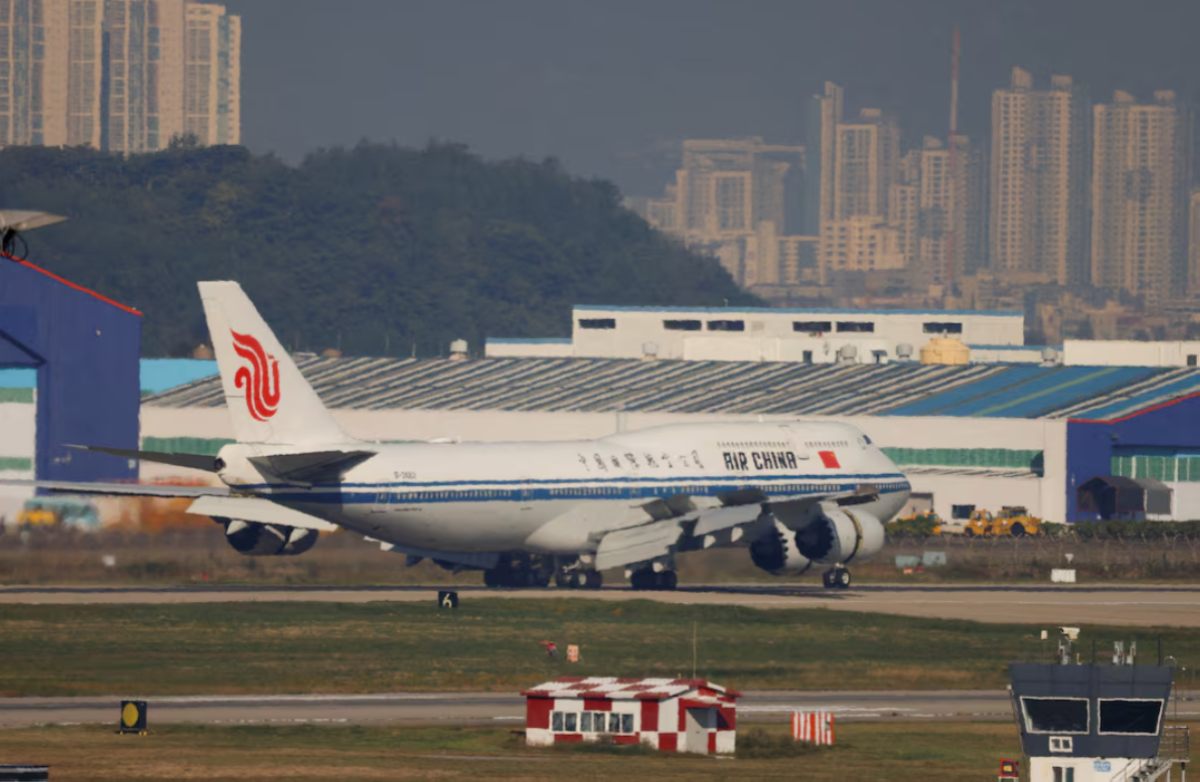
China's three largest state-owned airlines reported significant first-half losses for the seventh consecutive year, primarily due to soaring jet fuel prices and a lackluster summer season. The combined net losses for Air China, China Eastern Airlines, and China Southern Airlines amounted to approximately 8.2 billion yuan ($1.22 billion), marking a sharp contrast to their combined first-quarter profit of 4.82 billion yuan.
The losses came as a surprise, coming after the carriers had predicted a potential figure exceeding 9 billion yuan earlier in the month. Air China's net loss widened to 2.3 billion yuan from 1.81 billion yuan a year earlier, while China Eastern reported a 2.2 billion yuan loss compared to 1.43 billion yuan the previous year. China Southern reported a loss of 3.7 billion yuan, up from 1.53 billion yuan a year earlier.
The weak results highlighted the fragile state of China's aviation sector, as the airlines grappled with disrupted international routes and persistently high jet fuel prices, which rose between 35% and 38% in the first half. Unlike their Asian and European counterparts, Chinese airlines had limited options for hedging fuel purchases, leaving them more vulnerable to oil price fluctuations.
China Southern's filing noted there were currently no effective means to manage exposure to jet fuel price changes. Revenue growth was robust, with Air China up 10.5%, China Eastern up 11.1%, and China Southern up 9.7%, driven by international demand. European routes performed well as travelers avoided Middle Eastern hubs affected by the Iran conflict.
However, weaker economic conditions and competition from high-speed rail and driving holidays hindered substantial domestic fare increases without negatively impacting demand. Jet fuel prices, though down from their second-quarter peak, remained more than 50% above pre-war levels. The typically profitable third quarter offered little relief, as an unusually strong typhoon season disrupted domestic routes during the peak summer travel period.
Flight Master projected a 3.6% year-on-year decline in passenger traffic for Chinese airlines in July and August, marking the first contraction in the peak season since 2022, when much of China was under pandemic lockdown. HSBC analysts anticipate the three carriers to collectively report a loss of about 16.8 billion yuan in 2026, a stark departure from the market's expectation of a 1.3 billion yuan profit.
All three airlines saw a decline in Shanghai-listed shares, with losses of at least 36% so far in 2026 as weaker domestic travel demand continued to pressure their profit outlooks. None declared an interim dividend. Despite expanding their fleets of domestically produced COMAC jets, China Eastern expected fewer deliveries of the narrow-body planes than previously forecast between 2026 and 2028.
Air China and China Southern each added 11 more C919s to their fleets, taking two and three deliveries each, respectively.
Written by urgent.news from Gulf Times Business's reporting — not their text. Machine-written — may contain errors; check the original before relying on it.