Big four-tracking push! Railways to expand on 7 high-density routes - why it matters
India’s seven high-density railway routes, covering about 11,000 km, are being expanded to four tracks to handle more passenger and freight traffic across the country, Vaishnaw said recently.
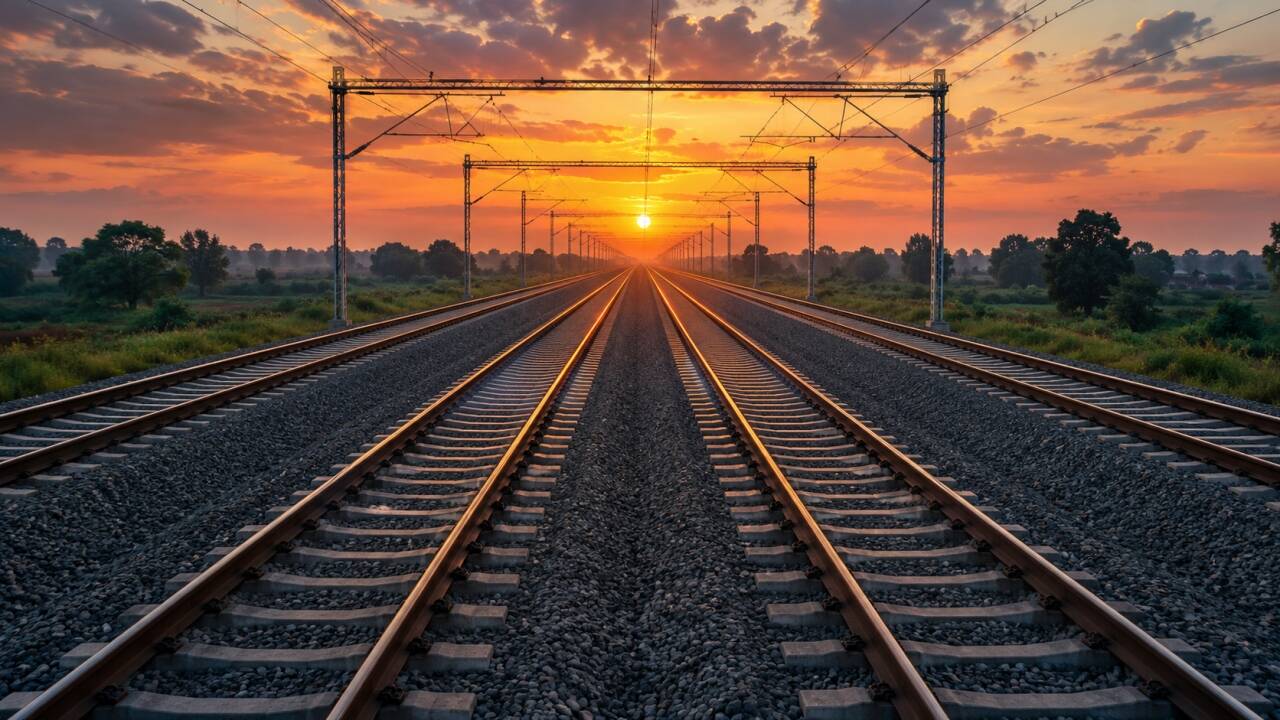
Indian Railways, the country's national transporter, is undertaking an ambitious expansion project on its high-density railway routes to boost capacity and meet growing demand. Railway Minister Ashwini Vaishnaw has announced plans to convert seven key routes into four-lane or four-track systems, allowing for more passenger and freight traffic to flow smoothly across the nation.
These seven routes, covering approximately 11,000 kilometers, account for a significant portion of India's overall rail traffic, contributing to 41% of total railway traffic while covering only 16% of the railway network.
Stretching across major cities and regions like Delhi–Howrah, Howrah–Chennai, Chennai–Mumbai, and Mumbai–Delhi, these critical corridors are poised to handle a substantial volume of passenger and freight movement. Railway Minister Vaishnaw highlighted the economic and environmental benefits of expanding these corridors, emphasizing the potential for increased mobility, reduced transportation costs, and enhanced clean mobility options.
The government's commitment to this multi-tracking push is evident in the recent approval of four railway projects with an estimated cost of Rs. 9,450 crore. These projects, approved by the Cabinet Committee on Economic Affairs, span across West Bengal, Odisha, Andhra Pradesh, and Tamil Nadu, adding around 410 kilometers to the existing Indian Railways network.
The projects are aligned with the PM-Gati Shakti National Master Plan, aiming to improve multi-modal connectivity and logistics efficiency through integrated planning and stakeholder consultations.
Indian Railways is also modernizing its infrastructure across various aspects, including trains, tracks, signaling, and freight. With railway budget increasing from Rs 32,000 crore in 2014-15 to Rs 2.78 lakh crore in FY2026-27, railway electrification has expanded significantly, reaching 99.6% in July 2026. The deployment of newer train services and technologies, such as Vande Bharat trains, Vande Bharat Sleeper services, Amrit Bharat services, and Kavach Version 4.0 on 2,633 route km, showcases the railway network's commitment to faster, safer, and higher-capacity rail infrastructure.
Written by urgent.news from Times of India's reporting — not their text. Machine-written — may contain errors; check the original before relying on it.