Supreme Court urges policies to cut business costs, prices
ISLAMABAD: The Supreme Court has called upon the government to create incentives through appropriate policies to lower the cost of doing business and the cost of producing and supplying goods, thereby facilitating lower prices for consumers. “It is the constitutional obligation of the government, as provided in Article 38 of the Constitution, to promote the economic and social well-being of the…
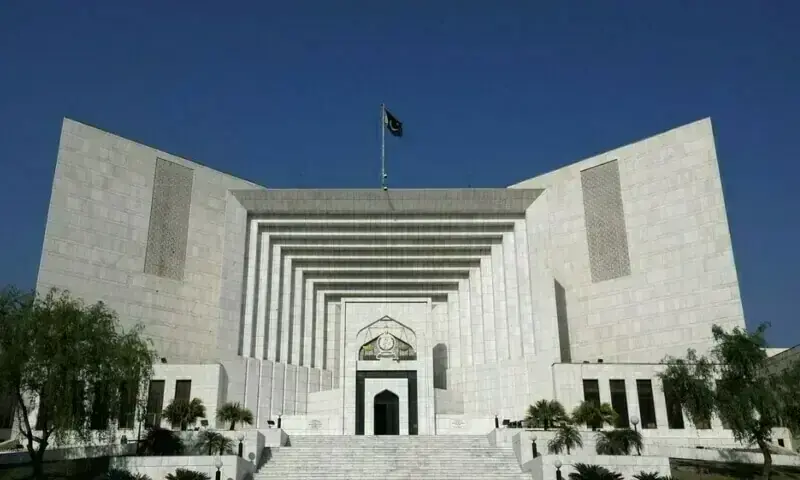
The Supreme Court has urged the government to implement policies that would reduce the expenses associated with business operations and the expenses incurred in producing and distributing goods, ultimately leading to lower prices for consumers. Justice Jamal Khan Mandokhail, who headed a two-judge bench with Justice Salahuddin Panwhar, made this call, citing Article 38 of the Constitution which mandates the government to promote the economic and social well-being of the populace.
The Court's decision came in response to an appeal against the Competition Commission of Pakistan (CCP) and the April 24, 2025 rulings of the Competition Appellate Tribunal (CAT). The CAT had concluded that the Pakistan Vanaspati Manufacturers Association (PVMA) had engaged in prohibited price-fixing under Section 4 of the Competition Act, 2010.
The Court, however, maintained that the PVMA was indeed in violation of competition law by collectively setting prices for ghee and cooking oil, but reduced the penalty imposed on the PVMA from Rs50 million to Rs30 million.
The PVMA, a trade association representing manufacturers of ghee and cooking oil, had, between 2007 and 2009, lowered prices in response to inflationary pressures and consumer concerns over essential commodity prices. The federal government had previously encouraged manufacturers to pass on the benefits of falling international palm oil prices to consumers.
In May 2011, the CCP had issued a show-cause notice to the PVMA, claiming that the association had led negotiations and price-setting with the government, breaching Section 4(1) and Section 4(2)(a) of the Competition Act, 2010. Additionally, the CCP alleged that the PVMA had colluded with transporters to fix transportation rates and discriminate between manufacturing units and commercial importers, contravening Section 3(3)(b) of the Act.
The Court's ruling stressed that individual businesses should determine their prices based on their own commercial interests, rather than collectively, as this collective determination undermines competition by replacing individual pricing decisions with a uniform price. The judgment underscored that competition advocacy serves as a preventive measure at the market level, fostering positive behavioral changes among manufacturers, consumers, and suppliers.
It further emphasized that the CCP's role extends beyond merely imposing penalties; it must regularly promote competition and prevent anti-competitive practices, using penalties only as a last resort when advocacy efforts have failed.
Written by urgent.news from Dawn Business's reporting — not their text. Machine-written — may contain errors; check the original before relying on it.
This story
This is one outlet's version. Read the fullest account.