Stuck In Traffic? These 5 Management Lessons Can Help You Navigate Workplace Chaos
Stuck in a jam thanks to water clogging? Wondering why the hell is it jammed on this side of road today at this time of the day? Ranting because you have been stopped at a signal for almost half an hour because some politician is travelling? Traffic jams have a special talent for exposing human behaviour. Someone is honking like it will magically create a new lane. Someone is aggressively…
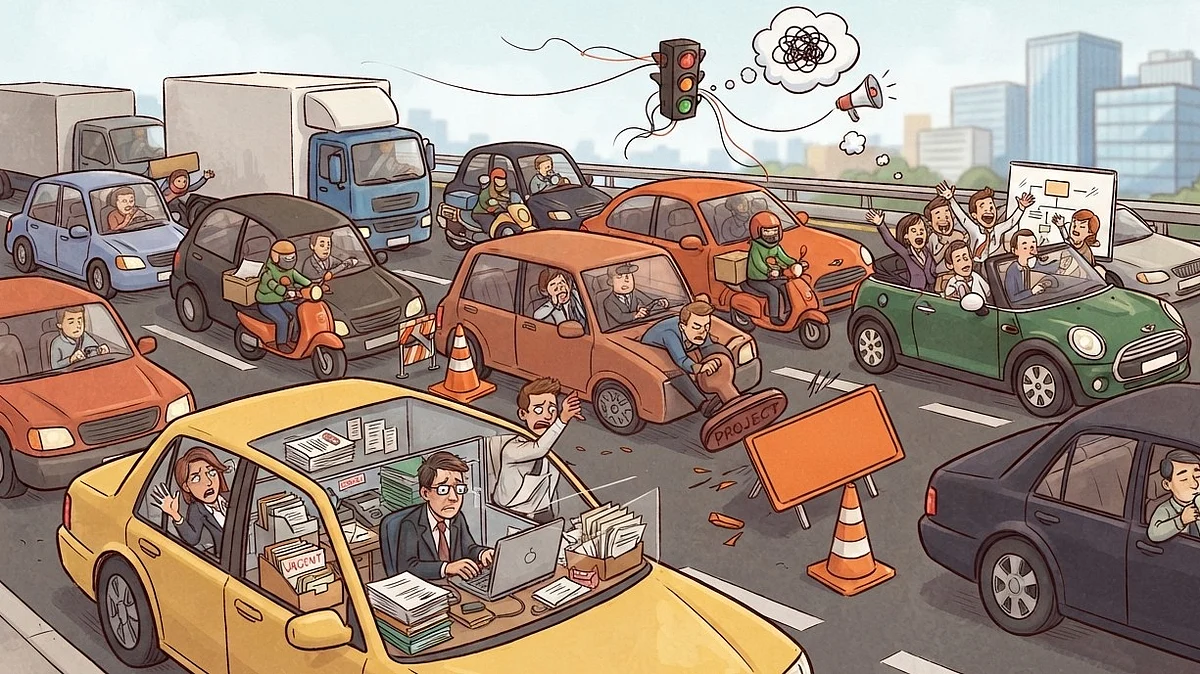
Traffic congestion is more than just an annoyance; it provides valuable insights into human behavior. Drivers often honk aggressively, change lanes excessively, and block their own progress. These behaviors mirror the problems that can arise in a workplace. To navigate these office "traffic jams," managers should first identify the bottleneck, much like a driver looking for the cause of a jammed road.
It may be a narrow road, an accident, or a vehicle blocking a lane. Similarly, in an organization, a delay might be due to a designer waiting for content, the content team waiting for data, or approval processes that are taking too long. The lesson here is to find the root cause before attempting to speed things up. Contrary to popular belief, adding more people to a project does not necessarily increase productivity.
A traffic jam worsens when everyone tries to squeeze into the same small space, just as more team members can lead to more opinions, meetings, and messages, ultimately causing confusion and misdirection. Managers should consider whether the existing team has the necessary resources or if clearer priorities are needed. The constant lane-changing seen on the roads is also a parallel to managers frequently changing strategies or processes.
This constant shifting can leave everyone in motion but without actual progress. Instead, managers should exercise patience and stick to a clear plan. Effective communication is key to smooth traffic flow, both on the roads and in the workplace. Signals, lane markings, and signs provide a clear understanding of expected behaviors, just as a well-defined communication hierarchy and protocols can prevent chaos within an organization.
Finally, sometimes the best approach is to wait. When a traffic jam is unavoidable, it's often more productive to patiently wait for the obstruction to clear rather than attempting risky maneuvers. In the workplace, this means recognizing when action is truly necessary and when patience is the best strategy. The next time you find yourself stuck in traffic, remember that the drivers around you are not just causing frustration; they are teaching valuable lessons about management and human behavior.
Written by urgent.news from Free Press Journal's reporting — not their text. Machine-written — may contain errors; check the original before relying on it.