Scientists say northern spotted owl is now functionally extinct in many areas
The northern spotted owl, once a revered icon of environmental activism, faces dire circumstances as it becomes functionally extinct in numerous regions. A recent study indicates a severe decline in its populations throughout their historical habitat. Factors such as habitat destruction and rampant wildfires have severely impacted the species over the years, while the encroaching barred owl…
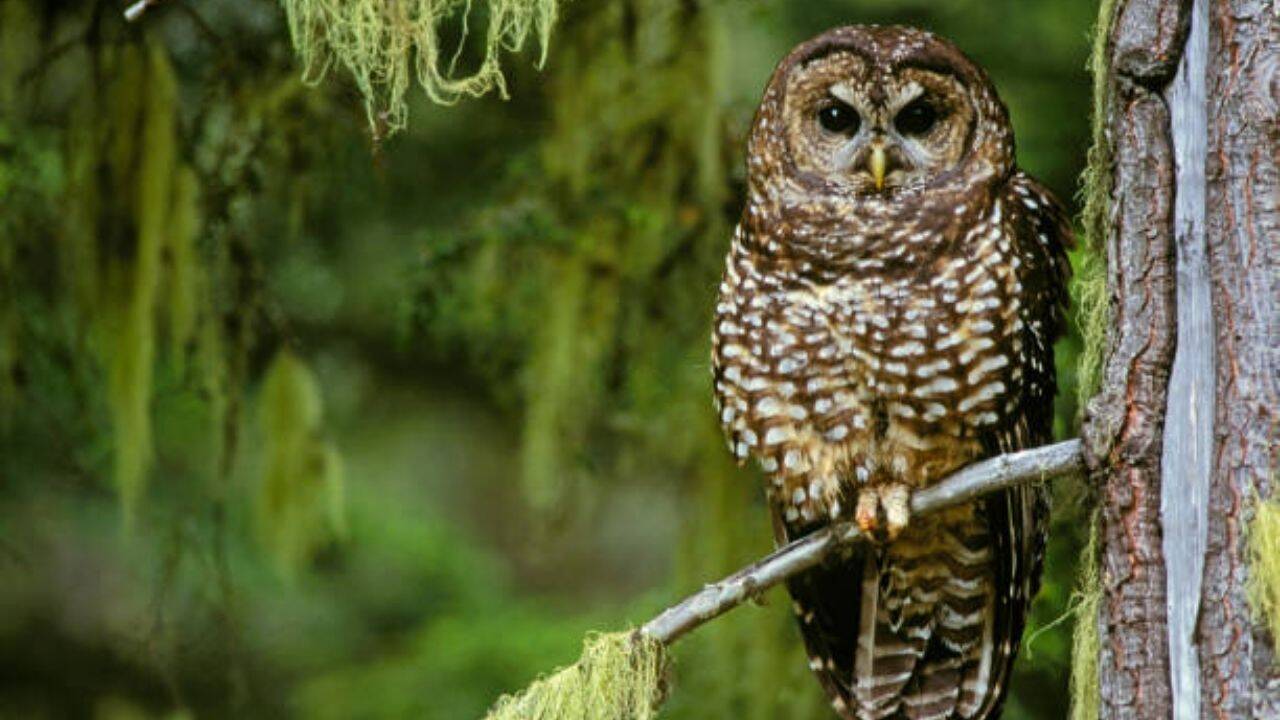
In 1990, the northern spotted owl became an iconic symbol of a fierce environmental battle in America. This small bird was designated as threatened under the Endangered Species Act, thrusting vast tracts of old-growth forest in the Pacific Northwest into the spotlight of a heated debate between environmentalists and the timber industry.
Thirty-six years later, researchers from Oregon State University claim that the species is now functionally extinct, or nearly so, across significant portions of its historical range, according to a new study.
Functional extinction refers to a species becoming so scarce in an area that it can no longer carry out its normal ecological functions or reproduce at a rate that permits its survival. The research, published in the journal Ecological Applications, found that owl populations have dwindled dramatically in specific regions of Oregon, Washington, and northern California, to the point where they may no longer sustain viable populations or fulfill their ecological role.
Damon Lesmeister, a wildlife biologist from the US Forest Service and co-author of the study, emphasized that functional extinction has already occurred. He stated that this situation is not merely a potential future scenario. The northern spotted owl, which sparked the "timber wars" in the Pacific Northwest during the late 1980s and 1990s, is now facing an additional threat: the barred owl.
Native to eastern North America, barred owls have expanded westward into the region, competing with the northern spotted owl for resources and territory, putting further stress on already weakened populations.
Scientists utilized an innovative method to assess the bird's status: they listened to them. Researchers placed passive acoustic recording devices across more than 38,000 square miles of federal land containing spotted owl habitat in Oregon, Washington, and northwestern California. They divided the landscape into sampling areas that approximated the typical territory of a northern spotted owl.
In 2023, they selected 1,027 sampling areas and installed four recording devices in each, collecting approximately 2.1 million hours of audio data. Using machine-learning models, scientists identified northern spotted owl calls in just 261 of the 1,027 sampling areas, while barred owl calls were detected in 891. Researchers recorded over 34,000 northern spotted owl recordings compared to nearly 280,000 barred owl recordings. Barred owls were heard more than eight times as frequently as northern spotted owls.
Habitat loss, primarily due to decades of logging and subsequent wildfires, remains a significant threat to the northern spotted owl. However, the study highlights barred owls as a new, increasingly important challenge. The owl faces functional extinction thresholds in Washington and along the Oregon Coast, with no sightings in parts of the Washington Cascades north of Seattle.
While the findings do not imply that conservation efforts are futile, researchers propose several strategies, such as safeguarding nesting landscapes, continuing habitat preservation, and managing barred owl populations. Removing barred owls, although controversial due to the killing of one species to protect another, has shown promise in previous experiments.
Captive breeding and reintroduction, already explored in Canada, could also prove effective in determining whether the northern spotted owl can be saved from extinction.
Written by urgent.news from Times of India's reporting — not their text. Machine-written — may contain errors; check the original before relying on it.