Just How Ridiculously, Hellishly Hot Are New York City’s Subways? Jack Can Tell You.
This story was originally published by the Guardian and is reproduced here as part of the Climate Desk collaboration. On a recent August day in the subterranean furnace of New York City’s subway, one bearded, curly haired man was studying his phone for different reasons than the other wilting passengers—to track the soaring temperatures and ponder how underground train stations can cool […]
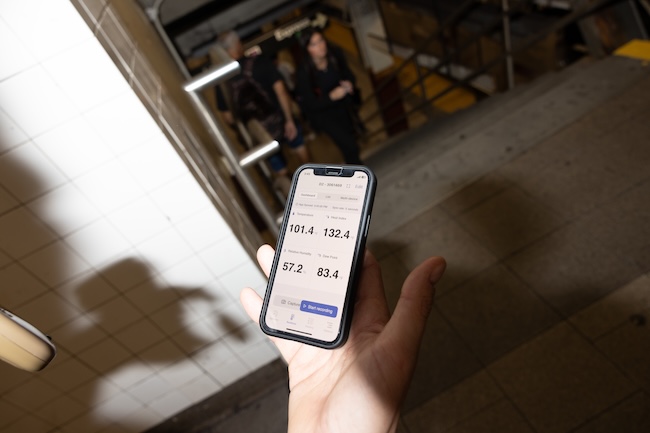
In the heart of New York City's subway system during the scorching summer months, temperatures inside the underground stations reached alarming levels, leaving passengers and staff alike struggling to cope with the oppressive heat. Jack Klein, a 31-year-old construction site manager, decided to track these extreme temperatures, installing thermometers in seven of the city's hottest Manhattan stations.
"This line must be cursed," Klein remarked as the temperature soared to a blistering 99 degrees Fahrenheit on the 4/5 line at the 14th Street-Union Square station, which was 10 degrees hotter than the surface temperatures. The heat index, which factors in humidity, soared to a staggering 116 degrees Fahrenheit, well above the threshold where heatstroke becomes a serious concern.
Klein's observations showed that the heat got even worse, reaching up to 120 degrees Fahrenheit in some areas. Passengers were visibly uncomfortable, with one Italian tourist named Leo expressing his distress and another woman fanning herself in the stifling heat.
Subway staff, including maintenance workers and cleaners, were particularly affected by the extreme temperatures, with their union describing the situation as dangerous. Klein has taken it upon himself to help mitigate the heat by distributing large water dispensers to platforms and advocating for better seating and air circulation.
Despite the gruff reactions from older commuters who remind him that the subway has always been hot, Klein insists that this issue is a public health concern. Rising global temperatures, exacerbated by the burning of fossil fuels, are putting increasing pressure on cities worldwide to find solutions to the stifling heat in public transport systems.
Older infrastructure and the design of the subway system pose significant challenges in addressing the heat issue. Underground stations act as "hot boxes," absorbing heat from concrete and steel structures and slowly releasing it. Trains, when braking, also generate additional heat and pollution, further exacerbating the problem.
The tightly packed crowds of commuters, each contributing around 100 watts of heat, compound the issue, sometimes raising temperatures by an additional 20 degrees Fahrenheit compared to aboveground levels. The ventilation system in the stations, though designed to circulate air, is inadequate in tackling extreme heat. Moreover, the stations' leaky nature and lack of air conditioning make it impossible to cool them down during the summer months, with temperatures sometimes being 20 degrees Fahrenheit higher than the surface.
The Metropolitan Transportation Authority (MTA) is exploring a novel solution to combat the heat in the stations by implementing a thermal energy network. This innovative approach involves capturing station heat and storing it deep underground, where it can be utilized in the winter to warm surrounding buildings. The system relies on chilled liquid running through pipes behind walls and under flooring to extract heat from the platforms.
As the liquid warms up, it is directed into storage boreholes, effectively utilizing the heat that would otherwise be wasted. This thermal energy network aims to provide a sustainable solution to the persistent heat problem in New York City's subway system, taking into account the age and design constraints of the existing infrastructure.
Written by urgent.news from Mother Jones's reporting — not their text. Machine-written — may contain errors; check the original before relying on it.