Before a people disappear, their stories do
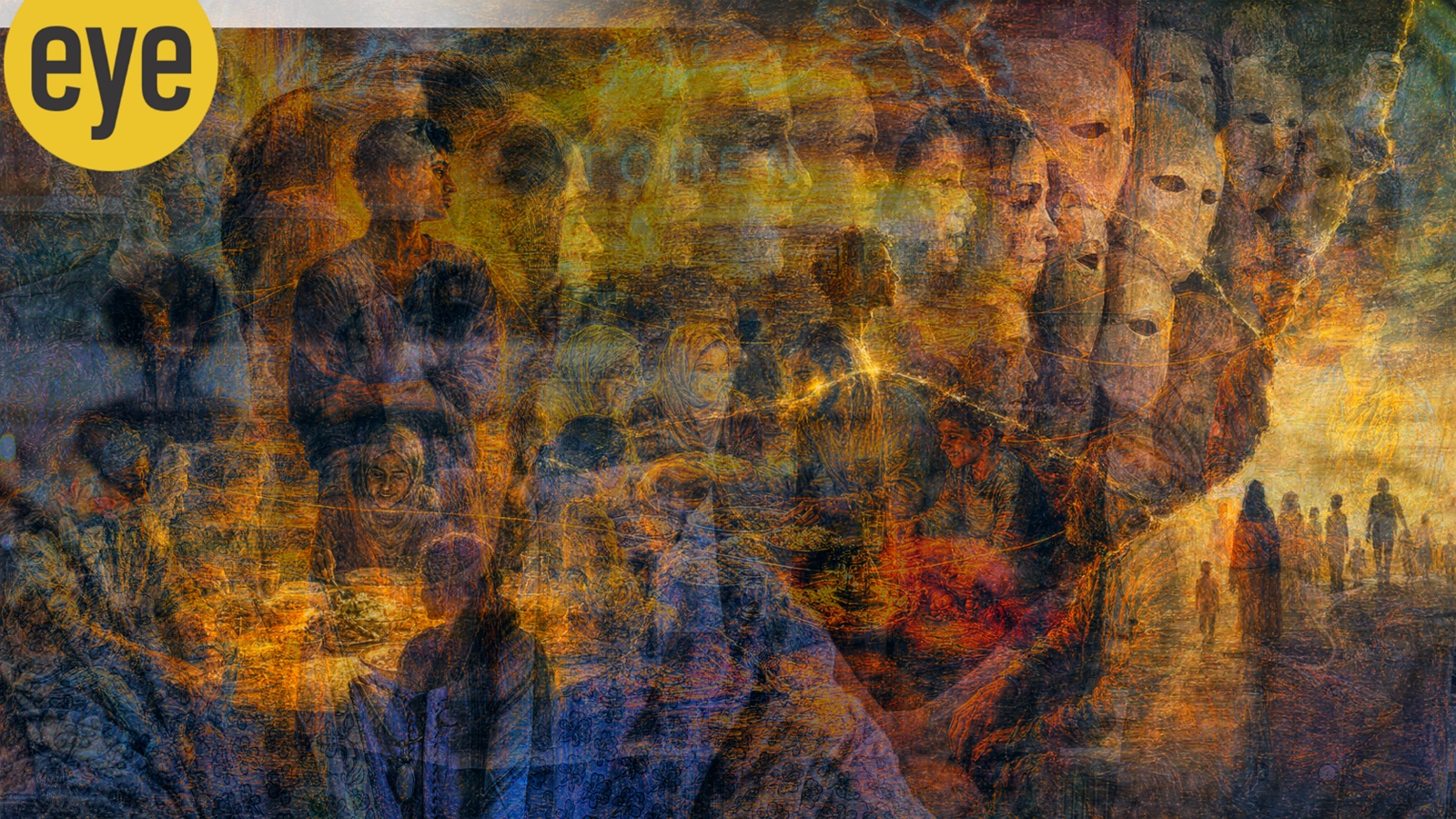
In a recent conversation, a woman in her fifties posed a haunting question: when was the last time you saw an ordinary Muslim family in a film? Not as a terrorist, gangster, suspicious neighbor or any other stereotype, but simply as a family. This question struck a chord, suggesting that erasure often starts with distortion. Before people are pushed out of public sympathy, they are pushed out of everyday stories.
Their individual identities are replaced by a single narrative, their diverse experiences condensed into one menacing portrayal. Once this happens, cruelty no longer seems cruel; it begins to feel like caution.
The author, who has personal experience with being reduced to a stereotype before being understood, draws a parallel between this process and the way individuals are often dehumanized before they are treated with empathy. From a homosexual boy growing up in a heteronormative world to being perceived as "the other" in various societies, the author has witnessed the progression from ridicule to distrust, and finally to mistreatment.
This progression begins with naming, then mimicking, followed by mockery, mistrust, and ultimately mistreatment. Leaders, both past and present, have used ridicule to create a culture where entire populations are reduced to punchlines before being labeled as problems. Donald Trump's language, for instance, has been used to mock Latinos, Arabs, Indians, immigrants, and those who don't fit neatly into societal norms.
By doing so, he creates an atmosphere where entire groups are treated as comic characters or potential threats, rather than human beings deserving of sympathy and respect.
The author argues that this form of ridicule, directed downward, is not humor but rather a hierarchical laugh at the expense of vulnerable people. It is a way for those in power to grant themselves permission to stop imagining the pain of the marginalized. When a leader mocks a vulnerable group, millions of people are given the green light to stop imagining their struggles.
If an immigrant is an invader, a refugee is a fraud, a transgender person is an absurdity, a Muslim is a menace, and a brown citizen is somehow permanently foreign, why should anyone extend sympathy or protect their dignity? Why should anyone pause before meting out punishment?
The danger of this language extends beyond America, as democracies around the world are increasingly drawn into tribal theatrics. Leaders of all persuasions have found that governing is difficult but creating grievances is easy. By magnifying migrants, declaring dissidents dangerous, declaring journalists traitors, and branding universities as conspiracies, societies are able to cancel complexity and replace it with easily digestible narratives. This is how language prepares the ground for injustice.
The author warns that this is not just a problem in America, but a global phenomenon. Across the world, democracies of all ages are being drawn into a tribal divide, with leaders creating enemies out of thin air and innocent individuals becoming targets. Those who call themselves liberal must look in the mirror and question the nature of their liberalism.
A liberalism that refuses conversation, humiliates uncertainty, polices imperfect words, and banishes rather than persuades is not the enlightened liberalism we claim it to be. It is orthodoxy with better branding.
When every mistake becomes malice, every question becomes violence, and every disagreement becomes proof of moral depravity, we abandon the very spaciousness we claim to defend. The author concludes by urging ordinary citizens to speak out, even though it comes with its own set of risks. History has shown that respectable silence has terrible consequences, as the darkest chapters of the last century were enabled by neighbors who lowered their curtains, professionals who protected their positions, intellectuals who found elegant reasons to wait, and decent people who decided that someone else's danger was not their duty.
The author emphasizes that speaking carries a price, but it is a price worth paying to protect the dignity and humanity of all people.
Written by urgent.news from The Indian Express's reporting — not their text. Machine-written — may contain errors; check the original before relying on it.