Adopt policies for reuse of treated water
India’s water future may hinge less on discovering new freshwater reserves and more on the intelligence with which the country recycles what it already has
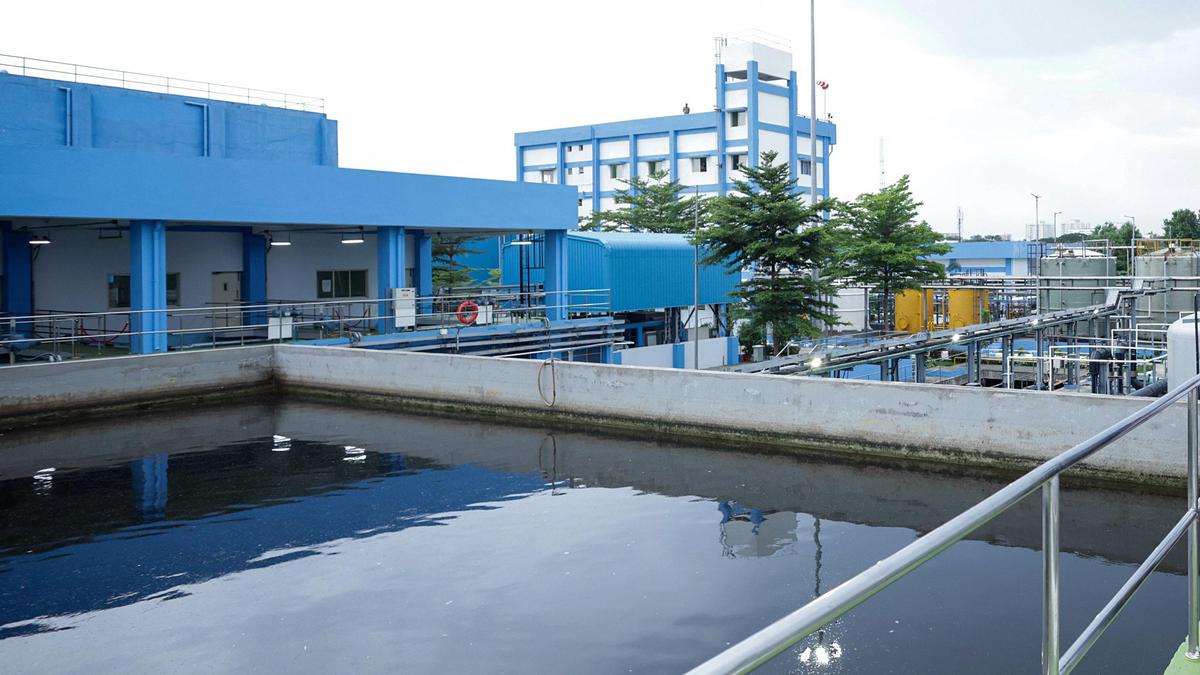
The recently notified policies for reusing treated wastewater in Uttar Pradesh and Uttarakhand provide a valuable example of how tailored policymaking can address the unique challenges faced by each state. These policies consider the varying geographical landscapes, the differing needs of hill communities versus densely populated regions, and incorporate principles such as appropriate reuse methods, urban planning integration, community involvement, blended finance approaches, and digital monitoring systems to ensure accountability.
Unfortunately, such examples are the exception rather than the norm. Despite facing water scarcity issues every summer, Indian states continue to grapple with the same problems. The persistent cycle of groundwater extraction and the ongoing struggle between agriculture, industry, and urban demand remains a constant narrative. The question now is not whether India needs to change this situation, but how long it can continue to ignore it.
Treated wastewater is a resource that is often overlooked and has the potential to provide a dependable, drought-resistant supply for agriculture, industry, urban landscaping, and ecological restoration. India's future water security may depend more on the efficient recycling of existing water resources rather than discovering new freshwater reserves.
National missions like the Atal Mission for Rejuvenation and Urban Transformation have made significant progress in expanding sewage treatment infrastructure; however, simply building facilities without proper integration is not enough.
India requires an ecosystem that transforms capacity into practical implementation. This includes inter-departmental coordination, pricing mechanisms that make reuse economically viable, quality standards that instill confidence among end-users, and city-specific roadmaps that translate national aspirations into local action. The National Framework on Safe Reuse of Treated Water (SRTW), 2022 serves as a crucial platform for this transition. Rather than being merely a guideline, it signals that treating wastewater is a national priority.
Several states have responded by establishing policies that set reuse targets and outline milestones for achievement. Treated wastewater, when viewed correctly, should not be considered waste management issue, but rather an economic opportunity. It can help build climate resilience, mitigate drought conditions, reduce reliance on freshwater, support industrial and urban growth without overburdening existing supplies, and facilitate low-carbon urban development on a large scale.
However, the economic case for wastewater reuse needs to be clearly communicated to state governments and planners for the policy to become more than just an aspiration.
For wastewater reuse to succeed, utilities, urban departments, irrigation agencies, and industries must collaborate in a cohesive manner. The financial momentum required to meet reuse targets often comes from synergies with existing schemes and convergence opportunities across various funded programs. Additionally, public perception plays a vital role.
Misconceptions about the safety of treated water are widespread, and the National SRTW Framework and the reuse policies for Uttar Pradesh and Uttarakhand have addressed this by referring to treated water as 'Apna Jal' (our water), emphasizing that the shift towards safe reuse is not just an infrastructural transformation, but also a psychological one.
While some states have begun to adopt clear plans for water security through reuse, several states are still lagging behind. These states are not just falling behind, but are also running out of time to catch up. Sonia Grover and Girija Bharat, water policy experts at Mu Gamma consultants, highlight that while experts working with state governments are witnessing a growing acceptance of the strategic importance of safe wastewater reuse, there are still states that have not yet taken decisive action.
Written by urgent.news from The Hindu - Sci-Tech's reporting — not their text. Machine-written — may contain errors; check the original before relying on it.