23,000 bronzes, 14 years, 60 volumes: how China is mapping lost heritage held abroad
In the quiet of a Peking University research room, shelves groan under the weight of 60 thick volumes. Stacked, they stand taller than an average human. Inside their pages lie the details of more than 23,000 ancient Chinese bronze vessels, weapons, chariot fittings and ritual objects that left China’s shores long ago and now sit in museums, private collections and auction houses across nearly 30…
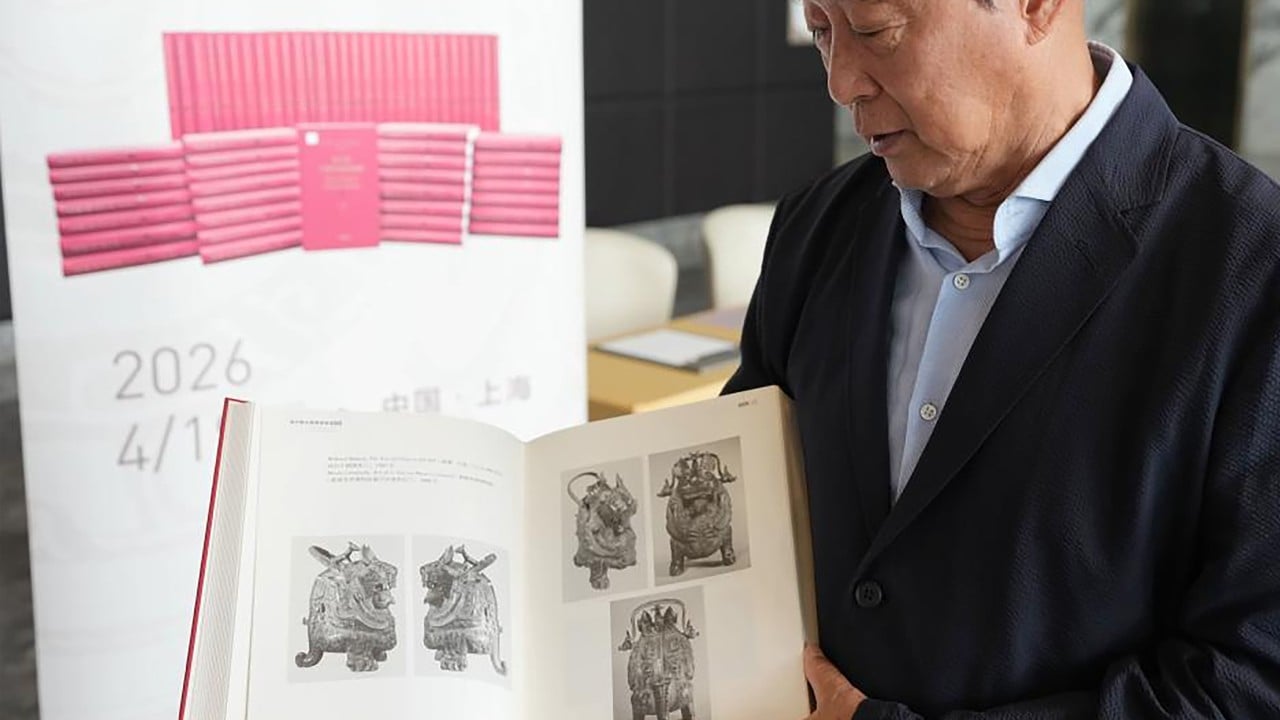
In April, Shanghai Classics Publishing House released a monumental 60-volume catalogue titled "Collection of Chinese Bronzes in Overseas Collections." This exhaustive work documents over 23,000 ancient Chinese bronze artifacts—such as weapons, chariot fittings, and ritual objects—that were once a part of China’s cultural heritage but have since been scattered across nearly 30 countries.
The project took 14 years to complete and was the result of a meticulous investigation spearheaded by Peking University, under the leadership of lead editor Zhu Fenghan, a Boya Chair Professor at the university.
Initiated in 2012, the endeavor began when China's National Cultural Heritage Administration (NCHA) commissioned Peking University to quantify the extent of Chinese bronzes dispersed abroad. Researchers journeyed through more than ten countries, visiting over 260 institutions, and meticulously scanned rare catalogues, trawled auction records, and photographed artifacts that had seldom been systematically recorded.
Their efforts culminated in a staggering data trove, including nearly a terabyte of documents and 200 gigabytes of images.
Previously, estimates suggesting around 3,000 bronzes existed overseas were significantly underestimated; the new catalogue reveals their true number to be over seven times greater. Each artifact is meticulously catalogued, creating a comprehensive "identity document" for every piece, much like a personal file. This document includes high-resolution photographs, precise measurements, inscriptions, the artifact's original discovery location, its transmission history, and its current whereabouts.
Among the diverse array of 300 bronze types catalogued, 3,462 pieces carry inscriptions that shed light on early Chinese political systems, rituals, and daily life. These bronzes embody the symbolic power of China’s historical narratives, from the legendary Nine Tripods to phrases like "one word carries the weight of nine ding" that resonate throughout Chinese cultural memory.
Despite their profound historical significance, many bronzes were lost due to war, looting, and smuggling during the late Qing dynasty and the mid-20th century, often leaving behind scant records of legal export or diplomatic gifts.
One notable example highlighted in the catalogue is the complete Western Zhou banjin altar set, originally excavated in Baoji, Shaanxi, and owned by the late-Qing official Duanfang. This set, now housed at the Metropolitan Museum of Art in New York, represents one of the most complete sets of its kind. Such stories transform the abstract loss of cultural artifacts into documented histories, providing a clearer picture of China’s dispersed cultural assets.
Since the start of the 14th five-year plan period (2021–2025), China has actively pursued the recovery of its cultural heritage. In this timeframe alone, 35 batches of 537 lost relics and artworks have been returned to China, including the Western Zhou bronze ritual vessel Feng Xingshu Gui, columns from the Old Summer Palace, and volumes of the Warring States-era Zidanku Silk Manuscripts. Earlier this year, US authorities returned 41 items, including bronzes, marking a significant step in this ongoing recovery process.
Beijing's efforts extend beyond individual recoveries; China has actively engaged in international forums, signing agreements with numerous countries, co-authoring the Qingdao Proposal on colonial-era cultural property, and taking a leading role in UNESCO heritage frameworks. This proactive stance aims to reshape global cultural repatriation rules, particularly in the wake of the United States' withdrawal from UNESCO at the end of 2021.
For legal scholars, the new catalogue addresses a critical obstacle to further recoveries—the missing "chain of evidence," which is essential for proving that artifacts were illegally exported. Huo Zhengxin, a professor at the China University of Political Science and Law, emphasizes that this archive is crucial for establishing a factual foundation necessary for future repatriation efforts.
While legal barriers persist, the painstaking provenance work facilitated by Chinese research teams and international collaborations is gradually bridging the gaps in historical documentation.
Legal expert Wang Wen, dean of the Chongyang Institute for Financial Studies at Renmin University, situates this project within a broader cultural framework. He notes that despite the significant losses suffered by Chinese scholarship over the years, the completion of this comprehensive catalogue represents a crucial step toward reclaiming a portion of China’s cultural sovereignty and restoring a more complete historical record of its bronzes.
Written by urgent.news from South China Morning Post's reporting — not their text. Machine-written — may contain errors; check the original before relying on it.
This story
This is one outlet's version. Read the fullest account.