The physics of a fidget: why spinning and clicking help focus
A fidget spinner turns a remarkably small movement into a long one. Flick an outer arm and a low friction bearing lets rotational momentum keep the toy moving after your finger stops. A cube works differently, giving the hand a succession of hinges, buttons or surfaces to manipulate, while a popper trades rotation for repeated tactile resistance. The satisfying part is partly mechanical:…
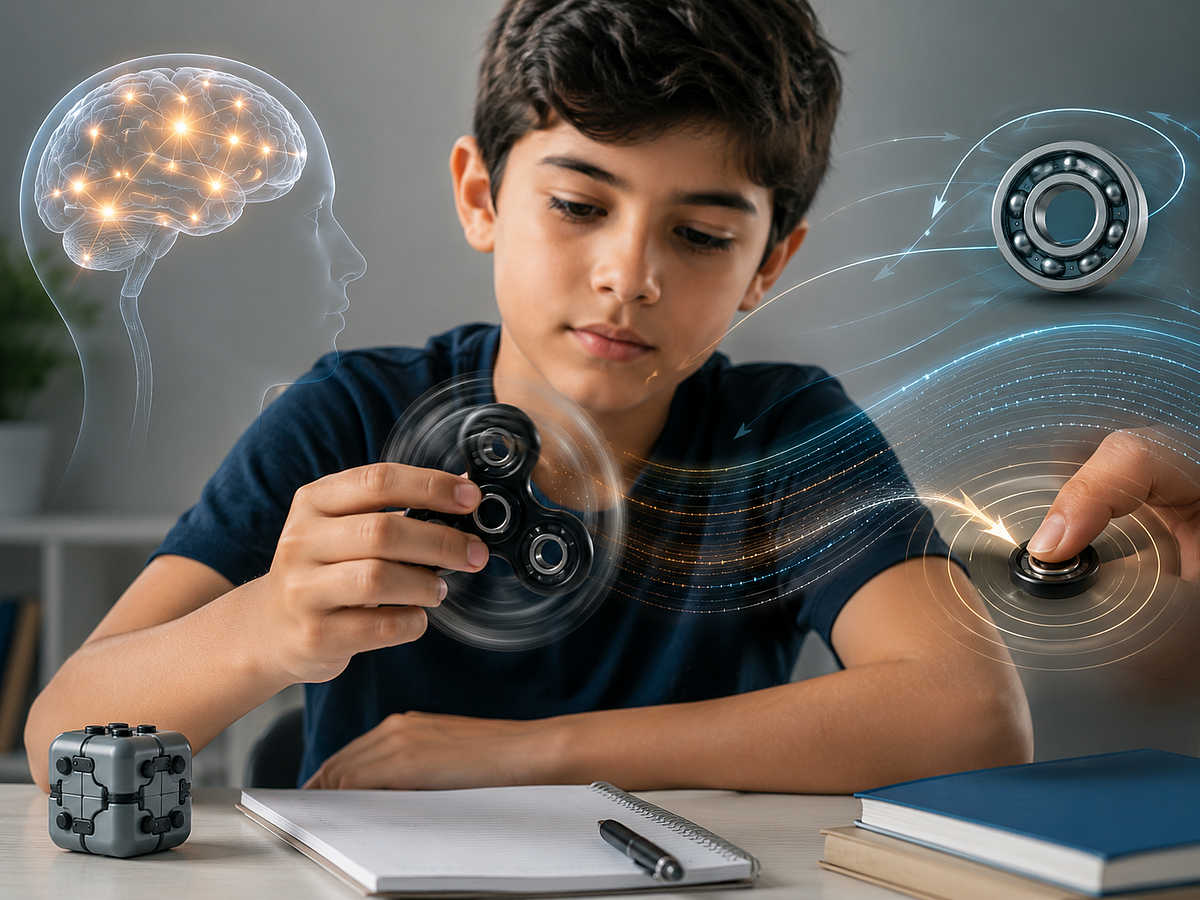
Fidget spinners, cubes and poppers offer various ways to manipulate small objects with repetitive movements. These gadgets utilize predictable mechanical actions to provide sensory feedback that may help some individuals focus. Research indicates that tiny, recurring motions could assist certain people in regulating alertness and engagement during challenging tasks.
Researchers differentiate between natural hand movements and the deliberate use of a fidget toy. Studies on adults with ADHD found some evidence suggesting fidgeting may play a role in sustaining attention, though alternative explanations are still possible. Companies selling fidget products have seen mixed outcomes in classroom settings. Factors like portability, noise level and visual attention required when using the gadget are important considerations when selecting a suitable option for different environments.
When choosing a fidget toy, prioritize the type of movement over the specific product. For desk work, opt for a compact mechanism that can be operated mostly through touch to minimize visual distractions. For travel or commuting, pick a fidget with few loose parts and a shape that fits easily into a bag.
Some recommended fidget toys include the Luminous Fidget Spinner, which demonstrates the physics of rotation through a luminous design; the QiYi Little Elephant Infinity Cube, which features a continuous folding motion suitable for small spaces; and the Colourful Pop It Fidget, offering tactile resistance and sound feedback.
Ultimately, the best choice depends on personal preference for the specific motion and the environment in which the fidget will be used. If attention regulation is a concern, consult a medical professional rather than relying solely on a commercial fidget toy.
Written by urgent.news from Gulf News's reporting — not their text. Machine-written — may contain errors; check the original before relying on it.