The Bhotekoshi flood | A Himalayan tragedy
Scientists investigate how a high-altitude rock-and-ice avalanche may have triggered one of Nepal’s most devastating floods; while experts have not directly attributed this event to climate change, they note that rising temperatures are warming the Himalayas and accelerating glacier melt
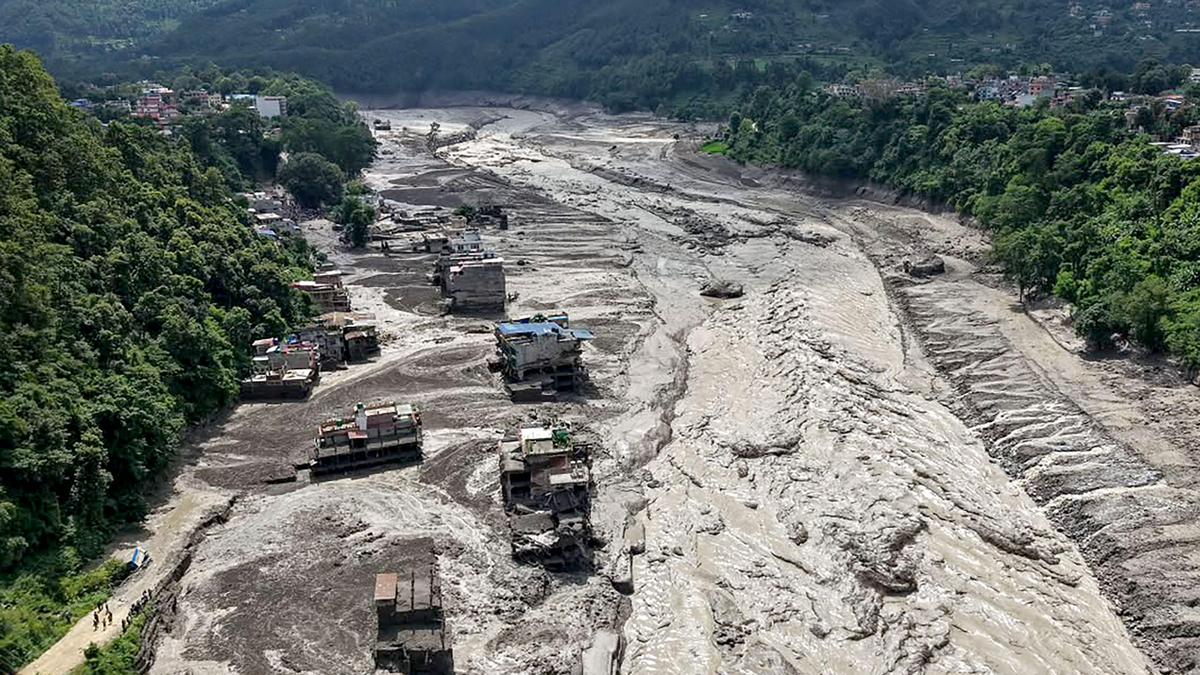
A clock tower in Betrawati, Nepal, stopped at 09.29, reflecting the devastating impact of a flash flood in the Bhotekoshi River on August 26, 2026. Over 600 people lost their lives, with nearly 2,500 still missing, including foreign nationals primarily from India. The Nepalese government swiftly mobilized the Nepal Army, Nepal Police, and the Armed Police Force for a massive search-and-rescue operation.
Scientists from Nepal's Department of Hydrology and Meteorology, along with Chinese experts, are investigating the origins of the flood, which they attribute to an ice avalanche, permafrost movement, and a rockslide near the Nepal-China border. This theory is based on satellite imagery suggesting that the rockslide occurred on the Chinese side and its impact extended into Nepal.
Local hydrologist Binod Parajuli noted that the avalanche originated close to the border, triggering flooding that crossed the border and causing damage on both sides. The Bhotekoshi River, known for its occasional flooding, has been ravaged by a sturzstrom, a massive rock avalanche triggered by a combination of ice, snow, and frozen soil.
This disaster, described as one of the worst since the 2015 earthquake, has left a trail of destruction in Rasuwa, Nuwakot, and Dhading districts. The International Federation of Red Cross estimates that around 93,000 people may have been affected, with many homes severely damaged and communities cut off. The early-warning systems worked, but their effectiveness was questioned due to the flood's unprecedented speed.
Experts suggest that climate change may have contributed to the disaster, as rising temperatures and melting glaciers are altering the Himalayan ecosystem, but they caution against directly linking the disaster to global warming.
Written by urgent.news from The Hindu's reporting — not their text. Machine-written — may contain errors; check the original before relying on it.