As the victims' photos went up, people flocked like clouds… “This child has to be alive.” [Field Report]
On the afternoon of the 29th, a man named Ram, a 29-year-old from Nepal, stood in front of Kathmandu University Hospital's Education Hospital. Ram had hung up a photo of his 3-year-old nephew, whose whereabouts were still unknown. His sister and his older brother, along with other nephews, had already been found deceased. Ram was searching for his "missing nephew" among the bodies being transferred from the hospital and the information gathered there.
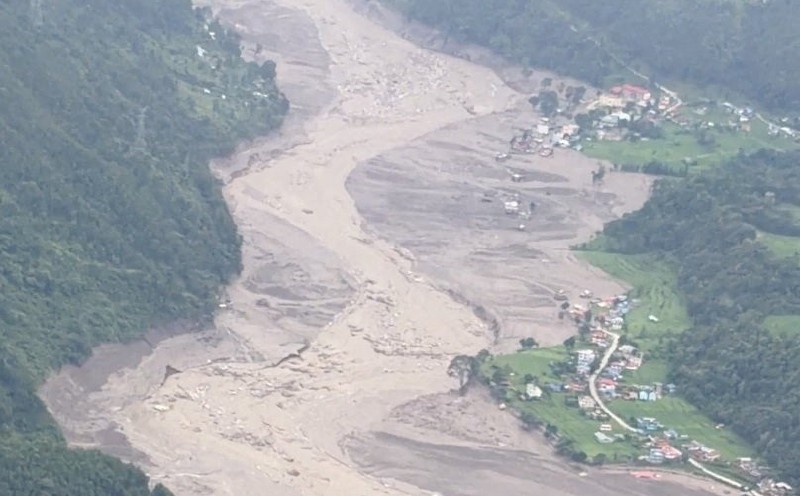
He expressed his desire for the nephew to survive, and requested journalists to cover the story. The newspaper, since the 26th, had been searching for the disaster-stricken areas of Bagramati District and Naukot, where hundreds of deaths and hundreds of disappearances had occurred. According to AP communication, as of the morning of the 29th, the death toll had reached 633, and the number of missing persons had surpassed 3,000.
The unstable weather and the fear of further flooding caused rescue operations to face difficulties. Among the thousands of survivors and their families who came to Kathmandu University Hospital, Amor Lamlil, a 39-year-old, mentioned that his 27-year-old brother, who worked at Lhasa and local dam construction sites, was missing.
With nine Korean workers missing in dam construction projects, their safety was uncertain. Many families were suddenly separated due to landslides caused by a sudden collapse of ice. A 19-year-old Nepal named Ruten, who had been living in Kathmandu University during his university life, placed photos of his six family members on the hospital wall.
He said, "From left to right, my three uncles, my other uncle, my mother, my two brothers, and my godmother." The large number of casualties and the inadequate system made it difficult to confirm the fate of families. Photos of victims at the hospital's search room in front of Kantierlini Hospital, adjacent to Trubayan University Hospital, attracted crowds of citizens who rushed to find their loved ones.
Most of them were in a pitiful state, covered in mud and water. The police, who managed the scene, shouted through a megaphone, "Check and leave quickly. There are 70~80 bodies stored at the hospital." The police stated, "There is still time, but soon there will not be enough space for storage, as bodies continue to arrive." Although the Nepalese government had previously refused foreign search and rescue teams, it approved the dispatch of Korean experts and technical personnel to the site due to additional concerns about dam collapses and ongoing instability. The government's rapid response team also added two rescue helicopters to the search efforts.
Written by urgent.news from Hankyoreh's reporting — not their text. Machine-written — may contain errors; check the original before relying on it.