Startup bags $7M to build drone-interceptor-in-a-backpack systems
Spike drone defense system is designed to be carried in a rucksack or mounted on top of a vehicle
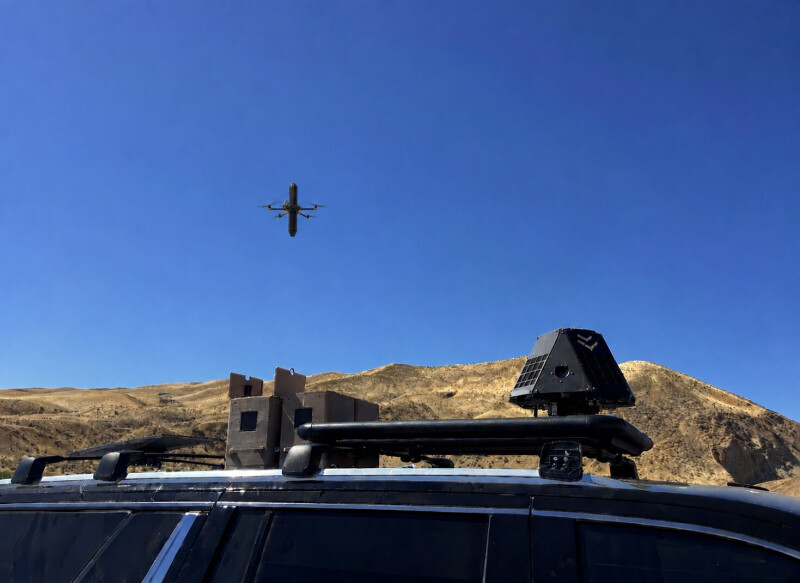
A defense startup based in San Francisco has secured $7 million in funding to create a compact system designed to intercept and neutralize swarms of small, unmanned aerial vehicles (UAVs) or "drones," particularly the First-Person View (FPV) variety that have caused significant casualties in recent warfare in Ukraine. The company, Mara, plans to commercialize its Spike drone defense system, which features modular components for varied deployment options.
The Spike system comprises Spotter sensor units, seeking to identify and track drone targets, and Seeker kinetic interceptors. The interceptors are lightweight (weighing just 250 grams or half a pound), high-speed (200 kilometers per hour or 124 miles per hour), and capable of launching from tube-mounted positions, with onboard intelligence to guide them to the target. The system is scalable, ranging from a single backpack kit for individual protection to a multi-kilometer perimeter shield for larger bases or sites.
The Spotter sensor combines electro-optical and acoustic detection capabilities, with an option for low-signature radar, enabling all-weather protection day and night. According to Mara's co-founder and CEO Daniel Kofman, small drones have altered the battlefield dynamics by distributing the cost and precision of attack, making traditional countermeasures expensive and concentrated.
The Spike system addresses this issue by deploying a "distributed mesh of small, cheap nodes," each capable of aiming and shooting in multiple directions simultaneously.
Mara has conducted tests of its components with potential customers, including Seeker interceptors successfully neutralizing targets in exercises overseen by the US Army in Texas and Europe. Additionally, Ukrainian forces have employed the Spotter system near their country's front lines to track FPV drones. Mara is currently in research and testing agreements with three US defense organizations and has early engagements with military partners in the UK, Czech Republic, and Ukraine. The $7 million funding round was led by Khosla Ventures.
Written by urgent.news from The Register's reporting — not their text. Machine-written — may contain errors; check the original before relying on it.
This story
This is one outlet's version. Read the fullest account.