Startup bags $7M to build drone-interceptor-in-a-backpack systems
Spike drone defense system is designed to be carried in a rucksack or mounted on top of a vehicle
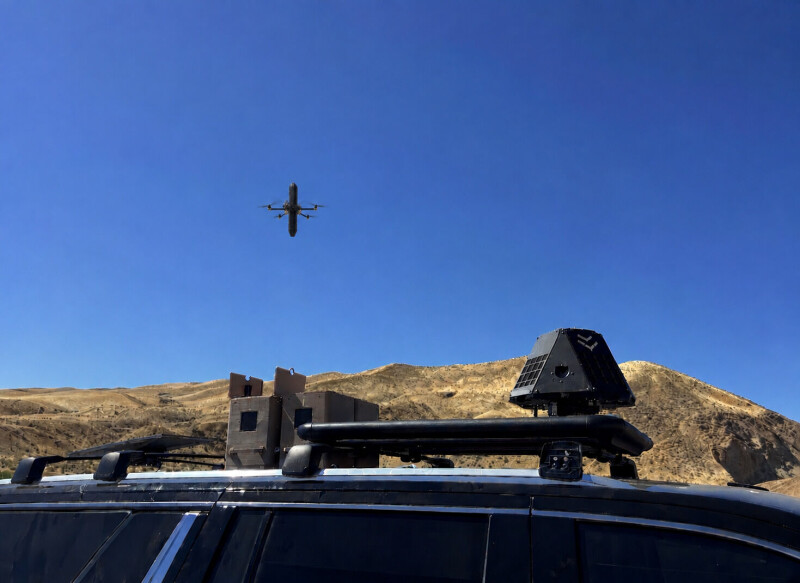
A San Francisco-based defense startup, Mara, has secured $7 million in funding to develop its counter-drone system aimed at protecting against swarms of small FPV (First-Person View) drone attacks. The Spike drone defense system comprises separate Spotter sensor/targeting units and multiple Seeker kinetic interceptors, which are small, fast, and have onboard intelligence for guidance.
The system can scale from a single rucksack kit to protect a team of soldiers, to a vehicle-mounted launcher, or even a multi-kilometer perimeter shield for bases or sites.
Mara claims that the distributed mesh of small, cheap nodes can aim and shoot in multiple directions simultaneously, creating a cost-effective countermeasure to expensive point solutions. The Spotter sensor combines electro-optical and acoustic sensors with an optional low-signature radar for all-weather, day and night protection. The Seeker interceptors, weighing 250g each, are fast (200 kmph or 124 mph) and tube-launched, with onboard intelligence to locate and neutralize their targets.
Mara's co-founder and CEO, Daniel Kofman, believes that small drones have changed the battlefield by distributing the cost and capability of precise attacks. By creating a distributed system of small, cheap interceptors, Mara aims to protect troops and bases from the growing threat of drone swarms. The company's components have already been tested by potential customers, including the US Army and Ukrainian forces, with successful intercepts and operations near the front lines.
Mara is currently seeking partnerships with three US defense organizations and military partners in the UK, Czech Republic, and Ukraine.
Written by urgent.news from The Register Science's reporting — not their text. Machine-written — may contain errors; check the original before relying on it.