New U.S. sanctions will hit ordinary Iranians hard. That may be the whole point as the crashing economy stirs fresh protests
U.S. Treasury Secretary Scott Bessent unveiled plans on Monday for a "economic D-Day" against Iran, aiming to isolate the regime further from the global community. The U.S. will broaden secondary sanctions targeting entities and nations engaging with Iran, even removing any country that aids Iran from the dollar-based financial system.
Additionally, the department singled out five crucial areas for Iran: digital assets, technology, gold, aviation, and shipping. However, Esfandyar Batmanghelidj, the founder and CEO of the Bourse & Bazaar Foundation think tank, argued that these areas actually benefit ordinary Iranians, not the regime. He pointed out that digital assets and gold help Iranians protect their savings from inflation, technology keeps Iranians connected with the world, aviation maintains family connections across borders, and shipping brings essential goods, including food and medicine, to Iran.
The sanctions arrive as the Trump administration has shifted away from a full-scale war, hoping that economic warfare will achieve what bombs and missiles couldn't. The Treasury Department did not respond to a request for comment.
While crypto currencies, technology, and shipping are methods the Iranian regime uses to dodge Western sanctions, allowing it to generate valuable revenue, the United Arab Emirates also halted all trade and transactions with Iran this month, severing another vital link to the global economy. The U.S. war and naval blockade have dealt a devastating blow to Iran's struggling economy, which was already in disarray before the conflict began.
Inflation has skyrocketed above 80%, with food prices increasing by 100%. The currency has lost an additional 30% of its value this year.
The International Monetary Fund projected in April that Iran's economy will contract by 6.1% this year, the steepest decline in decades. Furthermore, a labor ministry official estimated that more than 1 million jobs were lost by late May. The naval blockade has not only halted Iran's oil exports via its ports but also prevented the entry of refined fuel imports that Iran needs despite being a major oil producer.
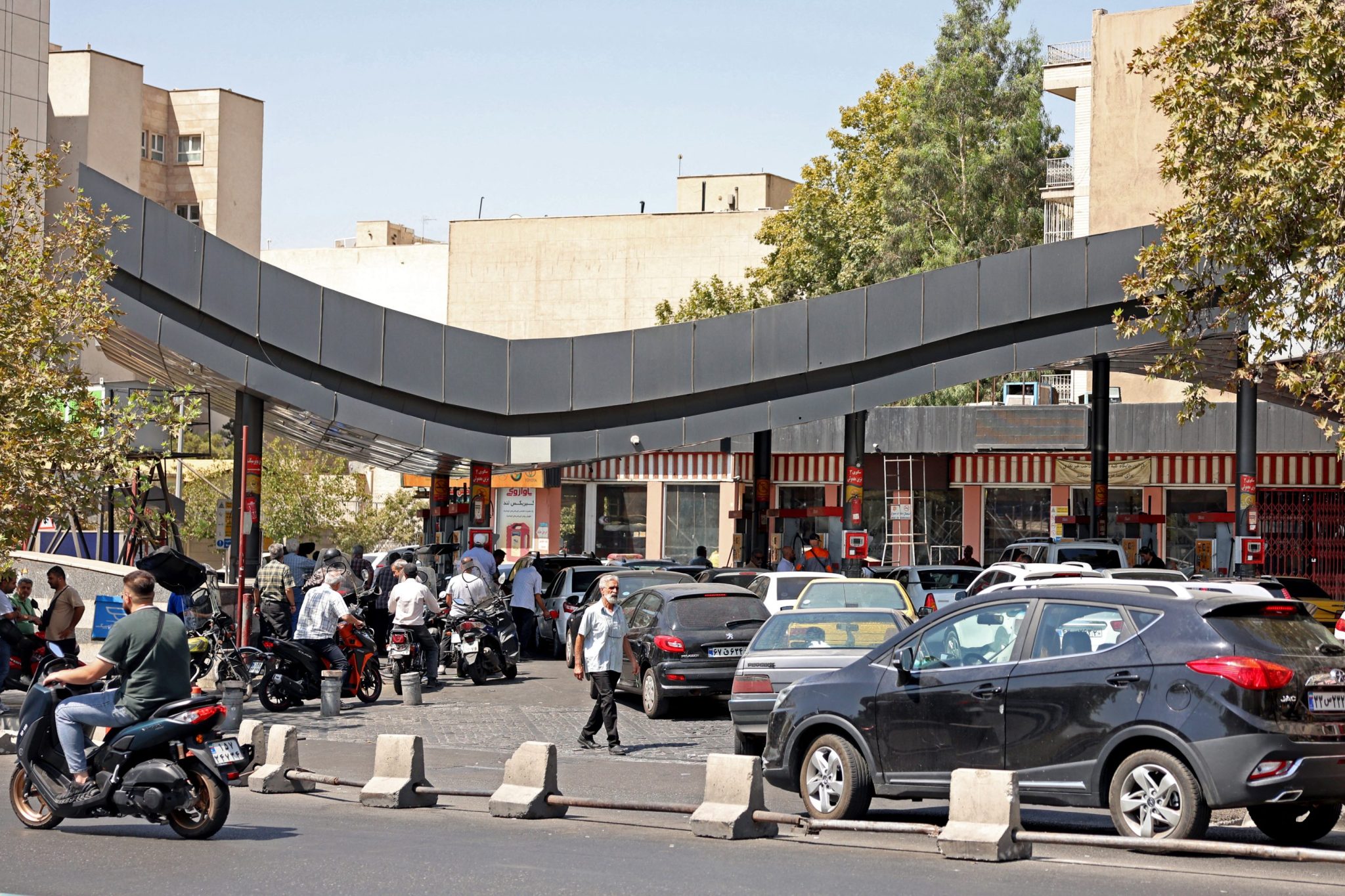
This has resulted in fuel shortages and long gas station queues, exacerbated by subsidies that promote excessive consumption. However, the government is hesitant to raise prices and dampen demand, fearing further public anger over inflation.
Amid the mounting strain, some moderate officials have indicated that time is running out to secure economic relief as Iran and the U.S. remain at odds with no signs of diplomatic progress. "No matter how strong we are militarily, if the people are hungry and we do not have financial circulation, economic growth and domestic production, we will not endure," parliamentary speaker and Iran's chief negotiator Mohammad Bagher Ghalibaf stated while visiting Iraq earlier this month.
Protests have indeed begun, although not as widespread as those witnessed in January when the government brutally suppressed thousands. On Monday, oil and gas workers in Asaluyeh held a protest, stating they should not have to endure a cost-of-living crisis while keeping oil production running. Earlier, approximately 100 laid-off workers demonstrated at the Shadegan steel complex in western Iran, petrochemical workers in Bandar-e Mahshahr protested layoffs, and teachers union members publicly complained about unpaid salaries.
Experts have warned that Iran's repressive regime is unlikely to be swayed by the suffering of ordinary citizens and is prepared to endure economic hardships longer than Americans can tolerate high gas prices. Nevertheless, officials acknowledge the hardships faced by ordinary Iranians while clashing with hardliners who oppose any negotiations with the U.S. "The country today faces great, complex, and multiple open and hidden challenges," Ghalibaf said on Wednesday.
"Our duty at this moment is to devote all our time and energy to resolving the people's problems, increasing Iran's economic power, and preserving the achievements of resistance."
Written by urgent.news from Fortune's reporting — not their text. Machine-written — may contain errors; check the original before relying on it.