Iceland in suspense after vote on EU membership talks
Iceland voted in a referendum on whether to resume membership negotiations with the European Union, with a close race predicted and the final result expected late in the night or next morning.
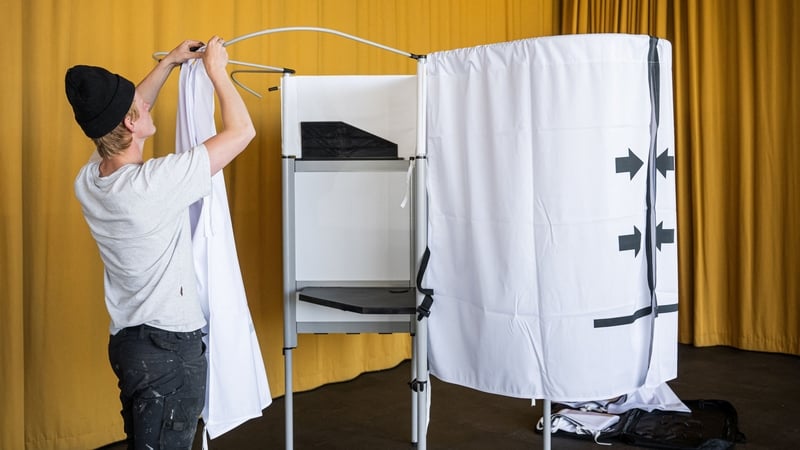
Iceland is on edge following a referendum on resuming membership negotiations with the European Union, with the outcome uncertain and expected late in the night or early morning. Voting closed at 10 PM (11 PM Irish time), and ballot counting began once voting stations closed, meaning a clear winner may not emerge for several hours. The referendum asked voters if Iceland should resume accession negotiations with the EU, with the question phrased as a simple "Yes" or "No."
Iceland applied to join the EU in 2009 amid the aftermath of a 2009 financial crisis that devastated its economy. Membership talks were suspended in 2013 due to a eurosceptic government taking power. A recent opinion poll by Maskina showed the "Yes" side with a slight edge at 50.4%, but this margin falls within the statistical margin of error.
Should the "Yes" side win, Iceland would negotiate an accession agreement with Brussels, which would then be put to a new referendum on actual membership. The issue of fisheries, a crucial part of Iceland's economy, would need to be addressed with Brussels, who seem more open to creative solutions this time. The referendum result is non-binding, but the coalition government, led by Social Democratic Prime Minister Kristrun Frostadottir, has pledged to respect the outcome.
The referendum's tight race and excitement were evident, with Prime Minister Frostadottir stating it had raised discussions about Iceland's place in the world and its geopolitical status. The government has called a press conference to share its plans moving forward. If the "No" side wins, the government has already stated it won't resume accession talks during its term, which ends in 2028, and will refer the question of Iceland's formal withdrawal from EU membership bid to parliament.
Political analysts believe it is unlikely the government would resign, even if the "No" side prevails. The referendum discussions have primarily focused on domestic and economic matters, despite rising international tensions, including the war in Ukraine and US President Donald Trump's ambitions for neighboring Greenland. Iceland's economy has recovered and thrived, but its currency is volatile, and soaring inflation and interest rates have left many indebted households considering adopting the euro and its lower interest rates.
On the global stage, the return of war in Europe due to Russia's invasion of Ukraine has shaken established security doctrines. Iceland, being an island in the sub-Arctic with no military, relies on NATO and a 1951 bilateral agreement with the United States for its defense. The unpredictability of US President Donald Trump and his threats to take over neighboring Greenland have added to Icelanders' concerns.
The EU's reaction to a possible Icelandic membership will be closely watched, as Brussels sees such an outcome as a positive example of enlargement that could make it more acceptable for member states to consider admitting poorer countries like Montenegro or even help change minds in wealthier non-EU member Norway.
Written by urgent.news from RTE News's reporting — not their text. Machine-written — may contain errors; check the original before relying on it.
This story
This is one outlet's version. Read the fullest account.